✅ In short
- To connect AI investments to your business, it is a prerequisite that you can secure electricity at the necessary locations and times. It is necessary to separately confirm the nationwide electricity supply and demand and the possibility of supply to individual facilities.
- 🏗️ Maps showing connection possibilities and initial consultation responses do not guarantee the start of power reception as is. It is important to align the confirmation stage of reception conditions with the progress of land, construction, and customer contracts.
- 🌱 Procuring the environmental value of renewable energy, receiving electricity, and operating facilities without interruption involve different equipment and contracts.
- 🤝 We believe that data center operators, in particular, along with transmission and distribution operators, retail electricity providers, power generation operators, equipment companies, and users, should specify the conditions and decide who bears the responsibility for delays and additional costs.
Introduction
This time, we will explain who will secure the "available power" needed for AI (Artificial Intelligence) data centers, and what kind of equipment and contracts will be used in combination.
We believe that investing in AI will only be viable if it is planned, including securing electricity.
Even if you have high-performance semiconductors and buildings, you can't start providing services on the scale you expect unless you can get the power you need at that location.
However, if we dismiss this simply as "Japan will face a power shortage," it will obscure the practical points.
What you need is to know where, when, how much power, and under what conditions it will be available.
This paper focuses on projects receiving electricity from Japan's power transmission and distribution network (electricity system), examining location, equipment, power procurement, and contracts in that order.
Consider the expansion of electricity demand and the possibility of receiving electricity for individual projects separately
International Energy Agency (IEA) Summary of the 2026 report "Key Questions on Energy and AI" According to the IEA's central outlook, global data center power consumption will roughly double from 485 TWh in 2025 to 950 TWh in 2030.
TWh is a unit of electricity called terawatt-hour (terawatt-hour).
These figures are not just for AI-only facilities, but are consumption figures for the entire data center, and future figures are projections.
On the other hand, whether a new data center can be operated in a particular region cannot be determined solely by the annual electricity consumption of the country or the world.
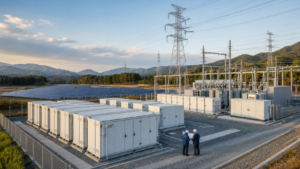
Even if there is a supply surplus on the power generation side, if it becomes necessary to maintain the transmission lines, substations, and siding equipment to the target location, we will have to wait for that process to begin.
The IEA also cited the summary of its 2025 report, "Energy and AI," as The long and complex queues for grid connections, and the doubling of waiting times for critical grid equipment such as transformers and cables in the past three years He points out that.
This problem cannot be solved solely by increasing the number of power plants.
To make an investment decision, it is necessary to translate the market outlook of "future demand growth" into a point-by-point verification of "whether electricity will be received in this case at the necessary time."
Making the conditions for "available electricity" concrete
The term "available electricity" in this article is not a legal term.
This is a summary of the conditions that need to be confirmed in the business plan.
At the very least, it would be easier to proceed with the consideration if the following conditions were organized separately.
| Conditions to check | What businesses want to realize |
|---|---|
| Required amount | How much electricity will be used at the time of opening and after the expansion |
| Start of supply | When can electricity be received and when a gradual increase is required |
| Technical power quality | To what extent the equipment can handle voltage, frequency, waveform, etc |
| Continuity of operation | What functions to maintain and how much to maintain in the event of a power outage or equipment failure |
| Foreseeability of costs | Which costs, including electricity rates, connection work, and backup equipment, will vary |
| Request for decarbonization | Whether the environmental value and emissions calculation requirements demanded by users can be met |
I would also like to use the term "quality of electricity" with this distinction in mind.
Fewer power outages and equipment being able to withstand instantaneous voltage drops are not the same thing.
Furthermore, even in areas where electricity is currently stable, whether the new large-scale demand can be met as desired will be a separate consideration.
Tokyo Electric Power Company Power Grid Technical documents related to special high-voltage power receiving equipment The government states that instantaneous voltage drops (instantaneous voltage drops) can occur due to accidents on power lines caused by lightning or snow, and that preventing them from occurring is extremely difficult. Therefore, they are asking demanders to check the impact and consider installing UPSs.
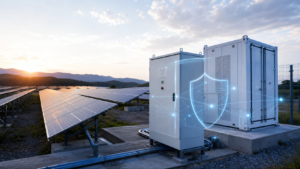
The same material is Securing a power source for safety As a result, we recommend two lines of power receiving, one main line and one backup line, and list emergency private power generation equipment, battery equipment, and uninterruptible power supply equipment (UPS), and ask that you consider the required capacity and operating time in a comprehensive manner.
When designing a facility, it is necessary to ensure that it supports not only the servers but also the necessary equipment for continued operation, such as cooling and control.
I think it's important to explain which anomalies, which equipment, and how they are designed, rather than simply judging them based on a list of equipment that includes UPS and battery storage.
Check the power receiving conditions and process before acquiring the land
The public map is a starting point for narrowing down the candidate sites
In Japan, power, communications, and data center operators work together to effectively coordinate power and communications infrastructure "Watt-Bit Collaboration" This is considered a policy issue, and the Ministry of Economy, Trade and Industry and the Ministry of Internal Affairs and Communications have published a summary of the public-private consultation meeting in June 2025.
For those considering the location, it also makes sense to check power and communication conditions simultaneously.
This is because, in addition to securing power, it is also necessary to meet application-specific requirements such as communication delays and connection locations.
Tokyo Electric Power Company's power grid is also available to customers who wish to supply over 2,000 kW of special high pressure Welcome Zone Map We have published a large-scale supply potential map for demanders who wish to supply more than 50,000 kW.
Large-scale supply potential map indicates the location of substations with a receiving voltage of 154kV or 66kV and an empty capacity of 50MW or more, and the estimated construction period (approximately 5 years or 10 years) (version created on August 31, 2026).
However, we would like to avoid assuming that the conditions for receiving electricity have been finalized based on publicly available information.
The same map Points to note explains that the estimated construction period indicates the construction period after the construction plan for supply has been finalized, and is an estimate that does not take into account constraints and periods such as the status of existing power transmission lines, local conditions, and land acquisition.
This does not mean that all data center connections will take the same number of years.
The same points to note indicate that, depending on the results of the detailed review, the construction period may differ significantly from the estimated construction period for the map or the response to the prior consultation, and that the available capacity may have changed since the date the materials were created.
Therefore, when evaluating land, it is necessary to check what stage of information is currently available regarding the potential for electricity reception, along with the price and area.
Information regarding the available capacity for connecting power generation equipment to the grid cannot be confused with information regarding supplying power to demand equipment.
The same note also reminds us that the information in the "empty capacity mapping" for those wishing to connect power generation equipment differs from the empty capacity for supply in this map.
Document the premise of "expected supply"
When actually discussing the matter, it is necessary to include conditions such as the power receiving point, required capacity, desired timing, expansion plan, and method of withdrawal.
Tokyo Electric Power Company Power Grid Guide to the flow of electricity However, it is explained that in addition to surveys, design and construction, numerous steps will be required, including land negotiations and various application procedures.
What bothers me from a contractual perspective is that the "expected" start of supply is treated as a fixed date in another contract.
For example, if you are in the early stages of discussions about when to connect, but you have committed to a service start date for customers and are unable to move the delivery date for equipment, you can see where the risk of delays remains.
This is a hypothetical example for illustrative purposes, but I think it demonstrates the need to look at the process of related contracts together.
It is important to ensure that land sales or leases, construction, equipment procurement, and usage contracts with customers are not conducted on separate dates, but rather can be adjusted according to the status of power reception conditions.
Organize who will secure what
Simply stating "consult the power company" makes the confirmation process with the other party ambiguous.
The supply contracts with retail electricity companies, the maintenance of transmission and distribution equipment, backup equipment within the facilities, and the level of service promised to customers vary depending on the other party involved.
The following is a list of things that operators would like to confirm, assuming the procurement of general grid electricity.
This is not a comprehensive table of legal obligations or responsibilities, but rather a compilation for reviewing contracts and equipment plans.
| Main stakeholders | Things I want to make concrete |
|---|---|
| Data center operators and development entities | Required capacity, rising demand, opening process, overall facility operating conditions and budget |
| General power transmission and distribution operator | Technical conditions for connection and supply, necessary work, construction period assumptions, construction cost burden, and handling of changes in conditions |
| Retail electricity businesses | Terms, fees, procurement of shortfalls, and treatment at the end of the power supply contract |
| Power generators and renewable energy procurement partners | Addressing the timing of power generation, supply and environmental value, output shortages, and development delays |
| Design, equipment and maintenance businesses | Performance, switching operation, testing, inspection, and restoration of power receiving and substation equipment, UPS, battery storage, and cooling equipment |
| Data Center Users | Required service levels, acceptable shutdowns or delays, and treatment of electricity costs and environmental value |
The fact that multiple procedures and stakeholders are involved before the supply begins is as mentioned above Procedure guidance for power transmission and distribution operators You can also check from here.
The direct contract with each party varies depending on the business scheme, so we would like to confirm the contractual relationship after creating a diagram.
In practice, it would be best for the data center operator or development entity to clearly define who is responsible for coordinating these conditions.
That doesn't mean that businesses make all their own technical decisions.
This role involves gathering expert opinions and verifying whether the equipment design conditions and contractual agreements are consistent.
Connecting renewable energy procurement with stable supply and continuous operation of facilities
What to source with a PPA
Power Purchase Agreements (PPAs) are an option when considering renewable energy procurement.
However, the name PPA alone doesn't tell us how the power will be delivered or what will be guaranteed.
Ministry of the Environment Materials on Offsite Corporate PPAs (Updated March 2026) is a physical PPA (Physical PPA) that supplies power and environmental value to buyers as a set via the power grid, and transfers environmental value separately from power without supplying power to buyers We distinguish between virtual PPAs (Virtual PPAs), which use differential settlement based on contract prices and market prices.
Environmental value here refers to attributes that indicate that the electricity is derived from renewable energy sources, among other things.
Even if a virtual PPA is concluded, the contract does not guarantee power supply or grid connection to the facility in question.
Even in physical PPAs, how to handle situations where power plant output falls below demand, or when a power plant or system is shut down, depends on the individual procurement structure and contract.
We need to see who will source the shortfall and who will bear the price fluctuations.
It is important not to broaden the description "reenergy procured" to mean that the power required by the facility has been secured at all times.
Do not confuse re-energy variability with power quality
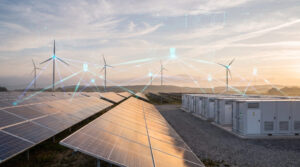
Solar and wind power have the characteristic that their output changes depending on the weather and other factors.
However, it is not accurate to use this as an excuse to conclude that "re-energy electricity is of low quality and cannot be used for AI."
U.S. Department of Energy Explanation of inverters and system support functions This explains that inverters, which are devices that convert DC to AC, can respond to voltage or frequency fluctuations and have functions that help stabilize the system.
The functions that can be provided vary depending on the equipment's design, control, and the availability of power generation and storage.
What needs to be considered is how to combine power supply, power transmission and distribution networks, battery storage, and facility-side equipment in response to the target location and demand.
When introducing batteries, it is necessary to distinguish between output, the amount of electricity stored, and whether they can be used for the required amount of time.
Furthermore, if we are to combine operations that leave power for power outages with operations that aim to generate revenue through normal charging and discharging, we would like to determine the amount of power needed in emergencies and the priority of operation, both in terms of contracts and controls.
What to explain about decarbonization
Scope 2, which is the indirect greenhouse gas emissions associated with the use of purchased electricity, steam, heat, and cold, Guidance on the GHG Protocol (Greenhouse Gas Protocol) Calculations and explanations based on these principles are also a point of contention.
The terms of any contract or certificate demonstrating environmental value, and the terms of the physical power supply, must be checked separately.
The GHG Protocol is reviewing its Scope 2 market-based methodology.
Description of the protocol dated October 16, 2026 According to the report, the review is ongoing after a call for comments from October 2025 to January 2026, with a consolidated call for comments scheduled for the second quarter of 2027 and the publication of joint enterprise standards with ISO for the fourth quarter of 2028.
In long-term contracts, it is possible to identify the calculation standards currently used and the customer's requirements, and even decide how to discuss obtaining additional certificates or data, reviewing procurement methods, and covering costs if these changes.
The contract will match the relevant dates and costs
The following are some practical contract proposals that we would like to consider for individual cases.
Not all items are legally required clauses.
Incorporate power receiving conditions into investment execution decisions
Before acquiring land or beginning construction, it is advisable to decide to what extent the conditions for receiving electricity will be checked.
Listing the consultation documents, the scope of work required, the estimated cost of the work, the relationship between the desired start date of power reception and the responded supply date, and any remaining undecided information makes it easier to share the assumptions for making a decision.
If necessary, the plan could be designed to withhold payment or construction until important conditions are met, or to allow changes or cancellations if conditions are not met.
However, this does not require agreement with the other party, nor does it presuppose that the standard procedures or terms and conditions of the power transmission and distribution operator can be freely modified.
Distinguish between receiving power, commissioning, and service start
The date you can receive power does not necessarily coincide with the date you can start providing service to your customers.
The question arises as to where to place comprehensive checks, including equipment testing, confirmation of switching operations, and cooling equipment, within the process.
Regarding service level agreements (SLAs) with users, we would like to see what can be used to provide services, where downtime is measured, and how planned outages and exceptions are handled.
If the guarantees and compensation received by the facility do not match the level promised to users, the risk of that difference may remain with the business operator.
This document outlines how to handle delays, additional construction work, and price fluctuations
In case of delays in receiving electricity, it may be necessary to set deadlines for notification, process updates, changes to phased opening, and final review.
When delays occur in land negotiations, licensing, or equipment procurement, it is necessary to confirm which contracts can address these issues.
Costs should be considered not only in terms of the unit price of electricity, but also in terms of connection work, receiving and substation equipment, backup, maintenance, and procurement of environmental value.
Tokyo Electric Power Company Power Grid also provides general main line and reserve line supplies How to calculate construction cost contributions Although this has been made public, it is said that the distance and cost may change at the stage when the route proposal is presented through consultation, and the conditions for application to individual projects and the treatment of additional construction work need to be confirmed.
Even if the unit price of a PPA is fixed, this does not necessarily mean that the overall electricity-related costs borne by the facility are fixed.
It is important to calculate the costs included in the contract, the costs that will be borne separately, and the costs that will be reviewed when the terms change.
The extent to which any portion not covered by the contract should be addressed through contingency funds, insurance, equipment redundancy, and phased investments should also be considered.
Consider the case where data center operations and demand do not grow
Along with increasing supply facilities, there is also room to consider how flexibly the data center can use power.
The IEA To operate data center servers or adjacent power generation and storage facilities more flexibly are listed as options for addressing lineage constraints.
However, the range of time that can be moved differs between processing that responds immediately to user requests and processing that allows for some choice of start time.
Whether processing can be moved or postponed depends not only on the technology but also on the customer agreement and data handling conditions.
If we promise to cooperate in curbing demand, we would like to see the scope, notification time, duration, and impact on users that can be implemented.
Conversely, you should also consider the case where the planned demand does not increase.
The IEA also The lag between fast-moving data centers and slow-moving energy investments They cite this as a risk factor, pointing out that uncertainty about the actual load on data centers can lead to a shift in investment in the system.
If a customer's move-in is delayed after capital investment or long-term procurement contracts are made in anticipation of future expansion, there may be costs associated with unused equipment or contracts.
It is important to consider when to change capacity, minimum purchase amount, mid-term cancellations, and decisions to increase capacity, both when demand increases and when it does not.
Summary
The power required for AI data centers cannot be secured solely by power generators or retail electricity providers.
Stakeholders need to take concrete steps to define the conditions for connection and supply, facility equipment, services requested by users, and decarbonization procurement.
When considering implementation or investment, we believe the starting point should be to first organize the required capacity and rising demand, the desired start date of operation, the functions that we want to maintain when the system is shut down, and the requirements for decarbonization.
Furthermore, we believe it would be best to review the power reception conditions for each candidate site and combine the equipment plan with the processes, costs, and responsibilities of the related contracts.
I personally believe that the technical suitability of electrical equipment should be left to the discretion of experts.
Reflecting these findings in the business plan and contract, and sharing what has been confirmed and what conditions are not yet in place, is essential for the business to move forward.
When explaining that "we have secured the necessary power," I think it's important to leave the question of whether we can specify the location, time, quantity, operating conditions, and cost of that information early on when considering AI-related investments and locations.
This article is a general summary based on materials published as of October 20, 2026. The conditions for receiving electricity and the costs associated with individual projects must be confirmed through consultations with general power transmission and distribution operators, etc.


Comment