Introduction
(I've played around with words a bit in the title, but) this time I'd like to explain about tidal power generation.
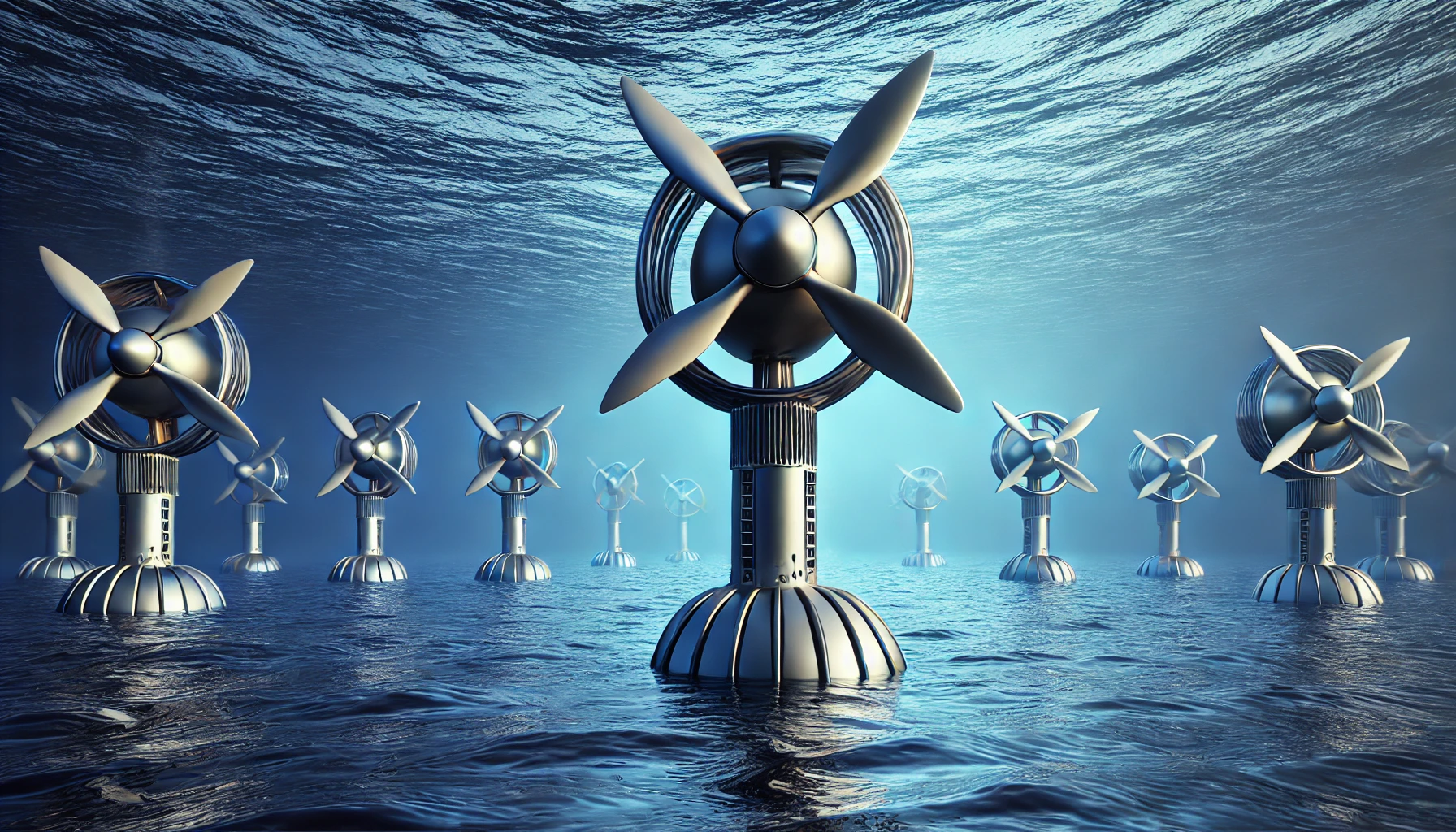
Tidal power generation has been attracting attention in recent years as a form of renewable energy that utilizes marine energy.
From the standpoint of global warming countermeasures and a stable energy supply, it is expected to have potential as a sustainable energy source.
Furthermore, there are also expected to be additional benefits, such as improved energy self-sufficiency, stable energy prices, and revitalization of local economies, and research and development into this technology is progressing rapidly both domestically and internationally.
In this article, we will take a deeper look at the latest trends in tidal power generation, explain its appeal and challenges, and explain how companies can get involved.
Why is tidal power generation attracting attention?
Tidal power generation is attracting attention as a technology that can generate extremely stable power compared to other renewable energy sources.
In particular, for a country surrounded by the sea like Japan, it is believed that if this technology becomes more widely used, it will make a significant contribution to the stable supply of energy.
Stable renewable energy
Tides occur periodically and are not affected by weather, allowing for stable power generation.
Wind power generation is affected by wind strength, and solar power generation is affected by the amount of sunlight, so the amount of power generated can easily be unstable. However, tidal power generation is easy to plan because the tides are regular, and it also has excellent stability in power transmission.
In other words, it can be used as a baseload power source.
If tidal power generation becomes widespread, it will be possible to achieve a stable power supply without relying on thermal or nuclear power generation.
It is also believed that this technology can contribute to improving the stability of the power grid and optimizing the supply and demand balance.
Clean energy with zero CO2 emissions
Tidal power generation does not use fossil fuels and does not emit CO2 when generating electricity.
As part of the global movement toward realizing a decarbonized society, the widespread use of renewable energy sources that can reduce carbon dioxide emissions is essential.
In particular, for industrial sectors that are highly dependent on fossil fuels, the introduction of tidal power generation, which does not emit CO2, is expected to play an important role in achieving CO2 reduction targets.
By incorporating tidal power generation into a company's ESG strategy, it is possible to reduce the environmental burden as part of sustainable management.
Current developments in tidal energy
The development of tidal power generation is progressing both domestically and overseas, and demonstration experiments are also underway in Japan.
Here I will briefly outline the current developments both at home and abroad, to the best of my knowledge.
Domestic Initiatives
In Japan, tidal power generation demonstration experiments are being carried out mainly in the Goto Islands in Nagasaki Prefecture and along the coast of Hokkaido.
Additionally, research and development is underway through government-led projects and private companies.
Furthermore, in collaboration with local governments and universities, progress is being made with the development of power generation technologies that take advantage of the tidal current characteristics of each region.
These efforts are expected to stabilize energy supplies in each region and also contribute to revitalizing the local economies.
Overseas trends
The UK's "MeyGen Project" ( see this website for an example ) is already operating a commercial-scale tidal power generation system, and technological development is underway to improve power generation efficiency and reduce costs.
Demonstration experiments are also underway in France and Canada, and the potential for tidal power generation is being explored in countries around the world.
Advantages, disadvantages and challenges of tidal power generation
Tidal power generation has many advantages, but it also faces technical and economic challenges.
In particular, there are several issues that need to be resolved, such as the high cost of equipment, the difficulty of maintenance, and the impact on the ecosystem.
Below, we will explain the advantages and disadvantages of tidal power generation, as well as future challenges.
merit
Some of the benefits overlap with those mentioned above, but there are four main advantages:
High predictability
One advantage is that the tides are regular and the amount of power generated is easy to predict, making it easy to plan power supplies.
Tides are based on the gravitational pull of the moon and can be predicted over the long term, making it easier to balance supply and demand.
This makes a significant contribution to the stable supply of electricity compared to wind and solar power generation.
Low environmental impact
It has zero CO2 emissions and contributes to reducing greenhouse gas emissions.
Tidal power generation does not use fossil fuels, so it does not emit greenhouse gases during power generation, helping to prevent global warming.
Another advantage is that it has less impact on the environment because no waste is generated during power generation.
High energy density
Another advantage is that it has a higher energy conversion efficiency and produces more electricity than wind power.
Because the density of water is about 800 times that of air, tidal power can generate more energy than wind power at the same flow rate.
This makes it possible to generate a large amount of power with a compact facility.
Less impact on the landscape
Another advantage is that because it is installed underwater, it has little impact on the landscape and land use.
Unlike wind power, tidal power plants are installed on the seabed and have little to no visual impact.
This makes it possible to supply energy while taking into consideration tourist destinations and the natural environment.
Disadvantages
While tidal energy has many advantages, it also presents several technical and economic challenges.
In particular, high initial costs and difficult maintenance are issues.
The three major disadvantages are:
High equipment costs
Building tidal power generation facilities requires a large investment, and initial costs tend to be high.
In particular, the costs of materials and design to ensure the durability of the turbines are a major burden.
In addition, because the installation site is underwater, construction is more difficult than for land-based facilities, which increases construction costs.
Difficult to maintain
Because tidal power generation equipment is installed underwater, it is not easy to inspect and repair it.
Regular maintenance is necessary to prevent damage and contamination of the equipment, but this requires diving work and specialized equipment, which is costly and time-consuming.
Work can be particularly difficult during bad weather, which could result in delays to repairs.
Impact on ecosystem
The impact of tidal power generation on marine life has not yet been fully studied.
Further environmental assessments are needed to determine how spinning turbines will affect fish and marine mammals.
In addition, the installation of tidal power generation may alter the ecosystem on the seabed, so careful assessment of the long-term impacts is required.
Incidentally, it is believed that fixed-bottom wind power generation facilities also have similar ecosystem problems.
assignment
To commercialize tidal power and make it a sustainable energy source, several challenges must be overcome:
Improved equipment durability
Tidal power generation equipment is susceptible to corrosion from seawater and the effects of waves, so it is necessary to improve its durability to ensure stable operation over long periods of time.
In particular, the selection of turbine materials and the development of corrosion prevention technology are important.
Maximizing power generation efficiency
Because the speed of tidal currents varies depending on the location and time, technology that can maximize power generation efficiency is required.
Optimizing turbine design and developing a system that can adapt to changing tides will be key.
Reduce costs and expand markets
Technological innovation and mass production are necessary to reduce initial investment and maintenance costs.
We also believe it is important for the government to provide incentives, such as by providing subsidies, to encourage companies to enter the market.
Strengthening environmental impact assessment
We believe that it is necessary to continuously investigate the impact that the introduction of tidal power generation has on the marine ecosystem and establish an operation that takes environmental considerations into account.
How to get involved in the tidal energy business
As tidal power generation becomes more commercialized, there are more opportunities for companies to enter the field and seize new business opportunities.
It may be difficult to enter the tidal power generation business without any experience, but below we will explain the specific ways to get involved in the tidal power generation business.
Technological development and investment
Further development of tidal power generation technology will require the development of new turbine designs and highly efficient power generation systems.
Companies can gain a competitive advantage by investing in research and development and leading technological innovation.
Project Participation and Partnerships
By participating in joint projects with local governments and power companies, it will be possible to deepen our involvement in the tidal power generation business.
In addition, by promoting international technical collaboration, we will be able to utilize cutting-edge knowledge.
What laws and regulations should you consider?
In order to popularize tidal power generation, not only technological and market developments are essential, but also the establishment of appropriate laws and regulations.
The introduction of tidal power generation involves many legal factors, including environmental protection, marine use, and energy policy, and requires proper compliance with these. This article explains the main laws and regulations related to tidal power generation.
Obligation to carry out environmental assessment
The introduction of tidal power generation requires the implementation of an Environmental Impact Assessment (EIA).
It is necessary to assess the impact of power generation facilities on marine ecosystems in advance and take appropriate measures. In particular, designs must be made to minimize the impact on marine life and changes to the seabed topography.
Permission to use marine areas
Tidal power generation facilities are installed in public waters (oceans), so permission is required from the national or local government.
Specifically, the areas where equipment can be used and the conditions for installation will be determined based on laws and ordinances regarding the use of marine areas.
In addition, coordination with existing fishing rights and the shipping industry will be necessary, so consultations with all relevant parties are essential.
Electricity Business Act and Grid Connection
This does not apply only to tidal power generation, but in order to connect electricity generated by tidal power generation to the power grid, procedures based on the Electricity Business Act must be observed.
In particular, there is a need to establish a feed-in tariff system for renewable energy and a power sales scheme that utilizes market mechanisms.
Additionally, the technical requirements for grid connection and the development of transmission infrastructure are also important issues.
Safety Management Standards and Technical Regulations
As with other renewable energy sources, to ensure the safety of tidal power generation equipment, it is required that it be designed and operated in accordance with international technical standards and domestic laws and regulations, and it is important to establish a safety management system that includes durability tests, regular inspections, and measures to respond to abnormalities.
In particular, strict design standards must be set in order to withstand the harsh marine environment.
International Cooperation and the Application of the Law of the Sea
Tidal power generation is an energy technology that is being developed not only in coastal countries but also within an international framework.
Development must be carried out in international cooperation while ensuring consistency with the United Nations Convention on the Law of the Sea (UNCLOS) and each country's marine energy policies.
In particular, when installing power generation facilities in waters that cross borders, consultations with neighboring countries may be required.
summary
I hope you have come to understand that tidal power generation is particularly stable among renewable energies and is an area with great potential for Japan.
With technological innovation and policy support, it will be possible to achieve a stable energy supply while reaping economic benefits.
Meanwhile, technological innovation, cost reduction, and strengthened policy support are essential for the further development of tidal power generation in the future.
Companies, governments, and local governments must work together to advance efforts to build a sustainable energy society.





comment