Introduction
Now let's consider ammonia.
In recent years, with the promotion of carbon neutrality, ammonia has been attracting attention as a decarbonized fuel and hydrogen carrier.
In particular, amid international calls for measures to combat climate change, the use of ammonia as a clean energy source is rapidly increasing along with the expansion of the use of renewable energy.
Around the world, countries are aiming to achieve carbon neutrality by around 2050, and in Japan, the introduction of ammonia fuel is being promoted as part of its "Green Growth Strategy."
Additionally, under the EU's "Fit for 55" policy, the development of a green ammonia supply infrastructure is underway, and China is also considering using ammonia as part of its carbon peak policy.
There are various methods for producing ammonia, and the appropriate choice is required from the perspective of environmental impact. In this article, we will focus on the ESG perspective and provide a detailed explanation of the types of ammonia and their respective characteristics, their environmental impact, the strategies that companies should take, and their relationship with hydrogen energy.
Why is ammonia attracting so much attention now?
In order to achieve carbon neutrality, decarbonization is being promoted in countries around the world. Ammonia is considered important among them for the following reasons:
Potential as a zero-CO2 emission fuel
Ammonia does not emit CO2 when burned and is expected to be a clean energy source that can replace conventional fossil fuels.
In particular, demonstration experiments are underway at thermal power plants to significantly reduce emissions by co-firing ammonia with coal.
Role as a hydrogen carrier
Ammonia can be used in a form that makes hydrogen easy to store and transport, so it can contribute to the realization of a hydrogen society.
In particular, because hydrogen is a gas and difficult to transport, technology is being developed to store it in the form of ammonia and extract it as hydrogen when needed.
Utilizing existing infrastructure
Ammonia is widely used in the fertilizer and chemical industries, and by utilizing existing production and distribution infrastructure, the need for large-scale construction of new infrastructure can be avoided, reducing capital costs.
Due to these properties, ammonia is being considered for use in a wide range of fields, including power generation, transportation, and industrial applications, with particular promise for use as ship fuel and as fuel in power plants.
Types of Ammonia
Ammonia is broadly classified into three types depending on the production method.
Gray Ammonia
Hydrogen is primarily produced by steam reforming ( SMR ) natural gas (methane), and ammonia is synthesized using the Haber-Bosch process.
This method is the most common and accounts for the majority of the world's ammonia production. It is currently considered the most economical method because production costs are relatively low and large-scale facilities are already in place.
However, due to the large amount of CO2 emissions, improvements are required from a sustainability perspective.
Blue Ammonia
It is produced in a similar way to gray ammonia, but it utilizes Carbon Capture, Utilization and Storage (CCUS) technology to capture, store or utilize the CO2 emitted, reducing the environmental impact.
This method makes it possible to significantly reduce CO2 emissions while still using fossil fuels.
Developments in CCUS technology are driving the adoption of blue ammonia, which is seen as a promising bridge to decarbonization in the short term.
However, there are still issues to be addressed in terms of economic viability, such as the cost of CO2 capture equipment and the need to develop infrastructure.
Green Ammonia
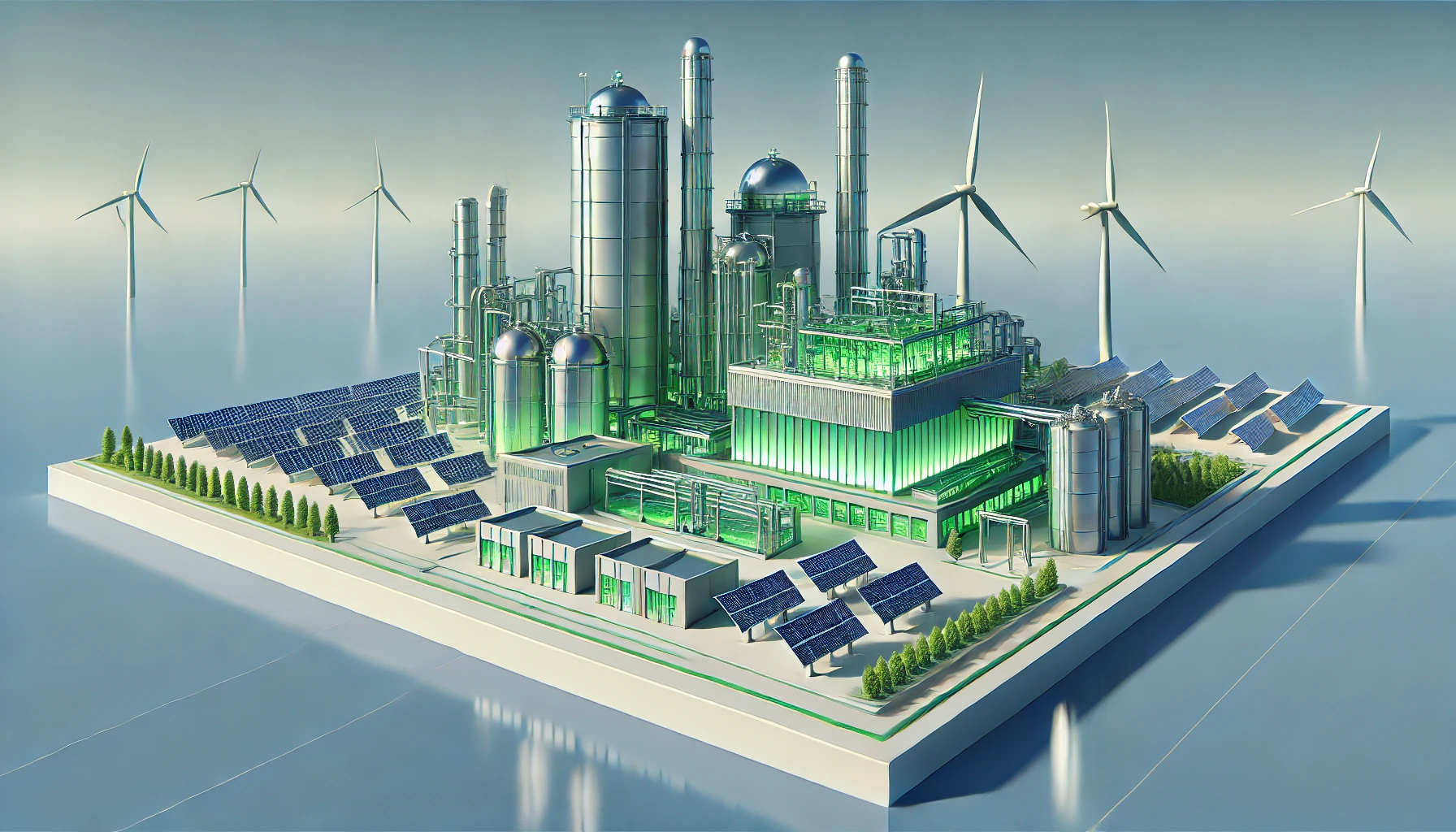
We utilize renewable energy sources (wind, solar, hydroelectric, etc.) to produce hydrogen through water electrolysis, and then synthesize ammonia.
This method is considered to have the lowest environmental impact as it does not emit any CO2.
Currently, many countries are aiming to expand green ammonia production and are conducting large-scale demonstration projects. However, production costs remain high and it is necessary to establish a renewable energy supply system.
Future technological innovations are expected to reduce costs and enable large-scale adoption.
Various types of environmental impacts
There are three types of ammonia: grey, blue, and green, each with a different environmental impact.
Below we will explain each type of environmental impact in more detail.
The environmental impact of grey ammonia
Grey ammonia is produced using natural gas, a fossil fuel, and the manufacturing process emits large amounts of CO2.
It is said that approximately 1.6 to 1.8 tons of CO2 are produced when producing 1 ton of ammonia, which poses a major challenge in achieving carbon neutrality.
Currently, technologies to reduce emissions are being developed, but a transition to green ammonia is required to fundamentally reduce the environmental impact.
The environmental impact of blue ammonia
Blue ammonia reduces CO2 emissions by applying CCUS (Carbon Capture, Utilization and Storage) technology to the gray ammonia production process.
By capturing and storing emitted CO2, it is possible to effectively reduce emissions.
However, in this case, it will not be possible to achieve completely zero CO2 emissions, and the cost of capture technology and the development of infrastructure remain issues.
Still, it is seen as an effective short-term decarbonization strategy.
The environmental impact of green ammonia
The greatest feature of green ammonia is that it is produced using renewable energy, reducing CO2 emissions to zero.
It is expected to be a means of sustainable energy supply, as hydrogen is produced through electrolysis using wind and solar power, and then used to synthesize ammonia.
However, costs are currently high and further technological innovation and policy support are needed for widespread commercial adoption.
Strategies required by companies
As companies move towards decarbonization, they need to think strategically about how to position their ammonia use.
In the short term, the use of blue ammonia, which can reduce CO2 emissions, is a realistic option, but in the long term, it seems likely that a transition to green ammonia will be required.
Policy support and investment promotion will be key, and companies will likely be required to take measures with an eye toward sustainable growth.
Short-term strategy: Utilizing blue ammonia
Blue ammonia is suitable as a short-term transitional measure because it can reduce the environmental impact compared to grey ammonia by utilizing CCUS technology.
In particular, it is an easy option for companies to adopt because it allows them to reduce CO2 emissions while utilizing existing infrastructure.
Long-term strategy: Transitioning to green ammonia
Because green ammonia is produced entirely using renewable energy, we believe it will contribute to the realization of a decarbonized society.
However, high costs and the need to develop supply infrastructure remain issues, calling for support through investment from governments and companies.
For companies looking to operate sustainably, the future will require a transition to green ammonia.
Environmental investment and stakeholder relations
Companies will need to consider using ammonia not only to reduce their environmental impact, but also from the perspective of ESG investment.
As investor and consumer interest grows, companies are being asked to act transparently in their environmental efforts.
By clarifying a sustainable energy strategy, it is believed possible to gain the trust of stakeholders and increase corporate value.
The relationship between ammonia and hydrogen
As mentioned above, ammonia (chemical formula: NH3) is attracting attention as a carrier that can efficiently store and transport hydrogen.
Hydrogen is lightweight and must be stored at high pressure and low temperature, but by converting it into ammonia it is possible to solve the issues of transportation and storage.
Ammonia as a hydrogen carrier
It is difficult to transport hydrogen over long distances as it is, but if it is stored in the form of ammonia, its energy density increases and stable transportation becomes possible.
In particular, with a view to realizing a hydrogen society, the use of ammonia is being promoted as a means of efficiently storing and transporting hydrogen, and more is planned to be promoted.
Ammonia supports the spread of hydrogen energy
Currently, the introduction of hydrogen energy is being promoted in countries around the world, and the use of ammonia as a hydrogen carrier is important in establishing the supply network.
In particular, efforts are underway in Japan and Europe to build hydrogen supply networks that use green ammonia.
Ammonia as a fuel
In recent years, technology for directly burning ammonia has also been developed.
This will make it possible to use it directly as fuel in ships and power plants, which is expected to achieve further decarbonization.
summary
Ammonia is expected to be an important energy source toward realizing a decarbonized society.
As mentioned above, the environmental impact of ammonia varies greatly depending on the type, and in the short term, it is necessary to utilize blue ammonia, and in the long term, to transition to green ammonia.
Companies need to develop sustainable energy strategies and take environmental measures in a way that meets the expectations of investors and consumers. In addition, the storage and transportation of ammonia is likely to play an important role in realizing a hydrogen society.
It is expected that the utilization of ammonia will be further promoted in the future through policy support and technological innovation.








comment