Introduction
Now let's think about aggregation.
As renewable energy has become more widespread in recent years, maintaining the stability of the power grid has become a major issue.
One innovative solution to this problem that has been gaining attention is the "aggregation business." Below, we will explain as briefly as possible the basic concept of the aggregation business, its relationship with renewable energy, regulatory trends, and its contribution to power grid stabilization.
The intended readers are those who are not very familiar with the aggregation business.
For this reason, this may not be enough for those who are already involved in the aggregation business, but please bear with us.
What is the aggregation business?
The aggregation business is a business model that bundles distributed energy resources (DERs) and provides integrated management and control.
Aggregation means "collection," which basically means to gather or put together.
In an article published by Environmental Business that I always read, entitled "The era of using electricity wisely -- the expanding market for aggregation services," there was a diagram that explained the basic structure of the business, so I would like to quote it here.
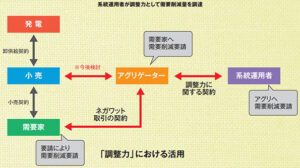
DERs include renewable energy sources such as solar and wind power, storage batteries, electric vehicles (EVs), and even consumer power saving capabilities (demand response).
"Aggregators" play a central role in this business.
Aggregators use IoT (Internet of Things) and AI technologies to make many small energy resources function virtually like one large power plant.
This is called a Virtual Power Plant.
The aggregation business also contributes to disaster prevention and response. The use of DERs enables early restoration of power outages and the interchange of power between regions, thereby contributing to improved resilience.
The relationship between renewable energy and aggregation business
Renewable energy sources, particularly solar and wind power, have an unavoidable challenge in overcoming instability because their output depends on external factors such as the time of day and weather.
Aggregation technology plays a key role in overcoming this challenge.
Specifically, by bundling multiple renewable energy sources (aggregation) and managing them in an integrated manner, individual fluctuations can be offset, making it possible to provide a stable supply overall.
For example, in Japan, the combination of solar and wind power generation has been shown to reduce the risk of weather fluctuations between regions, improving the accuracy of power generation forecasts and reducing imbalances.
It has also been reported that a forecasting model using advanced AI technology can keep the error in power generation forecasts up to 48 hours in advance to within 3%.
Regulatory trends surrounding aggregation business
In Japan, the Ministry of Economy, Trade and Industry has formulated the " Guidelines for Energy Resource Aggregation Business " to support market formation and promote business participation.
The guidelines clarify the rules for sharing information between retailers and consumers, as well as the conditions for participating in the supply and demand adjustment market.
Furthermore, new regulations have been introduced, such as the mandatory reporting of demand response implementation due to amendments to the Energy Conservation Act and the DRready system for low-voltage customers.
These are expected to promote the use of small-scale resources such as home storage batteries and EVs, leading to the expansion of the distributed energy market.
Contributing to power grid stabilization through aggregation business
A major role expected of aggregation is to stabilise the power grid.
Although it is generally said that it contributes to the stabilization of the power grid, there are several ways in which it contributes, which will be explained below.
Supply and demand adjustment mechanism
Aggregators integrate and control distributed energy resources, making it more efficient to balance supply and demand.
For example, by combining large-scale renewable energy facilities with battery storage facilities, it is possible to provide high balancing power in the supply and demand adjustment market.
The supply and demand adjustment mechanism of the aggregation business is to stabilize the grid by adjusting the supply and demand balance.
Disaster Resilience
In the event of a disaster, this will enable emergency power supply from EVs and storage batteries to important facilities, making a significant contribution to disaster prevention.
A system that can supply power continuously for 72 hours during a power outage has been demonstrated in the Tokyo Electric Power Company service area.
The aggregation business contributes to stabilizing the grid by making it possible to put in place a system to supply electricity within the range where transmission is possible during a disaster.
summary
I have given a brief explanation of the aggregation business.
The aggregation business is essential in solving the two issues of expanding the use of renewable energy and stabilizing the power grid.
It is expected that their role will continue to expand as the regulatory environment improves and technological innovation continues.
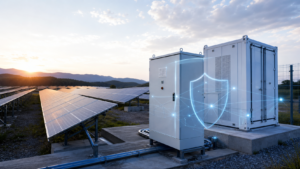
On the other hand, since aggregation is also a crystallization of things like IoT and AI, new challenges such as cybersecurity will also need to be addressed.


comment