Introduction
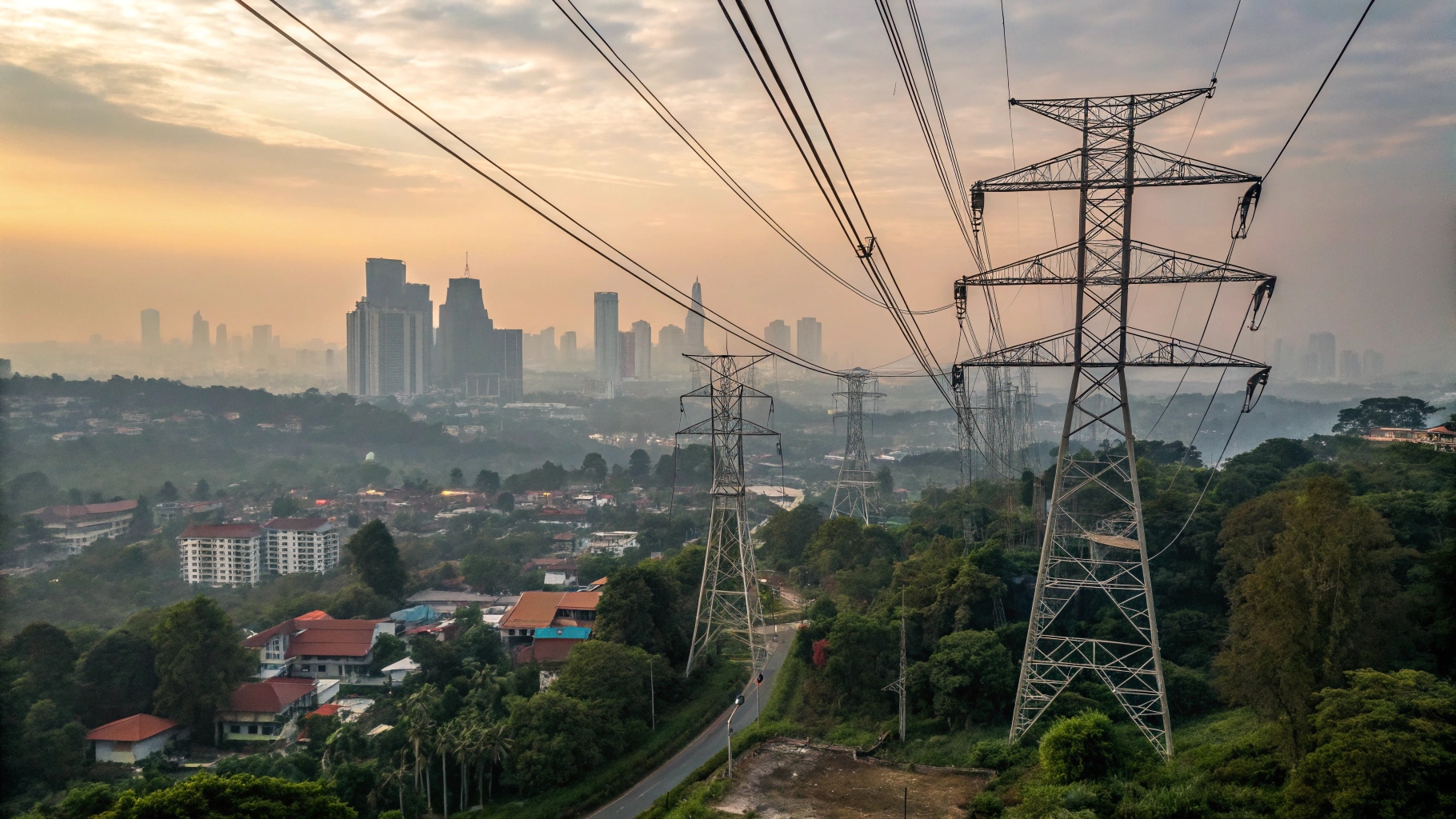
This time, we will explain Indonesia's new regulations regarding renewable energy.
As part of this latest move, Ministry of Energy and Mineral Resources Regulation No. 5 of 2025 (PM ESDM 5/2025, hereinafter referred to as "this Regulation"), which came into effect on March 4, 2025, regulates power purchase agreements (Perjanjian Jual Beli Listrik, abbreviated as "PJBL" in Indonesia, but commonly used in the industry as "PPA") for renewable energy power plants.
This regulation is likely to have some backlash, with some people already voicing their opposition, so we will explain the outline of the regulation and its future impact below.
This is the author's understanding and may not be correct in reality, but the actual background to the establishment of rules such as these is believed to be as follows.
In Indonesia, it appears that there is a strong demand from the government to proceed with the broad framework for promoting renewable energy as a given.
According to this direction, even though state-owned power companies have a monopoly on retail, corporate PPAs are likely to proceed not only with virtual but also physical PPAs. This direction, especially the direction of proceeding with physical PPAs, could put pressure on PLN's (Perusahaan Terbatas Perusahaan Listrik Negara (Perusahaan Perseroan)) profits unless fees or wheeling charges are set high.
At the same time, it is necessary to secure PLN's interests and profits, and even more so, to ensure the survival of the organization itself.
The Indonesian government appears to be faced with the difficult task of balancing these two requests.
I feel that we can get a glimpse of how these adjustments are being made in the deposit system, which I will explain below.
Basic information about the Regulations
This regulation was enacted with the aim of promoting the spread of renewable energy and stipulates standards for contracts between power generation companies and PLN.
In particular, it stipulates important elements such as price adjustments and contract periods, aiming to improve the stability of the power supply while reducing risks for operators.
Official name
Regulation of the Ministry of Energy and Mineral Resources of the Republic of Indonesia No. 5 (2025) – Guidelines on Power Purchase Contracts (PJBL) from Power Plants Using Renewable Energy Sources (PERATURAN MENTERI ENERGI DAN SUMBER DAYA MINERAL REPUBLIK INDONESIA NOMOR 5 TAHUN 2025)
Effective Date
March 4, 2025
Repeal of rules
Related regulations including Ministerial Order No. 10 of 2017
Target renewable energy sources
This regulation stipulates the scope of renewable energy that will be covered.
In addition to the renewable energies that have traditionally been covered, waste-to-energy generation has been newly added, promoting the use of a wider range of energy sources.
Existing target energy
– Geothermal power – Hydroelectric power – Solar power – Wind power – Biomass power – Biogas power – Marine energy power – Biofuel power
Newly added: Waste-to-energy (garbage power generation)
This regulation officially adds "waste-to-energy" to the scope of renewable energy (Article 3(2)).
The aim is to simultaneously solve both the urban waste disposal problems and the energy supply issues.
Key terms of the PPA
Contents of the PPA
The rules set out detailed standards for PPAs.
This is expected to standardize the content of contracts between power generation companies and the power company, PLN, and improve the transparency of contract negotiations.
Some of the provisions related to the PPA are as follows:
| project | content | Article |
|---|---|---|
| Contract Period | Maximum 30 years (starting from COD), extendable | Article 5 |
| Price Adjustment | Dealing with exchange rate fluctuations and tax system changes | Article 28 |
| Domestic product obligations | Compliant with current laws (minimum procurement rate clearly stated) | Article 33 |
| Environmental Value | Provisions for attribution of environmental values such as carbon credits | Article 34 |
According to Article 4, paragraph 1 of the Regulations, the matters that must be specified in the PPA are as follows:
a. PPA period
b. Rights and Obligations of Generators and PLN
c. Allocation of Risk
d. Project performance guarantee
e. Commissioning and COD
f. Certification of power equipment
g. Electricity trading
h. Power system operation and management
i. Power plant performance
j. Termination of PPA
k. Assignment of Rights
l. Prices and price adjustment terms
m. Dispute Resolution
n.Force Majeure
o. Use of domestic products
p. Environmental attributes or economic value of carbon
q. Refinancing
r. PPA Language
This shows the commitment to sticking to regulations that previous governments have imposed, such as the use of domestically produced products and language rules.
Environmental Value
This article clarifies who owns the rights to environmental values generated by renewable energy power generation.
The rights in question are:
| Japanese Name | Abbreviation (Japanese) | English name | Abbreviation (English) | Indonesian name | Abbreviation (ID) |
|---|---|---|---|---|---|
| Carbon Credits | CC | Carbon Credits | CC | Carbon Credits | KK |
| Renewable Energy Certificate | REC | Renewable Energy Certificate | REC | EBT Certificate | SET |
| Green Label | GL | Green Label | GL | Green Label | LH |
| Other tradable rights | OTR | Other Tradable Rights | OTR | Traded Rights | LENGTH |
| Greenhouse gas reduction benefits | GHG-RB | Greenhouse Gas Reduction Benefits | GHG-RB | Benefits of Emission Reduction | AND |
The principles regarding the attribution of environmental values are set out in Article 34, Paragraphs 2 to 4 of the Regulations, as follows:
Legislation takes precedence
Existing laws (e.g. Carbon Economic Value Act No. 12/2023) take precedence
Freedom of contract
Undeveloped areas are based on the agreement of the parties through PPA
Ensuring flexibility
The system should be able to accommodate new types of environmental rights.
Obligations of power generation companies
These regulations stipulate the obligations that power generation companies must comply with.
Emphasis is placed on deposit systems and performance maintenance obligations to ensure the stable operation of renewable energy projects.
This deposit system is likely to have a major impact on power generation companies as well.
Deposit a maximum of 10% of the total project cost to PLN
Obligation to maintain performance (Articles 22 to 24)
Penalties when Performance Ratio (PR) falls below a certain level
Obligation to update storage batteries (Article 40)
When the battery reaches the end of its life, it must be replaced with a new one.
PLN Obligations
Specifically:
- To purchase electricity generated by the power producers during the term of the PPA, as provided for in the PPA; - To pay for electricity not absorbed due to pseudo-transmission in certain circumstances of PLN, under the grace period applicable under the PPA; - To maintain and preserve the reliability of the power grid facilities in order to receive electricity from the power producers.
PLN is required to give priority to renewable energy generation and take into account compliance with grid operation regulations and distribution regulations when planning and executing grid operations.
Impact of the implementation of the regulations and responses
Therefore, if power generation companies are assuming that their PPAs will be renewed, this could have an impact on their business schemes and revenue models.
This regulation is a comprehensive set of rules aimed at accelerating the introduction of renewable energy and improving the investment environment.
Specifically, it is important to pay close attention to preferential treatment for renewable energy connections and clarification of the handling of carbon credits.
In addition, compliance with these rules will be mandatory for power generation companies that plan to enter into PPAs in the future, as well as those that are considering renewing existing PPAs, so it is important that they fully understand these rules.
Appendix: Summary of Provisions
Below, we will set out the contents of these rules in the order of their provisions.
In the text above, we use abbreviations commonly used in the industry, such as PPA, but below we use the Indonesian abbreviations.
Definition (Pasal 1)
Key terms have been clarified. For example:
Renewable Energy (Energi Terbarukan): Energy obtained from renewable sources.
Power Generation Company (Pengembang Pembangkit Listrik – PPL): An electricity supplier that enters into a power purchase agreement with PT PLN.
Power Purchase Agreement (Perjanjian Jual Beli Tenaga Listrik – PJBL): Power Purchase Agreement between PPL and PT PLN.
Commercial Operation Date (Tanggal Operasi Komersial – COD): The date when the power plant starts supplying electricity to the PT PLN power grid.
Availability Factor (Faktor Ketersediaan – AF): The ratio between the amount of electricity taken or deemed taken by PT PLN and the maximum generating capacity of the power plant.
Contracted Energy Quantity (Energi yang Diperjanjikan – CE): The amount of energy to be generated during the period agreed upon by PJBL.
Dispatcher: PT PLN's power system operation and control department.
Deemed Dispatch: A situation in which electricity is deemed to be dispatched to the PT PLN grid under certain conditions, even though PPL's power plants are in operation.
Deemed Commissioning: A state in which a PPL power plant is deemed to have been tested and commissioned in accordance with the conditions agreed upon by PJBL.
Liquidated Damage: Penalty for delay in COD.
Scope (Pasal 3)
The regulation applies to power plants that use the following renewable energy sources:
GeothermalHydroPhotovoltaic (PV)
Wind Biomass Biogas Marine Energy Biofuel Waste-based Solar, wind and marine energy plants can be equipped with batteries or other energy storage.
Key Provisions of the Power Purchase Agreement (PJBL) (Pasal 4)
It sets out at least the main provisions that should be included in the PJBL.
Contract Period
Rights and Obligations of PPL and PT PLN Risk Allocation Project Execution Assurance Commissioning and COD
Certification of power equipment Power trading Power system operation and control Power plant performance
Termination of PJBL Rights Transfer Price and Price Adjustment Terms Dispute Resolution Force Majeure Use of Domestic Products Environmental Attributes or Carbon Credits Refinancing
In case of purchase of PJBL language surplus power, provisions relating to project execution guarantee, commissioning and COD, transfer of rights and use of domestic products are exempted.
Contract Period (Pasal 5)
The contract period for PJBL is a maximum of 30 years from the COD, and can be extended without considering the initial investment cost. The contract period will be determined by PT PLN taking into consideration the economic viability of the project and the type of power plant. The power purchase price at the time of extension will refer to the highest base price (staging 2) from the 10th year after the start of the contract.
Construction and operation form (Pasal 6)
In principle, PJBL constructs and operates power plants on a Build-Own-Operate (BOO) model, but other configurations are also possible based on agreement between the parties and taking into account the type of power plant.
Risk Allocation (Pasal 9)
The risks borne by PPL and PT PLN respectively are clearly stated.
PT PLN Burden Risks: Electricity demand, grid readiness and capacity, and exchange rate fluctuations.
PPL Risks: Land acquisition, permits (including environmental permits and spatial compatibility), construction schedule delays, currency convertibility, power plant performance, and the availability and cost of biomass, biogas, biofuels and fuel for geothermal power plants.
Project Execution Guarantee (Pasal 10)
The project execution guarantee provided by PPL to PT PLN is set at up to 10% of the total project cost of the power plant.
Delay in Commercial Operation (COD) and Late Charges (Pasal 14)
If PPL's power plant is late in COD and is not in deemed commissioning status, late payment penalties will be levied under PJBL. Late payment penalties are calculated according to the number of days of delay, with a maximum period of 180 calendar days. On the other hand, if COD is late due to certain reasons on the part of PT PLN and PPL's power plant is in deemed commissioning status, PPL will be entitled to payment of electricity tariffs based on deemed COD.
Electricity Trading (Pasal 16-19)
PT PLN is obliged to purchase power based on the contracted energy (CE) or availability factor (AF) as stipulated in the PJBL. Power in excess of the contracted amount can be purchased under certain conditions (up to the maximum installed capacity and at a price of up to 80%). In addition, power in excess of the installed capacity can be purchased at the lowest price and according to grid demand (up to a maximum of 30% of CE or AF) to optimize the plant.
In the event of deemed transmission, PT PLN is obligated to pay for the electricity not transmitted based on the grace period set out in the PJBL. In the event that PPL's transmission volume falls below the contracted volume (other than due to deemed transmission), PPL is obligated to pay a penalty to PT PLN.
Payment for the purchase of electricity will, in principle, be made in Indonesian rupiah, and the Jakarta Interbank Spot Dollar Rate (JISDOR) of the day before the payment date will be applied.
Power System Operation and Control (Pasal 20-21)
To ensure the reliability of the power grid, the dispatcher coordinates the operation of power plants in accordance with the Grid Code and Distribution Code. The planning and execution of grid operations will give priority to renewable energy generation and take into account compliance with the Grid Code and Distribution Code. It will also take into account the operational coordination matters agreed between PT PLN and PPL at PJBL.
Power Plant Performance (Pasal 22-24)
The performance of a power plant is evaluated based on availability factor (AF), contract energy (CE), performance ratio, and other technical criteria, and if it does not meet the criteria set out in the PJBL, a penalty is imposed on the PPL (except in cases where the cause is deemed transmission). The types of penalties include those related to AF or CE, reactive power (VAR), frequency, and load ramp rate.
End of PJBL (Pasal 25)
PJBL may be terminated due to the expiration of the contract term, unilateral termination due to non-performance of the contract, failure to secure financing, bankruptcy or liquidation of PPL, force majeure, or other conditions agreed upon by PJBL. PT PLN has the right to terminate PJBL if the late payment penalty reaches the upper limit.
Transfer of Rights (Pasal 26-27)
In principle, PPL is prohibited from transferring its shares until the plant reaches COD, except for transfers to directly owned 90% or more affiliates, or transfers based on step-in rights granted to lenders in the event of PPL's default, which may be made with the written consent of PT PLN. Transfers of shares in geothermal plants are subject to the relevant geothermal legislation.
Prices and Price Adjustments (Pasal 28-29)
Adjustments to the electricity purchase price are possible in the event of changes in taxes, levies, environmental charges, obligations on non-tax revenues, or other terms agreed in the PJBL. For renewable energy plants that refer to the maximum reference price, the adjusted price must be equal to or less than the maximum reference price and requires the Minister's approval. If not based on the maximum reference price, the price is based on the agreed price and requires the Minister's approval. If a price is specified in the initial trading agreement for a geothermal plant, the price can be adjusted taking into account the results of the geothermal exploration and the maximum reference price.
Dispute Resolution (Pasal 30-31)
Any dispute between PT PLN and PPL will first be resolved amicably through negotiation within 30 calendar days. If no agreement is reached, the dispute will be resolved through a national court or arbitration institution. In case of arbitration, the appointment of the arbitrator and the procedure will be set out in PJBL.
Force Majeure (Pasal 32)
PT PLN and PPL are relieved of their obligations in the event of force majeure. Force majeure includes war, civil war, volcanic eruption, fire, flood, earthquake, pandemic, epidemic, endemic disease, landslide, natural disaster, uncontrollable events, discovery of hazardous materials or historical artifacts at the power plant or related facilities, etc. Force majeure is recognized based on the decision of the relevant agency. The Minister may recognize other events related to the technical execution of the project as force majeure. If force majeure causes delays in COD or the generated electricity cannot be transmitted, the period of PJBL may be extended depending on the duration of force majeure and the necessary repair period.
Use of domestic products (Pasal 33)
The use of domestic products in renewable energy power plants will be carried out in accordance with relevant laws and regulations.
Environmental attributes or carbon credits (Pasal 34)
Rights regarding environmental attributes or carbon credits of renewable energy power plants (such as carbon credits, renewable energy certificates, green labels, other tradable rights, benefits from greenhouse gas emission reductions, etc.) shall be exercised in accordance with relevant legislation or, in the absence of relevant legislation, shall be determined by agreement between the parties and set out in the PJBL.
Refinance (Pasal 35)
PPL may refinance with lenders to optimize its renewable energy power generation business. When refinancing, PPL must notify PT PLN.
Intermittent renewable energy generation (Pasal 38-40)
Power producers using intermittent renewable energy sources (solar, wind, marine energy) are required to submit monthly and annual energy production forecasts to PT PLN. In case of the installation of batteries or other energy storage facilities, the power purchase and sale transactions are calculated based on the energy from both the power plant and the storage facility. PPL is responsible for replacing end-of-life batteries or energy storage facilities with newer equivalent or better technology.
Supervision and Reporting (Pasal 41-45)
The Minister of Energy and Mineral Resources will oversee the implementation of the PJBL and compliance with its provisions. PT PLN is required to report to the Minister within five business days of the PJBL being signed on its purchase of electricity from renewable energy sources. It is also required to report to the Minister every six months until the COD on the progress of construction and the use of domestic products.
Transitional Measures (Pasal 48-50)
PJBLs concluded before the enforcement of these Regulations will remain valid until their expiration. However, if they are extended, the provisions of these Regulations will apply. For bidding procedures that began before the enforcement of these Regulations, the PJBL provisions of the old law will apply. PJBLs concluded before the enforcement of these Regulations can also apply the excess power purchase and power purchase provisions for power plant optimization of these Regulations by means of an additional contract.
Repeal of existing regulations (Pasal 52)
The Minister of Energy and Mineral Resources Regulation No. 10 of 2017 and its amendments are hereby repealed upon the coming into force of this Regulation.







comment