✅ Roughly speaking
📊 By 2030, global data center power consumption will double to the equivalent of the entire country of Japan — IEA predicts 945 TWh, one ChatGPT transaction consumes 10 times the amount of electricity as a Google search 🌍 RE100 and Scope 2 reductions have become a "condition for survival" for companies — Amazon has over 30GW of renewable energy contracts, Microsoft has over 20GW, and they risk being excluded from ESG investments ⚡ Immersion cooling successfully reduces power consumption by 94% — KDDI demonstration experiment achieves PUE of 1.05, technological innovation is key to energy savings 🇯🇵 Ishikari City in Hokkaido becomes model case for "renewable energy x DC" — 3.6GW renewable energy plan attracts domestic and international companies due to cold climate benefits
Introduction
This time, we will explain the topic of " Why does renewable energy become necessary as the number of data centers increases ?", including legal and practical perspectives.
The other day, I received a general consultation from a company interested in investing in data centers, and this topic came up, so I thought it would be a good topic to discuss.
Behind the scenes, data centers operate 24 hours a day, 365 days a year, for the digital services we use every day, such as ChatGPT, Google search, and video streaming.
However, it seems that it is not widely known that the rapid spread of generative AI has led to an explosive increase in the electricity consumption of these data centers, posing a serious challenge for energy policy.
According to a report titled " Energy and AI " published by the International Energy Agency (IEA) in April 2025, global electricity consumption by data centers is expected to reach approximately 945 TWh (terawatt-hours) by 2030, doubling from 2024 levels.
This is slightly more than Japan's current total annual electricity consumption (approximately 900-950 TWh).
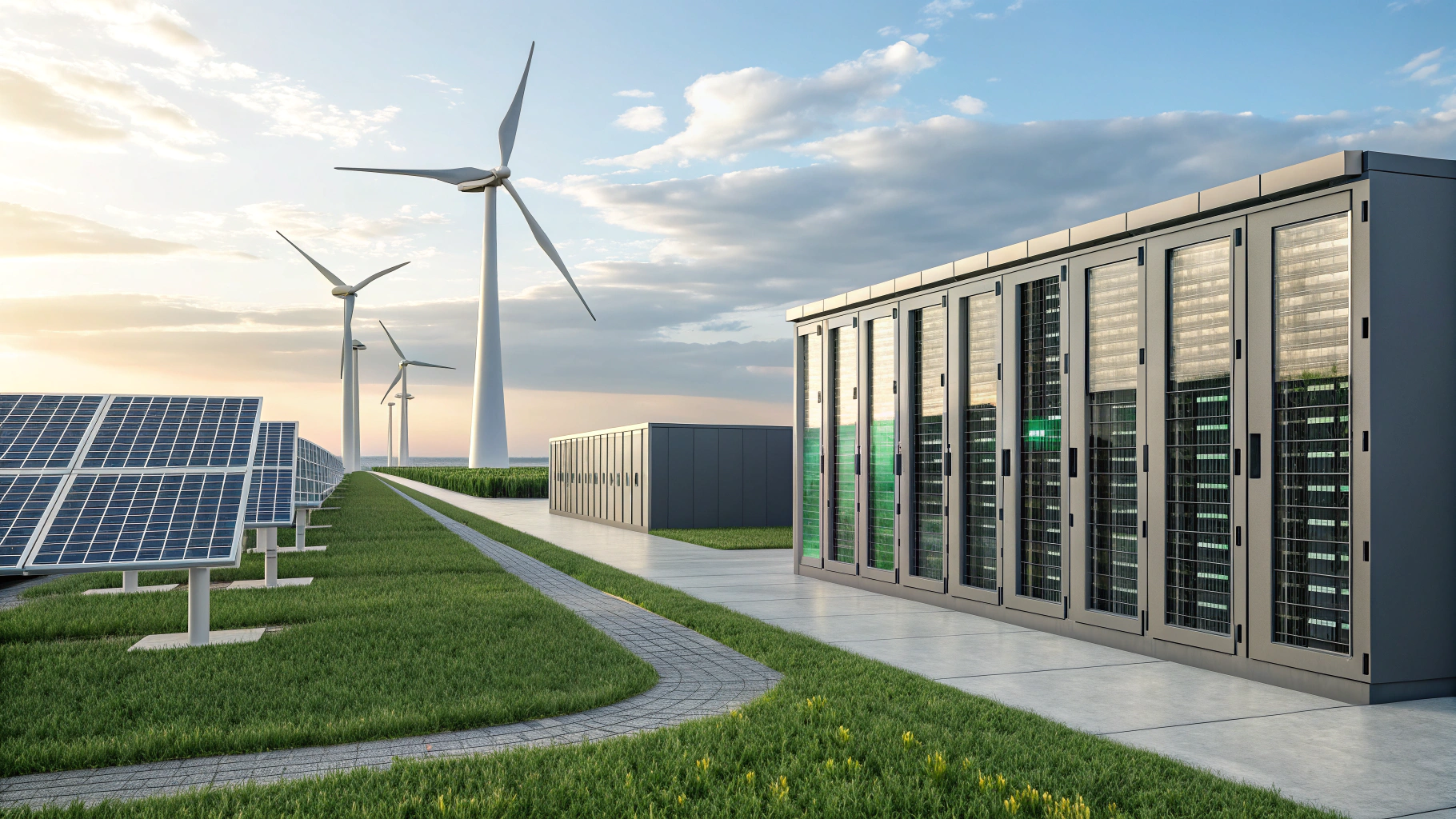
Under these circumstances, procuring renewable energy is becoming a de facto "requirement" for data center operators.
Procuring renewable energy is not just an environmental consideration; it is also essential for companies to participate in RE100 (Renewable Energy 100%: an international initiative that declares that 100% of electricity consumption will be covered by renewable energy), respond to ESG (Environment, Social, Governance) investments, and maintain their international competitiveness.
This time, I would like to analyze this issue from multiple angles and explain the strategies of global companies, technological responses, and trends within Japan based on as much concrete data as possible.
Actual state of data center power consumption
By 2030, data centers will consume as much electricity as the entire country of Japan
According to the aforementioned IEA report, the world's electricity consumption for data centers is estimated to be approximately 415 TWh as of 2024, but this is expected to double to approximately 945 TWh by 2030.
This increase alone will be equivalent to Japan's current total annual electricity consumption.
The situation is even more urgent within Japan. According to multiple studies, power consumption by data centers in Japan is expected to roughly triple from 19 TWh in 2024 to 57-66 TWh by 2034. This is equivalent to the annual power consumption of approximately 15-18 million average households, and peak power demand is predicted to reach 6.6-7.7 GW (gigawatts). This scale will account for approximately 4% of Japan's total peak load, and the impact on the power supply system is likely to be significant.
ChatGPT: A single question consumes 10 times more energy than a Google search
The biggest factor behind this explosion in electricity demand is thought to be the spread of generative AI.
According to a report in the Nihon Keizai Shimbun (June 2025), the power consumed to ask a question and get an answer on ChatGPT is approximately 2.9 Wh (watt-hours), which is approximately 10 times the power consumed by a single Google search (approximately 0.3 Wh).
While traditional search engines simply search for relevant pages from existing indexes, generative AI runs neural networks with a huge number of parameters in real time to generate sentences.
The complexity of this calculation process is reflected in the difference in power consumption.
In fact, survey results have shown that in some parts of the United States, increased power demand from data centers is causing average household electricity bills to rise by 6 to 7 percent annually.
One data center consumes as much electricity as a small city
I would also like to briefly touch on the scale of large data centers (Hyperscale Data Centers).
According to documents from the Japan Oil, Gas and Metals National Corporation (JOGMEC), the power consumption per typical data center is approximately 50MW.
This is equivalent to the contracted capacity of approximately 10,000 to 16,000 average households, and is comparable to the electricity used by an entire regional city with a population of 30,000.
There are also concerns about the impact on the grid if such large-scale electricity demand is concentrated in a specific area.
According to a document from the Ministry of Economy, Trade and Industry (June 2024), approximately 80% of data centers in Japan are concentrated in the Tokyo and Osaka areas, creating a regional electricity supply and demand shortage.
Why renewable energy is essential — 5 structural reasons
So why do data centers need renewable energy?
It is believed that there are structural reasons that cannot be explained solely by environmental considerations.
Reason 1: Thermal power plants cause rapid carbon emissions, which contradicts climate goals
First of all, there is the issue of consistency with climate change measures.
If the increased electricity demand for data centers by 2030 (approximately 530 TWh) were to be met entirely by coal-fired power plants, it is estimated that CO₂ emissions would increase by more than 500 million tons per year.
This is equivalent to about half of Japan's total annual emissions (approximately 1.1 billion tons), and could make it virtually impossible for countries to achieve their climate targets under the Paris Agreement.
The GHG Protocol is widely adopted internationally as the standard for calculating and reporting greenhouse gas (GHG) emissions by companies.
In particular, reducing Scope 2 emissions (indirect emissions associated with the use of electricity, heat, and steam supplied by other companies) is likely to be the most important issue for data center operators.
Reason 2: RE100 and Scope 2 reductions — a "condition for survival" for companies
Second, compliance with international initiatives is becoming a de facto "requirement for entry."
RE100 is an international initiative run by The Climate Group and CDP (Carbon Disclosure Project), in which participating companies declare that they will source 100% of their electricity from renewable energy sources and are required to report their progress annually.
According to documents from the Ministry of the Environment (September 2025), as of November 2025, 444 companies worldwide, including 94 from Japan, will participate in RE100. Participating companies include global IT companies such as Apple, Google, Microsoft, and Meta (Facebook), suggesting that renewable energy procurement has become a "standard specification" for data center businesses.
Of particular importance is the risk that companies that do not adopt renewable energy will be excluded from ESG investments. GPIF (Government Pension Investment Fund), the world's largest pension fund, manages approximately 6 trillion yen using ESG indices, and companies that do not adequately address climate change may be excluded from investment targets. Risks such as institutional investors withdrawing investments and business partners excluding them from the supply chain are considered to be serious threats to corporate management.
Reason 3: Corporate PPAs — Renewable energy is more economical in the long term
Thirdly, there is the perspective of economic rationality. The conventional perception that renewable energy is expensive is not necessarily accurate.
In recent years, corporate PPAs (Corporate Power Purchase Agreements: a system in which companies purchase renewable energy electricity directly from power generation companies under long-term contracts) have been expanding rapidly.
According to BloombergNEF data , 46 GW of corporate PPA agreements will be signed globally in 2023, up 12% from 41 GW the previous year.
This is said to be the highest level ever.
The biggest advantage of a corporate PPA is the reduction of the risk of price fluctuations due to the long-term fixed price.
Purchasing from traditional power companies exposes you to the risk of fluctuations in fossil fuel prices, but PPAs offer greater predictability in electricity costs through long-term contracts, typically of 10 to 20 years.
Additionally, according to data from the International Renewable Energy Agency (IRENA), the levelized cost of energy (LCOE) for solar power will fall by approximately 89% between 2010 and 2022, which suggests that the economic competitiveness of renewable energy has improved significantly.
Reason 4: To prevent strain on the local power grid
Fourth, there is the perspective of mitigating the impact on the power grid.
The concentration of data centers places a heavy burden on the local power grid.
As mentioned above, 80% of data centers in Japan are concentrated in the Tokyo and Osaka areas, and there are concerns about a sudden increase in electricity demand in certain areas.
In response to this issue, the Ministry of Economy, Trade and Industry and the Ministry of Internal Affairs and Communications published the " Interim Report 3.0 of the Expert Meeting on Digital Infrastructure (Data Centers, etc.) Development " in October 2024, which presented a concept for regionally distributed data centers, with securing energy, including renewable energy procurement, as one of the location requirements.
Specifically, the government has outlined a policy to promote the location of plants in areas with abundant renewable energy resources, such as Hokkaido, Tohoku, and Kyushu, and to reduce the burden on existing power transmission and distribution networks by combining this with the development of renewable energy sources near the grid (off-site PPA).
In particular, locating the facility in a cold region is expected to bring the secondary benefit of improved cooling efficiency.
Reason 5: International competitiveness — "ability to procure renewable energy" is a location condition
Fifth, there is the perspective of international competitiveness.
When global companies decide on the location of their data centers, the possibility of procuring renewable energy appears to be the most important factor.
A document titled " On Electricity Demand " by the Ministry of Economy, Trade and Industry's Comprehensive Resources and Energy Advisory Committee (June 2024) reported that foreign companies operating data centers have expressed concerns such as "large-scale PPAs are limited in Japan compared to other countries" and "the development of new renewable energy sources is stagnating."
In fact, as will be discussed later, global companies such as Amazon, Google (Alphabet), and Microsoft are actively procuring renewable energy in Japan, but the size of Japan's PPA market is currently small compared to other countries. The development of a renewable energy procurement environment is expected to be a source of competitiveness in attracting data center investment.
The Grand Strategy of Global IT Companies
Next, we will look at some specific examples of how global IT companies are procuring renewable energy.
Amazon — the world's largest renewable energy buyer
Amazon signed 8.8 GW of new PPA agreements in 2023, making it the world's largest corporate renewable energy buyer for the fourth consecutive year.
The cumulative renewable energy contract volume is said to be over 30GW, with contracts in place in 16 countries.
Amazon is a participating company in RE100, as mentioned above.
In Japan, the company has partnered with Mitsubishi Corporation to announce plans to develop solar power plants at approximately 450 locations in the Tokyo metropolitan area and Tohoku region.
The power generation capacity is said to be approximately 22MW, which is reported to be the largest corporate PPA in Japan.
The company plans to use this electricity in its own data centers.
Microsoft — Over 20GW of PPA agreements and investments in small nuclear reactors
Microsoft has signed PPA agreements for over 20GW worldwide and is working to secure power sources while simultaneously expanding its AI server fleet.
In Japan, it was reported that an additional renewable energy purchase agreement was signed with Natural Energy in October 2025.
Microsoft is also a participating company in RE100, as mentioned above.
According to BloombergNEF data, offsite PPA transactions in Asia Pacific are expected to reach 10.3GW in 2024, up 51% year-on-year, highlighting the rapid expansion of renewable energy procurement in the region.
Even more notably, Microsoft is also investing in the development of small modular reactors (SMRs).
According to an IEA report, major US IT companies are planning to develop SMRs with a combined capacity of more than 20GW, and are also considering the use of nuclear power beyond 2030.
Google (Alphabet) — The Challenge of "24/7 Carbon-Free Energy"
Google (Alphabet)'s goal is not simply "100% renewable energy," but " 24/7 Carbon-free Energy ."
This is an ambitious goal of achieving 100% renewable energy on an hourly basis, rather than an annual total, and we aim to achieve this by 2030.
Google (Alphabet) is also a participating company in RE100, as mentioned above.
In Japan, it was reported that in May 2024, JERA (a company formed by integrating the thermal power generation businesses of Tokyo Electric Power Company and Chubu Electric Power Company) and solar power developer West Holdings signed a 20-year renewable energy power purchase agreement.
The electricity will be supplied to data centers in Chiba and Ibaraki prefectures.
Meta (Facebook) and the current state of the corporate PPA market
Meta (Facebook) also has contracts for approximately 5.2 GW of off-site renewable energy, primarily solar, utilizing both its own operations and PPAs.
Meta (Facebook) is also a participating company in RE100, as mentioned above.
Looking at the volume of corporate PPA contracts by company in 2023, it is estimated that the top four companies (Amazon, Microsoft, Meta, and Google) alone will account for the majority of the global market.
It is clear that these global companies are leading the corporate PPA market.
Technological Innovation — The Challenge of Reducing Electricity Consumption
Along with procuring renewable energy, it is also important to make the data center itself more energy efficient. We will also look at technical measures to achieve this.
PUE — a measure of data center efficiency
PUE (Power Usage Effectiveness) is an international indicator used to measure the energy efficiency of data centers.
This is the value obtained by dividing the power consumption of the entire data center by the power consumption of the IT equipment, and the closer it is to 1.0, the more efficient it is.
The industry average PUE value for a typical data center is around 1.5 to 2.0.
The target value for green data centers is often set at PUE 1.3 or less.
In contrast, it has been reported that cutting-edge immersion cooling technology can achieve a PUE of 1.05 to 1.07.
Immersion Cooling — A Revolutionary Cooling Technology
With conventional air-cooling methods, it is said that 40 to 50% of a data center's power consumption is used for cooling.
Immersion cooling is a technology that has attracted attention as a solution to this issue.
Immersion cooling is a method in which the entire server is immersed in insulating cooling oil.
Liquids are said to have about 1,000 times the ability to absorb heat than air, eliminating the need for fans or large air conditioning equipment.
In a demonstration experiment conducted by KDDI, Mitsubishi Heavy Industries, and NEC Networks & System Integration in 2022, it was reported that a PUE value of 1.05 was achieved, successfully reducing cooling power consumption by 94% compared to conventional air cooling.
The Ministry of Economy, Trade and Industry also seems to be evaluating this technology as an "ultra-efficient cooling technology."
In addition to high cooling efficiency, the benefits of immersion cooling include quietness (no need for fans), dust resistance (no dust gets in), and high-density packaging (many servers can be installed in a small space).
However, there are still issues that need to be addressed, such as the need to change operation and maintenance methods, improve server manufacturer warranty systems, and build an ecosystem (expanding partners).
From air cooling to water cooling — a step-by-step approach to energy conservation
Immersion cooling is an innovative technology, but it also presents some challenges for adoption.
For this reason, a transition from air cooling to water cooling is being promoted as a more practical means of energy conservation.
In April 2025, Fujitsu, NIDEK, and Supermicro of the United States announced that they would collaborate to improve the energy efficiency of data centers (completely unrelated, but I wonder what will happen to NIDEK...at the time of writing this article, it is in the news for improper accounting...).
By utilizing water-cooling technology (a method of cooling equipment by circulating liquid), the company aims to reduce the amount of electricity required for cooling.
Generally, the average PUE value for air cooling is 1.6, and the average PUE value for water cooling is 1.2, so it is thought that water cooling can be expected to improve efficiency by approximately 25%.
Battery storage — Addressing renewable energy variability
Renewable energy sources are subject to variability, with solar power not generating electricity at night and wind power being affected by wind conditions.
The solution to this problem is storage batteries.
By combining a data center with a storage battery, it becomes possible to store electricity when there is a surplus of renewable energy and discharge it when there is a shortage.
Furthermore, by participating in the supply and demand adjustment market, it is thought possible to generate revenue while contributing to grid stabilization.
NTT has announced a concept called "Watt-Bit Collaboration," which aims to make effective use of renewable energy and optimize the balance of power supply and demand by flexibly controlling data center workloads and battery charging and discharging according to the renewable energy generation situation.
Japan's Challenges and Opportunities: Combining Regional Revitalization and Renewable Energy
Finally, let's look at efforts being made in Japan.
Ishikari City, Hokkaido — A model case of "renewable energy x data center"
The most notable case in Japan is Ishikari City, Hokkaido.
Ishikari City has three advantages: abundant renewable energy resources (3.6 GW of renewable energy generation is expected over the next 10 to 20 years), a cold climate (good cooling efficiency), and vast land area (enables the construction of large-scale data centers).
Major projects reported include Tokyu Land Corporation's Ishikari Renewable Energy Data Center No. 1 (scheduled for completion in March 2026, 100% renewable energy), Kyocera Communication Systems' Ishikari Data Center (operation to begin in October 2024, 100% renewable energy), and NTT-ME's containerized data center (October 2025, utilizing wind power).
Ishikari City is promoting the development of a variety of renewable energy sources, including offshore wind, onshore wind, solar power, and biomass, and is attracting attention as a model case for the integrated promotion of "local production and consumption of renewable energy" and "attraction of data centers."
SoftBank to build Japan's largest data center in Hokkaido
SoftBank has announced plans to open Japan's largest data center in Hokkaido in 2026.
It is a large-scale data center that is based on renewable energy procurement and is equipped with GPUs to meet AI demand.
SoftBank predicts that Japan's data center electricity demand will surge to 33 million kW in 2040, 22 times the 2020 level, and this strategy appears to be aimed at this huge market.
Kyushu and Tohoku — Ideal locations for solar and wind power
Kyushu is a suitable location for solar power generation (long hours of sunshine), and the region already has a high proportion of renewable energy.
Tohoku has great potential for wind power generation, and its vast land area makes it possible to carry out large-scale projects.
The Ministry of Economy, Trade and Industry's "Data Center Location Strategy" outlines a policy to promote the establishment of data centers in these areas in conjunction with renewable energy.
This is expected to be a measure that will achieve both regional revitalization and decarbonization.
Challenges for Japanese companies: Urgent need to expand the PPA market
However, Japan still faces major challenges.
According to a survey by the Renewable Energy Institute, the contract volume for Japan's corporate PPA market in 2024 is expected to be approximately 150 MW, which is only about 0.3% of the global market (46 GW).
As mentioned above, foreign companies have pointed out that "large-scale PPAs are limited in Japan compared to other countries."
Actions that will be needed in the future include strengthening the transmission and distribution network (removing grid constraints), establishing a PPA market system, promoting matching between renewable energy power generation companies and consumers, and providing long-term, stable policy support.
summary
In this article, we have examined from various angles the structural reasons why renewable energy is necessary for data centers.
To summarise the main points, I think it would be something like this:
First, the scale of electricity consumption is extremely large, expected to reach 945 TWh worldwide (equivalent to the entire country of Japan) by 2030.
Second, compliance with international frameworks such as RE100 and Scope 2 reductions is becoming a "condition for survival" for companies.
Third, with the expansion of corporate PPAs, renewable energy may become more economically rational in the long term.
Fourth, combining it with distributed renewable energy sources is effective in reducing the load on local power grids.
Fifth, the renewable energy procurement environment is a source of international competitiveness.
Global IT companies (Amazon, Microsoft, Alphabet, Meta) have already procured tens of gigawatts of renewable energy, and have achieved significant energy savings through innovative technological methods such as liquid immersion cooling.
Even within Japan, efforts to combine renewable energy and data centers are underway, including in Ishikari City, Hokkaido, but there are still many issues that need to be resolved, such as expanding the PPA market and eliminating grid constraints.
We believe that data centers are no longer simply "IT facilities," but have reached a stage where they can be considered the "energy infrastructure" that supports the digital economy.
How to procure this electricity is an important issue that is directly linked to multiple policy goals, such as climate change countermeasures, corporate international competitiveness, and regional revitalization.
As generative AI becomes more widespread in the future, it is expected that the demand for electricity at data centers will increase further.
To address this issue, it is believed that a comprehensive approach will be required to expand renewable energy procurement, save energy through technological innovation, and improve systems.
If you have any comments or questions about this article, please feel free to leave a comment.
We hope to discuss with you the legal and practical issues surrounding data centers and renewable energy.



comment