Introduction
This time, we will explain about Net Energy Metering in Malaysia.
It's a fairly minor topic, but I'll continue writing, confident that there will be people out there who are interested.
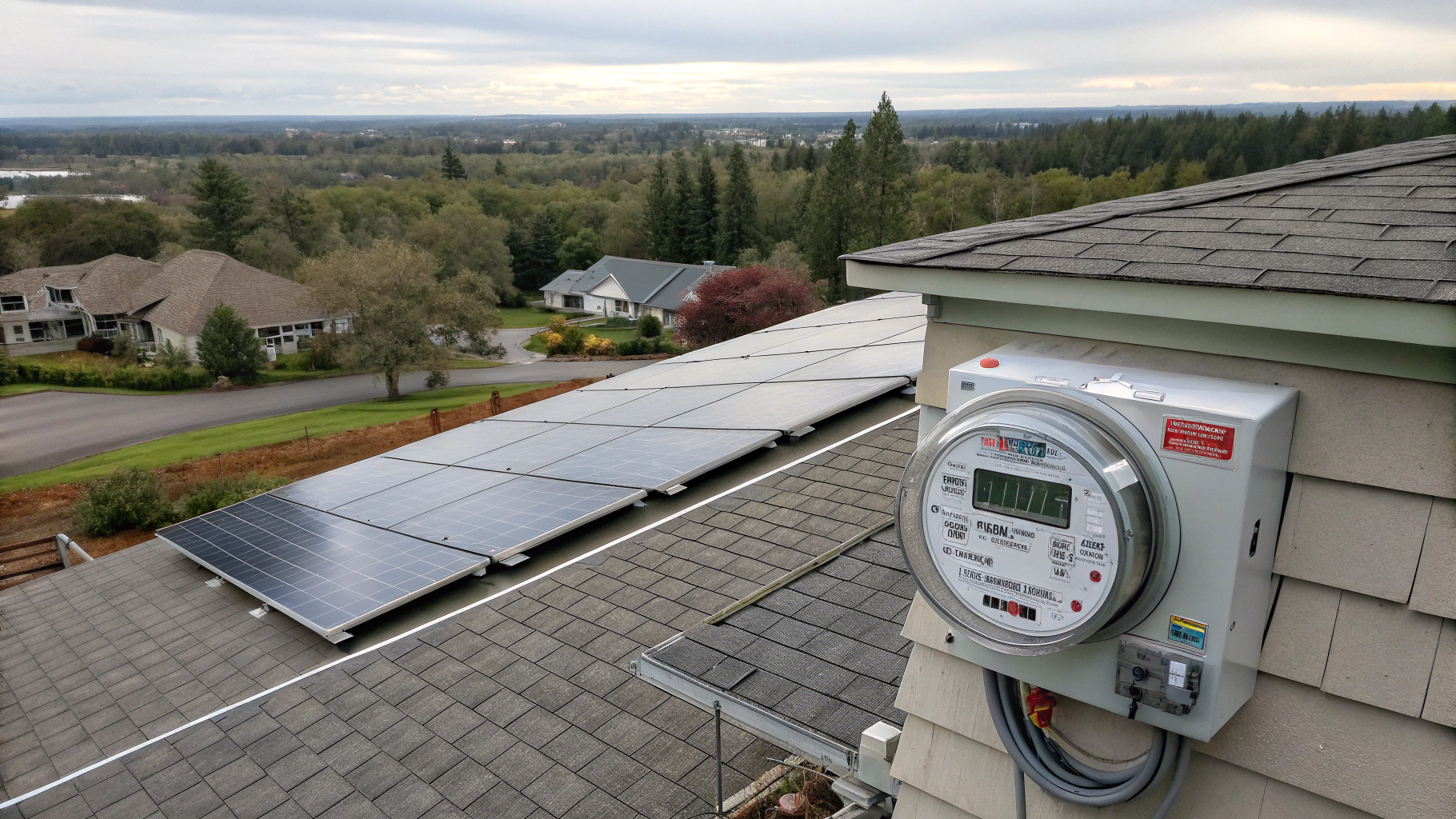
In Malaysia, the Net Energy Metering (NEM) system was introduced in 2016 with the aim of promoting the introduction of solar power generation.
This system has undergone step-by-step improvements as a core tool in renewable energy policy, culminating in the current NEM 3.0.
As of May 2025, there are active policy developments, such as the creation of additional slots for the NEM Rakyat for households.
In this article, we hope to provide as comprehensive an introduction as possible to the NEM system, from its inception to its latest trends.
The basis and development of the NEM system
System establishment period (2016-2018)
The NEM scheme was launched in November 2016 and initially consisted of selling surplus electricity to the state-owned electricity company, Tenaga Nasional Berhad (TNB), at replacement cost.
At this stage, unlike the Feed In Tarrif system, the electricity generated by solar power generation is first consumed within the home, and only surplus electricity is sent to the grid.
NEM 2.0 (2019~2020)
NEM 2.0, launched in 2019, introduced true net metering.
In other words, a one-to-one offset system was adopted, whereby for every 1 kWh supplied to the grid, the same amount of 1 kWh is deducted from the electricity bill, greatly improving the economic efficiency of the system.
During this time, the adoption of solar power has accelerated, especially in industrial applications.
NEM 3.0 and its structure
NEM 3.0 will run from 2021 to 2025, and splits the existing NEM system into three programs, designed for residential, government, and commercial/industrial use.
A brief explanation is given below.
NOT People
600MW (later expanded to 600MW → 700MW) will be allocated for residential use, and a one-to-one offset method will be adopted.
The maximum capacity is 5kWac for single phase and 12.5kWac for three phase, and you must be a TNB customer.
Excess electricity can be carried forward as credits for up to 12 months.
A subsidy scheme of up to RM4,000 called SolarIS (Solar for Rakyat Incentive Scheme) was introduced in April 2024 and has been extended until April 2025.
NOT GoMe
The scheme is for government organisations and has allocated 100MW.
The maximum installed capacity is 1,000kW, and installation conditions are set separately for medium voltage and low voltage.
The system allows for offset rights for a period of 10 years and is expected to be introduced in public facilities.
NOVA Program
The purchase quota for commercial and industrial use is set at a maximum of 1,700 MW.
In addition to the one-to-one offset method, a unique feature of this scheme is that the purchase price for surplus electricity is determined based on the monthly average of the system marginal price.
Virtual power aggregation across multiple facilities is also permitted.
Below is a comparison table outlining the main differences between the three NEM 3.0 programs:
| Program Name | subject | Allocated capacity | Main features | remarks |
|---|---|---|---|---|
| NOT People | Residential | 700MW (after addition) | One-to-one offset system, credit carryover up to 12 months, installed capacity capped | SolaRIS subsidy up to RM4,000 |
| NOT GoMe | Government | 100MW | Maximum 1,000kW, 10-year offset rights | There are restrictions for both medium and low voltage |
| NOVA Program | Commercial and Industrial Use | 1700MW | 1:1 offset + SMP average price, virtual aggregation possible | Capable of supplying power to multiple facilities |
System effectiveness and latest data
As of the end of 2024, approximately 82% of NEM 3.0's purchase quota has been used, with household use (NEM Rakyat) at 95%, GoMEn at 65%, and NOVA at 78%.
" 100MW more for domestic solar installations "
An additional 100MW will be allocated to NEM Rakyat for May 2025, increasing its total allocation from 600MW to 700MW.
“ Govt mulls new rooftop solar mechanism, adds 100MW residential quota ”
Malaysia's international commitments and the significance of the system
Malaysia has ratified the Paris Agreement and has committed to reducing its GHG emissions intensity by 45% by 2030, without any conditions.
The 12th Malaysia Plan aims to achieve a renewable energy ratio of 31%, and the NEM system is one of the main policies to achieve this goal.
Complementary with large-scale solar power generation
The government is actively promoting the Large Scale Solar (LSS) program in parallel with the NEM scheme.
This is a centralized power generation scheme aimed at large-scale facilities such as mega solar power plants, unlike the NEM scheme, which promotes distributed solar power generation.
The 2024 announcement stated that a total of 2,000 MW of new development capacity would be set aside for the fifth phase of the LSS program (LSS5), with competitive bidding planned among domestic and international renewable energy developers.
This is expected to stabilize the electricity supply and demand in Malaysia and increase the proportion of renewable energy.
Furthermore, as an innovative initiative, an additional 500MW has been introduced dedicated to floating solar projects, promoting the utilisation of unused water surfaces such as reservoirs and abandoned mine sites.
This initiative is attracting attention as a measure that enables renewable energy development even in areas with land constraints.
In addition, under the New Enhanced Dispatch Arrangement (NEDA) mechanism, the development of low-carbon power generation projects targeting non-solar sources such as wind, small hydro, biomass and hydrogen is also encouraged, with a total quota of 400MW set aside.
In terms of their institutional design, LSS and NEM are complementary.
While LSS is primarily responsible for stable supply as a core power source, NEM helps individuals and businesses achieve energy self-sufficiency and reduce costs. The parallel promotion of the two is promoting the diversification of Malaysia's energy mix and sustainable growth.
summary
Malaysia's NEM scheme has undergone a gradual evolution to become the core of a relatively small renewable energy policy.
The system structure, which covers a wide range of segments from household to industrial use, is a model that other countries can follow, and further promotional measures and institutional evolution in the future will be of interest.
In operating the system, it is important to comply with legal and technical requirements as well as to continually follow up on policy changes.



comment