Introduction
Meanwhile, ISCC ( International Sustainability & Carbon Certification ) is attracting attention as an effective system for ensuring the traceability of recycled raw materials and reducing carbon footprints.
It is believed that using these certification schemes to clearly demonstrate the reliability and sustainability of products can give companies a competitive advantage.
What is petrochemical recycling?
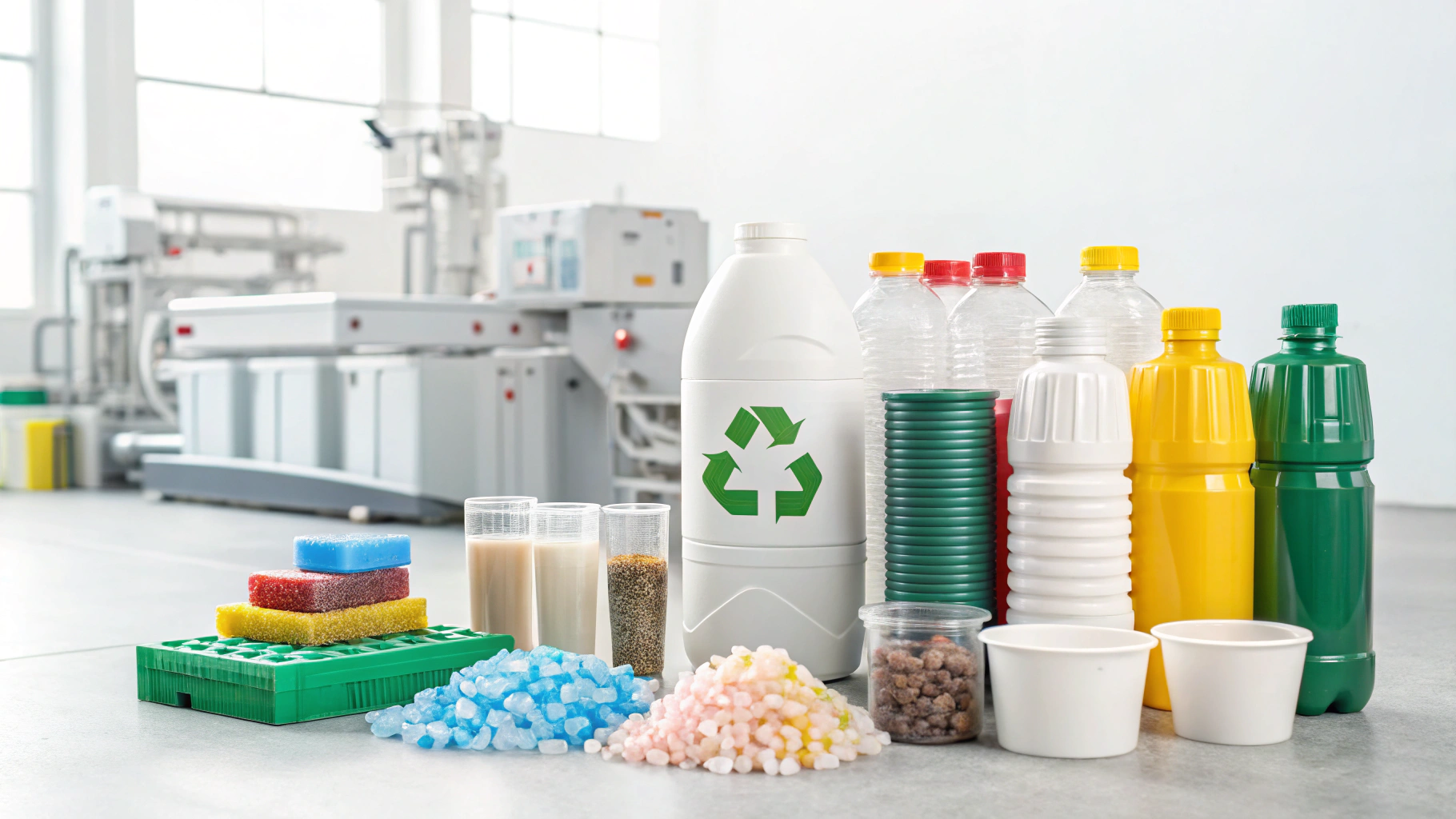
Oil-chemical recycling is a recycling technology in which used plastics are thermally decomposed at high temperatures and turned back into oil (decomposed oil).
The oil obtained is refined into naphtha (a petroleum product; a transparent liquid similar to gasoline) and is reused as a raw material for plastic products.
In Japan, several companies are engaged in oil chemical recycling.
For example, ENEOS and Mitsubishi Chemical are building an oil refining plant in Kashima, Ibaraki Prefecture, capable of processing 20,000 tons of waste plastic per year, which is scheduled to begin operation in 2024.
" Plastic Oil Chemical Recycling: A New Resource Circulation Model Using Cutting-Edge Technology "
While there has been some progress in terms of technology in Japan, in terms of the scale of commercialization and the establishment of a system for collecting waste plastic, we are still only halfway there.
Domestic adoption trends and major players
In order for oil chemical recycling to become widespread in a sustainable manner in the future, improvements are necessary not only in terms of technology but also in terms of systems and social acceptance.
Specifically, we can expect improvements in energy efficiency through advances in catalyst technology and low-temperature decomposition processes, the development of government subsidy systems, and linkages with emissions trading markets.
Additionally, companies are being asked to select materials and develop products with a view to reducing greenhouse gas emissions in Scope 3 (the entire value chain).
It seems important to practice ESG management that is consistent with international information disclosure standards such as TCFD, TNFD, and SBTi.
Comparison of overseas trends with Japan
Official website of Attorney Mitsuru Misawa » ESG Management and Oil Chemical Recycling – Will it be a solution to the waste plastic problem? Comment feed
On the other hand, in Japan, most of the waste plastic is incinerated, and the country is lagging behind Europe in terms of resource circulation. Although technological development is progressing, issues remain, such as delays in the development of legal systems and infrastructure, and the small size of the market.
Evaluation and issues from an ESG perspective
Oil chemical recycling is expected to have many advantages from the perspective of ESG management.
First, in terms of the environment (E), it has the potential to reduce greenhouse gas emissions more than incineration, and it can be recycled as a substitute for naphtha derived from crude oil.
From a social perspective (S), there are possibilities for local production and consumption through small-scale oil recovery plants being installed in each region, and job creation through collaboration with waste disposal companies.
On the other hand, contrary to this ideal, there are likely reasons why oil chemical recycling has not yet become widespread in society.
First of all, the high cost of energy seems to be a major bottleneck.
The electricity and fuel costs associated with high-temperature heating are pushing up business costs, and in many cases the price of recycled cracked oil is not market competitive.
Additionally, the huge capital investment required for oil refining is also an obstacle to its widespread adoption.
Another issue is the lack of infrastructure for collecting and sorting waste plastic.
It is difficult to distinguish on-site between plastics suitable for oilification and those that are not, which affects the efficiency of mixed waste treatment and product quality.
In addition, the legal standards for labeling products obtained through chemical recycling as "recycled plastics" and the system's method of accountability to consumers remain unclear.
As such, there are many fundamental issues behind why oil chemical recycling has not yet become widespread despite its high hopes.
However, in my personal opinion, considering the situation in other countries where waste separation is either not practiced at all or is rarely practiced, I believe that Japan, where waste separation is fairly well established in society, has great potential for the spread of oil-based chemical recycling if the infrastructure for collecting and sorting waste plastics is simply established.
Related legislation and certification schemes
In Japan, the system is based on the Waste Management and Public Cleansing Act and the Act on Promotion of Effective Utilization of Resources, and the feasibility and definition of whether chemically recycled products can be labeled as "recycled plastics" is a topic for future consideration.
ESG Management and Oil Chemical Recycling – Will it be a solution to the waste plastic problem? - Attorney Mitsuru Misawa Official Website
Future outlook and responses required from governments and companies
This time, we will explain about recycling waste plastic.
The problem of plastic waste has become one of the most serious challenges facing the global environment, alongside climate change and marine pollution.
With over 300 million tons of plastic produced annually around the world, much of which is disposed of by incineration or landfill, it can be said that we are far from creating a sustainable society.
As ESG management becomes increasingly important for companies, plastic resource circulation has become an unavoidable issue.
In this context, "oil chemical recycling" is attracting attention.
summary
Oil-based chemical recycling has been attracting attention as a new approach to solving the problem of waste plastics, but its sustainability needs to be evaluated from multiple perspectives, including not only the technology but also systems, social acceptability, and economic rationality.
We believe that when companies get involved in this field, they must go beyond simply introducing technology; they must also place it at the core of ESG management and engage in transparent initiatives.
As mentioned above, I believe that Japan has great potential in this field, so I am very excited to see it grow.








comment