Introduction
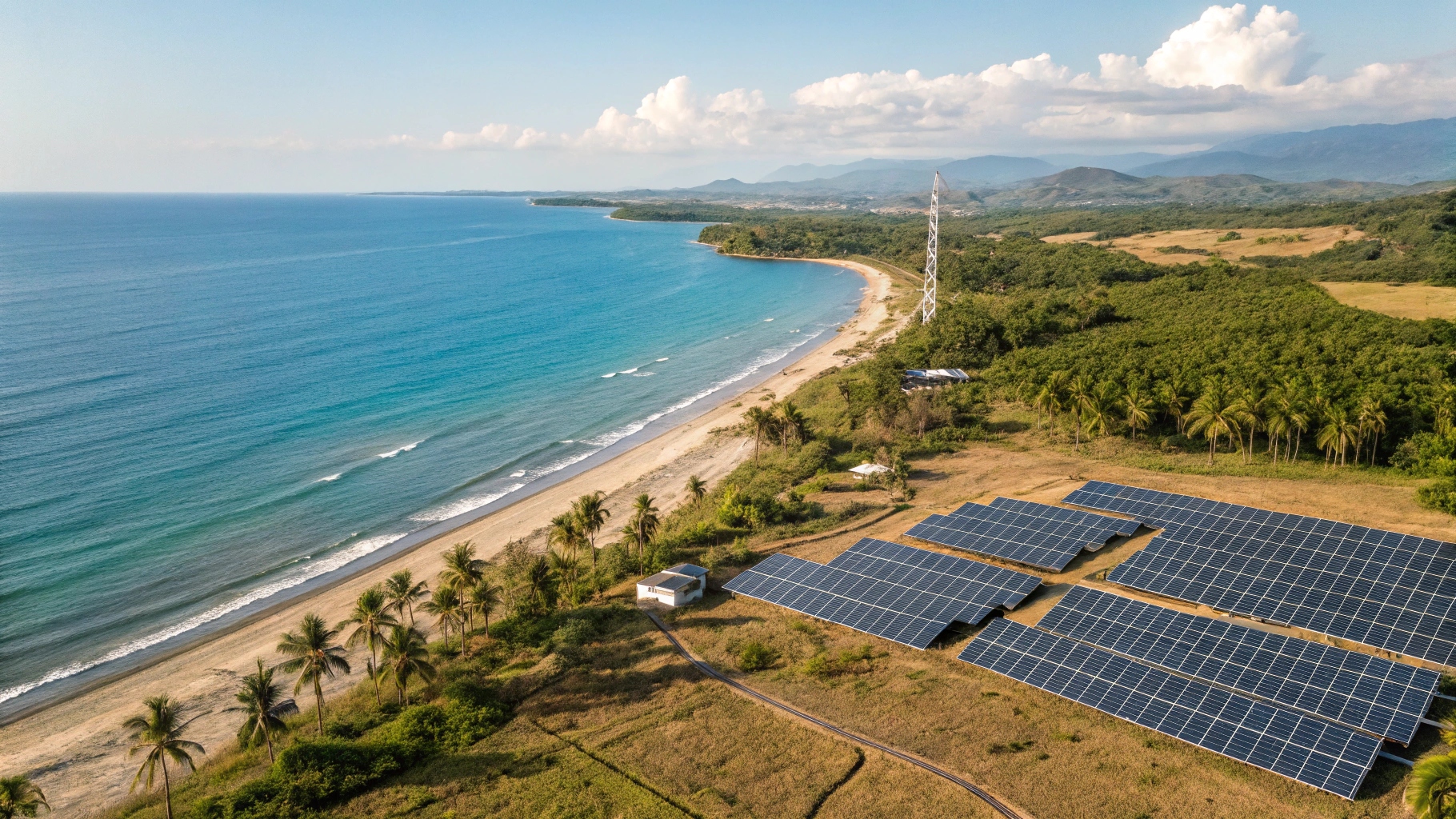
This time, for the first time, we will be focusing on the Philippines.
The Philippine government is promoting measures to accelerate the introduction of renewable energy and strengthen the country's power supply.
The government's efforts are proving to be successful, with the country set to record high renewable energy adoption in 2023.
Details are summarized in a press release issued by the Philippine Department of Energy (DOE) on February 11, 2025 (by the way, this site loads extremely slowly...).
The Philippines' power supply remains dependent on fossil fuels, making energy security and responding to climate change important issues.
For this reason, the government is promoting the introduction of renewable energy sources, aiming for long-term energy independence and decarbonization.
Below, we will explain the current situation and future prospects of renewable energy in the Philippines.
Renewable energy adoption record in 2023
As mentioned above, the Philippines recorded its highest ever renewable energy adoption in 2023.
Solar and wind power generation in particular are growing rapidly and are expected to continue expanding in the future.
Newly Installed Renewable Energy Capacity
According to the press release mentioned above, solar and wind power generation has seen significant increases compared to the previous year.
This increase is believed to be supported by several factors, including the government's proactive policy promotion, expansion of investment incentives, and advances in technological innovation, as outlined below.
Solar power generation
The introduction of large-scale mega solar projects is progressing, contributing to the electricity supply across the country.
The installation of solar panels to supply electricity in urban areas and for industrial use is expanding, and their use as independent power sources is particularly prevalent in commercial facilities and factories.
Additionally, the spread of small-scale domestic solar panels is accelerating as part of a decentralized energy supply model promoted by the government.
Wind power generation
New developments are progressing, especially in Northern Luzon, and are helping to stabilize the power supply.
This area is known for its strong winds, and several large-scale wind power generation projects are underway to take advantage of the stable wind conditions.
The government is also currently examining the feasibility of offshore wind power generation, and it is possible that this will become more widespread in the future.
Geothermal power generation/biomass
The Philippines is actually rich in geothermal resources, and new development projects are underway.
Geothermal power generation is capable of a stable supply and is a power source that can make a significant contribution to improving energy self-sufficiency.
In addition, biomass power generation, which utilizes agricultural waste and forest resources, is also expanding and is beginning to play a part in sustainable energy supply.
Major projects and investment trends
As mentioned above, the introduction of renewable energy is progressing rapidly in the Philippines, and various projects to support this are being promoted.
In addition to large-scale government-led projects, foreign companies are actively entering the market and local governments are also becoming more active.
This has led to greater diversification of energy supplies and strengthened electricity infrastructure.
I'll introduce it briefly below.
Large-scale government-led projects
In the Philippines, there are an increasing number of projects aimed at improving power supplies in rural areas and areas with underdeveloped power grids, and the use of distributed power sources is progressing.
Additionally, development of large-scale geothermal power plants is also underway as the government strives to ensure a stable supply of energy over the long term.
New foreign investment
In recent years, Japanese, Western companies have been actively investing in the Philippine renewable energy market.
In the fields of solar and wind power generation, capital and technology are being imported from overseas, and cutting-edge facilities are being constructed.
For example, European companies are involved in large-scale wind power projects, and more efficient turbine technology is being introduced.
Additionally, Japanese companies are also utilizing their unique technologies to contribute to improving the Philippines' energy infrastructure.
The Philippines is a country covered by the bilateral crediting mechanism , and Japanese companies are advancing projects with the aim of obtaining JCM credits.
For more information about JCM, please see our previous article .
Increase in PPAs (power purchase agreements) by local governments and private companies
In the Philippines, local governments and private companies are signing their own power supply contracts and promoting the use of renewable energy.
In particular, there are increasing cases of major companies aiming for RE100 (100% renewable energy) and signing contracts directly with power generation companies.
This is expected to accelerate decarbonization among companies and lead to stable growth in the renewable energy market.
At the local government level, there is also a growing movement to introduce renewable energy sources in each region and achieve energy self-sufficiency.
Renewable energy promotion policies and deregulation
The Philippine government is strengthening policies and relaxing regulations to promote renewable energy.
In particular, the investment environment is improving, and foreign companies are actively entering the market.
I'll explain a little bit below.
Philippine Government Renewable Energy Policy
The Philippine government has formulated a long-term policy to expand renewable energy and aims for sustainable development, particularly in terms of moving away from dependence on fossil fuels and contributing to international climate change measures.
Specifically, we have formulated a long-term plan based on the Philippine Energy Plan and are implementing measures to achieve both a stable and sustainable energy supply.
The plan calls for increasing the proportion of renewable energy while gradually reducing fossil fuel power plants.
In addition, the company has set a goal of increasing the proportion of renewable energy to over 50% by 2030, and is promoting the use of a variety of renewable energy sources, including wind, solar, hydroelectric, and geothermal.
To achieve this goal, not only are power generation facilities being expanded, but also the introduction of energy storage technology and the development of smart grids are being promoted.
In addition, we are promoting the National Renewable Energy Program , which is establishing a concrete framework for government and private sector cooperation to achieve energy transition.
The program appears to be intended to promote policies to attract domestic and international investment and support renewable energy projects that take advantage of regional characteristics.
It seems like there is some overlap between the two above, but the latter is a program that specializes in renewable energy.
Relaxation of foreign capital restrictions and changes in the investment environment
In order to promote foreign investment in the renewable energy sector, the Philippine government has significantly relaxed foreign investment restrictions, including:
This has made it easier for foreign companies to enter the market and accelerated the inflow of new technology and capital.
In 2022, 100% foreign investment became possible in the renewable energy sector, leading to an increase in direct investment from overseas companies, which had previously been restricted.
This change has led to energy companies, particularly from Europe, the United States and Asia, entering the Philippine market and leading to the launch of new projects.
The Board of Investment has expanded tax incentives to reduce the cost of entry for businesses.
In particular, preferential tax systems are applied to the construction of new power plants and the expansion of existing facilities, creating an attractive investment environment for companies.
The Philippine Economic Zone Authority is facilitating investment in special zones and establishing an expedited permitting process for renewable energy projects.
This is creating an environment in which investors can smoothly expand their business.
Incentives and Subsidies
To accelerate the introduction of renewable energy, the Philippine government has prepared various incentives and subsidy programs, including those listed below.
This is expected to encourage new businesses to enter the market and expand it.
Renewable Energy Certificate Scheme
We have introduced the Renewable Energy Certificate Scheme, creating a mechanism for companies to prove their use of renewable energy.
This system makes it easier for companies that use renewable energy to attract the interest of ESG investors.
Preferential treatment of customs duty exemption and income tax reduction
Preferential treatment of customs duty exemption and income tax reduction has been introduced, making it possible to reduce the costs associated with importing power generation equipment and launching new projects.
This has created an environment in which domestic and international investors can more actively participate in the Philippine energy market.
Funding support through green bonds
Funding support through green bonds is progressing, making it easier for governments and private companies to secure funds for projects with a low environmental impact.
This mechanism will enable businesses in the renewable energy sector to raise funds at low cost, and is expected to lead to further capital investment and project expansion.
Challenges and future prospects
The introduction of renewable energy has progressed smoothly, but there are still challenges to be overcome in terms of developing the power grid and other technical issues, as described below.
Going forward, we will need to address these issues while striving for further growth.
However, the development of power transmission networks is not unique to the Philippines; Japan and other developed countries appear to be facing similar challenges.
Issues with the power grid and the need for infrastructure development
The Philippines' power infrastructure faces challenges in accommodating the rapidly increasing adoption of renewable energy, including:
The stability of the power supply is threatened by factors such as the aging power transmission grid, regional differences in electricity demand, and the effects of natural disasters.
As a result, governments and private companies are working to strengthen the power grid and introduce distributed generation.
Aging power transmission infrastructure
Much of the power transmission equipment is aging, increasing the risk of large-scale power outages.
In particular, infrastructure development is lagging behind in rural areas, making a stable power supply a challenge.
Strengthening the power grid with the introduction of renewable energy
The introduction of wind and solar power generation is driving a shift from the traditional centralized power supply model to distributed power sources.
There is a need to upgrade the power grid and utilize smart grid technology.
Utilizing distributed power sources and the potential of microgrids
In order to ensure a stable power supply in the event of a disaster, the introduction of microgrids that would enable independent power supply for each region is being considered.
This will enable a stable supply of electricity and achieve energy self-sufficiency.
For Japanese companies and investors
The Philippine market offers many attractive opportunities for investors as the adoption of renewable energy accelerates. Government policy support and infrastructure development are creating a stable investment environment.
Investments in solar, wind and battery storage
The Philippines has abundant solar radiation, and the introduction of solar power generation is progressing rapidly.
Additionally, large-scale wind power projects are being developed in windy regions, and the introduction of new technologies is improving power generation efficiency.
Furthermore, advances in energy storage technology are enabling a stable supply of renewable energy, and it is anticipated that they will be used as a distributed power source, particularly in areas where grid connection is difficult.
Market stability through the development of legal systems
The Philippine government is improving its legal system to encourage foreign capital entry, and regulations on energy investment are being relaxed.
In particular, incentives under the Renewable Energy Act have been strengthened, offering tax breaks and subsidies.
Additionally, investment risks are being reduced through the introduction of long-term power purchase agreements (PPAs).
Long-term profitability prospects
As demand for renewable energy increases, it appears this is becoming a market in which long-term profitability can be secured.
Falling electricity costs and tougher environmental regulations are making renewable energy projects a more economically attractive option.
In particular, the development of the carbon credit market is creating additional revenue opportunities that companies are using as part of their new growth strategies.
summary
As explained above, the Philippines' renewable energy market is growing rapidly due to proactive government policies and an improving investment environment.
In addition, the relaxation of foreign investment restrictions and the expansion of incentives have made the country an attractive investment destination for overseas companies, including Japanese companies.
However, to achieve sustainable growth, it is essential to address the aging power grid and introduce new technologies.
In particular, the introduction of battery storage technology and smart grids is becoming an important issue in order to achieve a stable supply of renewable energy.
Furthermore, from an ESG perspective, the Philippine renewable energy market is attracting interest from investors and is expected to grow further in the future.
I'm looking forward to the future.
(Wow... the Philippine government websites were slow to load, and it took me a long time to research. I wonder if this was due to a problem with my computer...)


comment