Introduction
In recent years, efforts to realize a decarbonized society have been accelerating, and the aviation industry is also being called upon to reduce its environmental impact.
Among these, sustainable aviation fuel (SAF) is attracting attention.
In Japan in particular, domestic supply of SAF is scheduled to begin from fiscal year 2025, and the involvement of domestic companies is also increasing.
In a recent development, SAFFAIRE SKY ENERGY, a joint venture between Cosmo Energy Holdings and its partner companies, announced that it will begin supplying domestically produced SAF to Japan Airlines (JAL) and All Nippon Airways (ANA) from fiscal year 2025.
This will be an important step in establishing the first SAF supply chain in Japan.
In this article, we will explain basic information about SAF, domestic and international trends, and business opportunities for companies.
What is SAF?
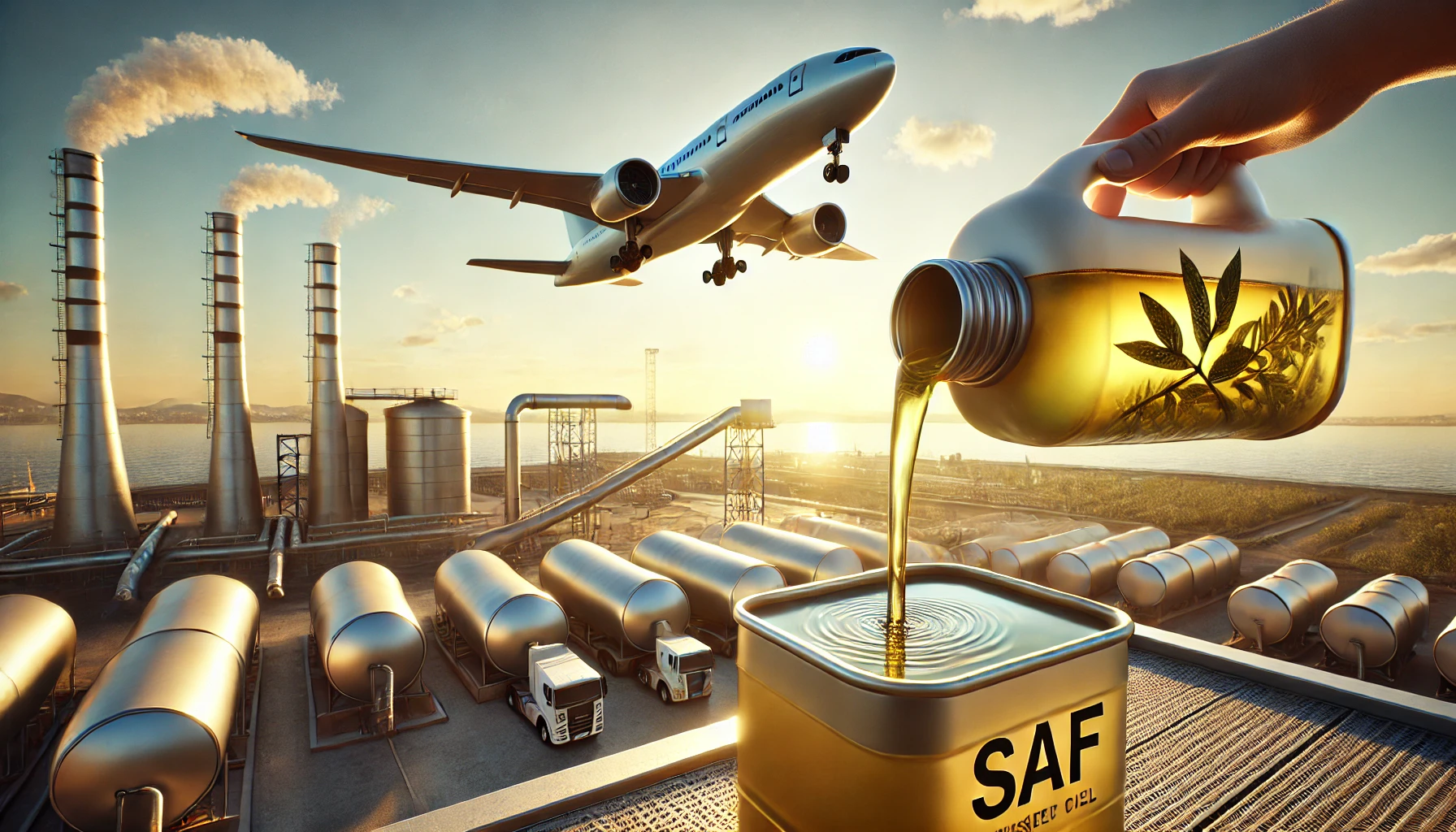
SAF (Sustainable Aviation Fuel) is a sustainable aviation fuel that can replace conventional fossil fuels. It is mainly produced from the following raw materials:
(1) Waste cooking oil
(2) Plant-derived oils and fats (biofuels)
(3) Waste (household waste, industrial waste, etc.)
(4) Synthetic fuels (using Power-to-Liquid technology)
SAF is expected to make a significant contribution to the decarbonization of the aviation industry as it can significantly reduce CO2 emissions compared to fossil fuels.
Furthermore, the widespread use of SAF is essential to achieving the International Civil Aviation Organization's (ICAO) goal of achieving "net zero CO2 emissions by 2050."
Why is SAF important?
The aviation industry accounts for approximately 2-3% of global CO2 emissions, making reduction of these emissions an urgent issue.
For international flights, ICAO's CORSIA (Carbon Offsetting and Reduction Scheme for Aviation International) has been introduced, requiring airlines to reduce CO2 emissions by 15% from 2024 levels compared to 2019.
In addition, the Japanese government has set promoting the use of SAF as part of its policy to achieve "carbon neutrality by 2050."
As a result, the domestic production and supply system for SAF is being developed, which is affecting not only the aviation industry but also fuel suppliers and the entire industry.
Current legal and regulatory situation regarding SAF
Legal regulations imposed by national governments and international organizations play an important role in the spread of SAF and market expansion.
In Japan, the government is also in the process of establishing a legal framework to support the promotion of SAF.
Japanese regulations
In Japan, it does not appear that there are currently any restrictive systems in place.
On the other hand, the Ministry of the Environment and the Ministry of Land, Infrastructure, Transport and Tourism are taking the lead in considering subsidies and tax incentives to promote the introduction of SAF.
There is also discussion about introducing a system that would require the domestic aviation industry to use a certain percentage of SAF, and companies are being asked to adapt to the regulations.
International Regulation
Under ICAO's CORSIA system, airlines are required to use SAF and implement carbon offsets to reduce CO2 emissions.
The EU has adopted the "ReFuelEU Aviation" policy, which will make it mandatory to replace a certain percentage of aviation fuel with SAF by 2030.
In the United States, the Biden administration's "SAF Grand Challenge" has strengthened tax incentives for SAF production.
Opportunities for companies to get involved in SAF business
If companies are interested in getting involved in the SAF business in the future, they can consider the following methods:
Entering the ESG investment and carbon credit market
As the adoption of SAF expands, companies are turning to this area as part of their ESG (environmental, social and governance) investments.
The carbon credit market is also thriving, creating new business opportunities for investors and financial institutions.
This is considered the easiest method for companies that have no intention of being involved in oil refining or technological development as described below.
Entering fuel supply and manufacturing
As the supply of SAF picks up steam, oil refineries and chemical manufacturers are moving forward with their entry into this field.
In particular, there is a movement to expand biofuel production capacity while utilizing existing oil refining facilities.
Additionally, the collection and refining of used cooking oil could become a new source of revenue for the food industry and waste management companies.
Technology development and research investment
Research and development is underway into efficient biofuel production technologies and Power-to-Liquid (PtL) technologies.
In particular, the production of synthetic fuels using renewable energy has attracted attention, and energy companies, universities, and research institutes are working together to promote new technological innovation.
Supply infrastructure and logistics development
In order to establish a supply system for SAF, it is necessary to develop the infrastructure, including airports and fuel supply facilities.
For the logistics industry, the construction of SAF's transportation and storage system will create new business opportunities.
Optimizing the supply chain will require the creation of a more sustainable distribution network, so there will be a need for infrastructure development.
summary
SAF is an essential element in driving the decarbonization of the aviation industry, and its adoption is accelerating both domestically and internationally.
In Japan, domestic supply of SAF will begin from fiscal year 2025, and a new market is beginning to take shape.
We believe that continuing to closely monitor trends in the SAF market and exploring business possibilities will lead to both the realization of a sustainable society and corporate growth.










comment