Introduction
This time, I would like to consider female directors as an area related to the S and G of ESG.
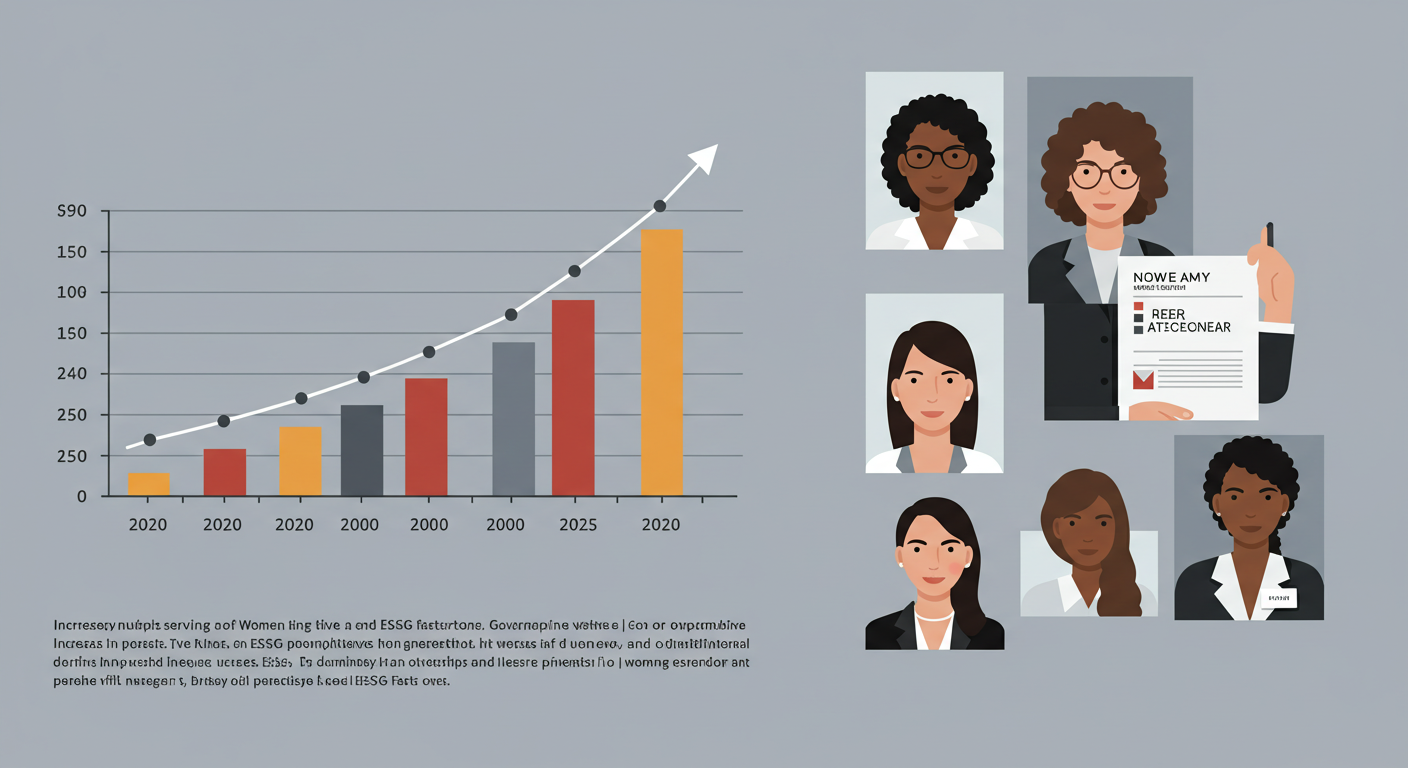
As ESG investment has become increasingly important in recent years, there has been a demand to increase the proportion of female directors on the board of directors.
Incorporating diverse perspectives into management is expected to promote innovation and strengthen risk management.
Japan's current situation and government goals
According to data from the Cabinet Office's Gender Equality Bureau , the ratio of female executives at Prime Market-listed companies increased from 11.4% in 2022 to 13.4% in 2023.
However, the current situation is that there is still a large gap between the government's target of 30% by 2030 and reality.
In addition, the Tokyo Stock Exchange's Code of Corporate Conduct requires that companies appoint at least one female director by 2025.
International comparison
Compared to other countries, the ratio of female executives in Japan remains low.
For example, as of 2021, the rates in France are 45.3%, in Germany 36.0%, and in the UK 37.8%, which are significantly higher than Japan.
These countries are working to increase the proportion of female executives through legal regulations such as the introduction of quotas.
Additionally, major asset management companies and institutional investors continue to place importance on ensuring diversity, and are calling on companies to take voluntary action.
On the other hand, under the second Trump administration, corporate regulations are being relaxed and direct government support for promoting diversity is seen as limited.
The relationship between the ratio of female executives and corporate value
According to a survey by Daiwa Institute of Research , companies with a higher ratio of female executives among TOPIX 500 constituent companies tend to have higher ROE and PBR (price-to-book ratio).
Additionally, according to a report by the Cabinet Office , companies with a higher ratio of female executives tend to have higher ROE (return on equity) and EBIT margins.
This demonstrates that incorporating diverse perspectives into management can improve the quality of decision-making and potentially lead to increased corporate value.
On the other hand, a study from Keio University analyzed Japanese listed companies from 2018 to 2022 and suggested that the ratio of female directors may have a significantly negative impact on ROA (return on assets).
This indicates that the short-term impact on business performance varies depending on a company's business structure and the actual status of executive appointments.
As such, studies have produced different results regarding the relationship between the proportion of female directors and corporate performance, and the impact may vary depending on the characteristics of the company and the industry.
Therefore, it is important for each company to carefully consider its strategy for promoting female executives, taking into account its own circumstances.
Recommendations
In order for a company to achieve sustainable growth, we believe that the following initiatives are important. We would appreciate your consideration of them.
Fostering female leaders within the company
One way to do this is to clarify the career paths of female employees and introduce training programs for them as candidates for management positions.
As a success story, Company A introduced an in-house mentoring system and doubled the ratio of female executives in three years.
Promoting diversity and inclusion (D&I) measures
It is also possible to respect diversity as part of your organizational culture and create an inclusive work environment.
Setting goals and publishing progress
One option is to set specific numerical targets for the proportion of female executives and regularly disclose progress toward those targets.
Through these efforts, companies can strengthen their governance systems and gain greater trust from investors and stakeholders.
In promoting ESG management, increasing the ratio of female executives is an unavoidable challenge, and proactive responses are likely to be required.
summary
We believe that increasing the ratio of female executives is not simply a social responsibility, but is directly linked to the company's sustainable growth and enhanced competitiveness.
In particular, as ESG investment expands, ensuring diversity has become an important factor in improving investor evaluations. Therefore, it appears that each company is being called upon to take the initiative in taking measures in line with government goals and international trends.









comment