Introduction
This time I'll focus on coffee.
This is not an explanation of the system, so you should be able to read it at your own pace.
I think there are many people who like to drink coffee at a cafe or take it out.
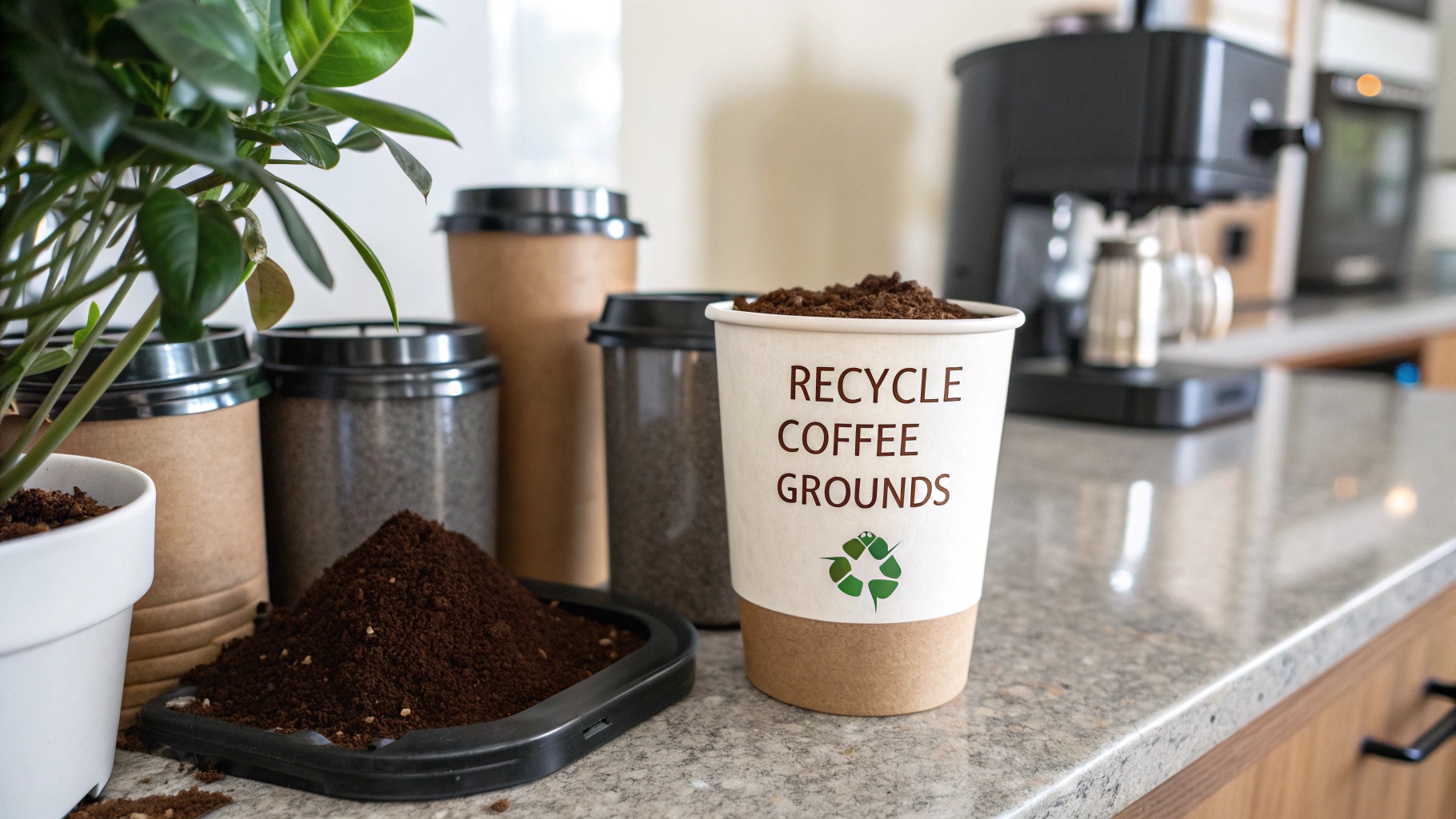
After making coffee at home, I usually throw away the grounds, but in recent years, coffee grounds recycling has been gaining attention, especially in the cafe industry.
Coffee grounds are produced in huge quantities every day, and most of it is probably incinerated, but there seems to be great potential for making effective use of them.
Below, we would like to look at the latest efforts in coffee grounds recycling from the perspective of ESG and SDGs.
Examples of building a circular food system
Below, we will introduce three examples.
I had no idea about this until I looked into it, but it seems that cafes that many of you know are actually making a serious effort to do so.
Kagoshima Horiguchi Tea Project
Kagoshima Horiguchi Tea (Shibushi City, Kagoshima Prefecture) has teamed up with Tokyo University of Agriculture, Horiguchi Coffee, Local Food Cycling, and others to launch a recycling project to compost coffee grounds and use them in agricultural production.
Click here for the press release .
The reason I originally decided to post this article was because I read an article about Horiguchi Seicha.
In this project, rather than disposing of coffee grounds as waste, the coffee grounds are composted to increase soil fertility and improve crop yields and quality.
It is also said that by reducing greenhouse gas emissions caused by incineration, it will contribute to reducing the burden on the global environment.
Compost made from coffee grounds appears to be rich in nutrients necessary for plant growth, such as nitrogen, phosphorus, and potassium, and is therefore likely to be useful in the agricultural sector.
Starbucks' "Coffee Grounds Recycling Loop"
As you all know, Starbucks is also doing something similar.
Starbucks Coffee Japan has expanded its " coffee grounds recycling loop, " in which coffee grounds are reused as compost or animal feed, to approximately 800 stores.
Through this initiative, Starbucks creates a sustainable, circular system in which coffee grounds are used as compost and provided to local farmers, who then use the vegetables and milk grown there to provide food and drinks at Starbucks.
We also participate in reforestation projects and work with local communities to promote environmental conservation activities.
Komeda Coffee's diverse recycling activities
Komeda Coffee reuses approximately 98% of the coffee grounds it produces each year.
Please click here to learn more about Komeda Coffee's initiatives.
The main ways to utilize coffee grounds are as compost or as bedding for cows, and there are also some unique initiatives, such as extracting dyes from coffee grounds and using them to dye apparel products.
In 2023, they also plan to start selling "Coffee Crayons" made from coffee grounds and "Vegetable Crayons" made from vegetable grounds.
These products are made from environmentally friendly materials and are designed with safety in mind.
We are also actively working to reduce our environmental impact, for example by using coffee grounds as building materials for our stores.
Various ways to use coffee grounds
When writing this article, I researched various ways to use coffee grounds, and it turns out there are actually a variety of uses for them.
Some of these initiatives overlap with those introduced above, but I'll introduce a few of them here.
Use in horticulture and agriculture
Coffee grounds are used in agriculture and horticulture as compost to increase the nutrients in the soil and as an insect and weed control agent.
Compost made from coffee grounds also improves soil aeration and drainage, promoting root growth in plants.
In particular, it contributes greatly to improving yields and quality in vegetable and fruit cultivation.
Composting process and effects
Coffee grounds are rich in nutrients such as nitrogen, phosphorus, potassium, magnesium and copper, and when mixed with other organic matter and composted, they increase the organic matter content of the soil, improving its structure, increasing its water retention capacity and promoting biological activity.
The specific composting process involves mixing coffee grounds, rice bran, and EM bacteria (including lactic acid bacteria, yeast, and photosynthetic bacteria), adding an appropriate amount of moisture, and allowing it to ferment.
The recommended ratio is 10 liters of coffee grounds, 10 liters of rice bran, and 7 liters of EM bacteria.
The fermentation period lasts about one month, and it is important to stir the malt moderately and supply oxygen during this time.
The finished compost can be used to grow vegetables and fruits, especially root vegetables and leafy vegetables, and is also expected to activate microbial activity and suppress pests and diseases.
There is one thing to be careful about; coffee grounds are highly acidic, so you need to be careful about the amount you use.
Using too much can upset the pH balance of the soil, so it is best to mix it with other organic matter (e.g. fallen leaves or compost) and apply in moderation.
Home Use
It can also be easily reused at home as a deodorant or cleaning agent.
Won't it smell like coffee...?
Use in beauty and health
It seems that there are also ways to use it, making use of its natural ingredients, such as in body scrubs and hair care products.
Coarsely ground coffee probably wouldn't work as a body scrub, but I'd like to give it a try next time.
Use in food
It is also used in making cold brew using coffee grounds and as a meat marinade, and seems to be gaining attention in the food industry.
summary
This time, we focused on coffee grounds and introduced the initiatives of various companies.
Recycling coffee grounds definitely has a positive impact on the environment.
By making good use of the coffee grounds disposed of at cafes and promoting activities like this, companies will not only be able to gain support from consumers and investors, but they will also be able to contribute to the realization of a sustainable future.









comment