In short
・Responsible businesses are recognized as "qualified businesses" and preferential treatment is provided in terms of procedures and operations.
・Supporting business continuity after the end of FIT/FIP and the realization of the main power source of renewable energy.
Introduction
This timeWe will explain the "Long-term Stable Qualified Solar Power Generation Operator System".
In April 2025, the Ministry of Economy, Trade and Industry established the "Long-term Stable Qualified Solar Power Generation Operator System."
The details will be explained below, but please also refer to the Energy Agency's explanatory materials dated November 28, 2024 and the agency's website information.
This system aims to transform solar power generation projects, which have relied on government-led support systems such as FIT and FIP, into a more self-sustaining and sustainable system.
In addition, the background of the system is that with the expansion of the introduction of solar power generation, a large number of distributed and small-scale facilities have recently become scattered, and inefficiency in operation and management has surfaced.
Especially after the expiration of the FIT/FIP system in the future, many power plants will be left unattended or withdrawn for economic reasons... Maintaining power generation assets as social infrastructure is expected to be an issue in the future, and it has become a future issue.
Under these circumstances, this system is intended to systematically build a "sustainable exit strategy" for the solar power generation business by providing incentives such as simplification of procedures, flexibility in the system of engineers, and preferential treatment for disposal costs to "qualified operators" who meet certain standards and requirements from the perspectives of governance capabilities, regional cooperation, and profitability.
The introduction of this system is expected to further recognize the reliability, safety, and environmental value of solar power generation in society, and is attracting attention as a major part of the government's renewable energy policy to achieve carbon neutrality。
Background and purpose of the establishment of the system
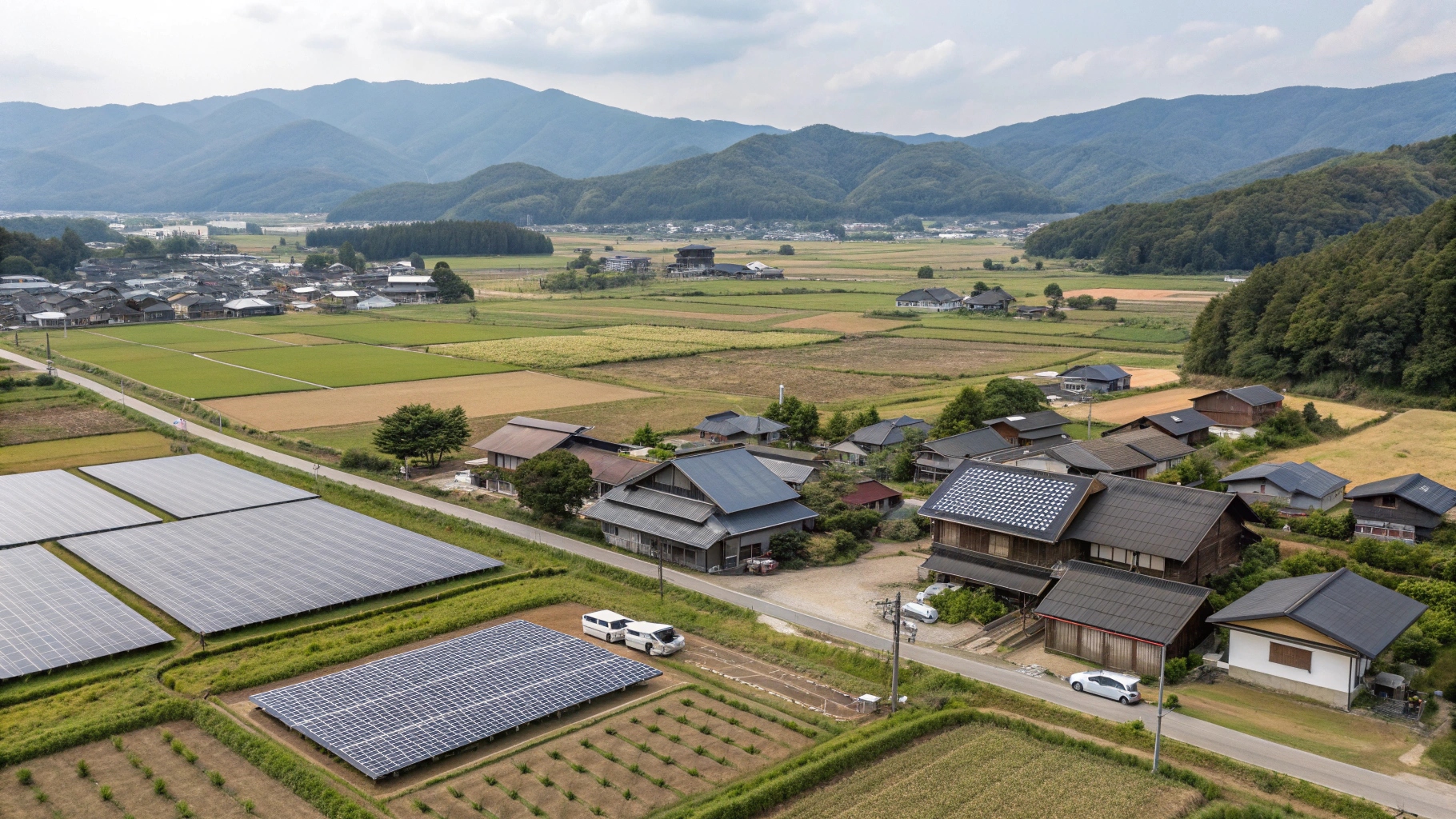
As mentioned above, solar power generation has expanded rapidly due to institutional support in the early stages of its introduction, but as a result, relatively small-scale low-voltage equipment is being installed in a dispersed manner throughout the country.
Specifically, low-voltage projects with a power generation output of less than 50 kW account for about one-third of the total, and we have reached a situation where inefficient grid operation and management costs have been neglected for many years.The following practical issues have arisen.
- Due to the small size of each power plant, the number of transactions increases and management costs increase
- Power plants are scattered around, and the burden of movement and management is heavy
- The operating status and profitability of equipment need to be scrutinized individually, and the due diligence load is high
In addition, more than 10 years have already passed since the start of FIT, and an increasing number of projects have been introduced for more than 10 years.
Despite the increasing importance of maintenance and management, such as deterioration of panels and failure of inverters, it is difficult to establish a unified O&M (operation and maintenance) system in a situation where equipment is distributed.
To address this situation, it is necessary to efficiently consolidate existing solar power generation facilities and establish a sustainable operating system that does not rely on institutions.
Therefore, the "Long-term Stable Qualified Solar Power Generation Operator System" was established this time, and it is thought that the aim is to promote solar power generation as a main power source not only in terms of "quantity" but also "quality" by selecting and certifying qualified operators and strategically reorganizing and integrating distributed power generation facilities.
Components of the system and certification criteria
The basis of this system is the certification system for "long-term stable qualified solar power generation operators (qualified operators)".
This certification is not just a formal qualification, but also a test of the overall strength of a power generation company, specifically, its attitude of coexistence with local communities, business continuity, and adaptability to the market environment.
Institutionally, the evaluation is based on the following three perspectives.
Building trust with local communities
In order for renewable energy businesses to take root in the region, it is essential not only to generate electricity, but also to build relationships of trust with local communities. Especially in recent years, there have been many concerns about landscapes, noise, and land use, and in some cases, troubles with local communities pose a risk to business continuity.
Therefore, we believe that the following measures are required.
・Strict compliance with relevant laws and regulations: Comprehensive compliance with a wide range of laws and regulations, including environmental impact assessments, forest laws, agricultural land laws, and building standards laws.
・Establishment of a governance system: Introduced corporate governance functions such as the Board of Directors, internal controls, and external audits to ensure transparency in management decisions and accountability to the region.
・Community communication mechanism: Regular dialogue with local governments and residents, emergency response training, and proactive information disclosure
Long-term stable business continuity ability
Eligible businesses must show that they can sustain their business for decades, such as 20 or 30 years, rather than short-term profitability.
It is thought that the medium-term management plan, financing plan, and the status of the O&M system will be examined as a basis for this judgment.
・Presentation of medium-term management plan: Presentation of a 5-10-year business outlook, including forecasted revenue, expenditure, and accumulation of equipment renewal and disposal costs.
・Annual reporting and monitoring system: Mandatory reporting of annual operation results, maintenance and inspection history, and accidents and troubles
・Risk management: Whether or not there is a system to prepare for risks such as earthquakes, storm and flood damage, and rising material costs with reserve funds and insurance systems.
Self-reliance of the revenue base
It is essential to have a business model that can be established as a business even after the FIT/FIP is completed (to prevent projects from being left unattended after the FIT/FIP ends).
Therefore, this certification is considered to be evaluated for its flexibility to respond to multiple revenue streams and market changes.
・Securing diverse revenue sources:P Diversifying electricity sales destinations through PA models, self-consumption models, corporate PPAs, etc.
・Introduction of non-electricity sales business: Utilization of renewable energy certificates (J-credit, I-REC, etc.), storage battery sharing, DR (demand response), etc.
・Market risk response measures: Whether or not there is a track record of using long-term contracts and hedging contracts against fluctuations in wholesale electricity market prices.
These certification criteria are not only based on equipment specifications and capacity, but also comprehensively judge the "reliability" and "sustainability" of a power generation company.
Obtaining certification is of strategic importance to the industry, as it not only provides institutional benefits but also improves social credibility and financial access.
Benefits through certification
Being certified as a "qualified business" has several clear advantages in the system.
These incentives are not limited to mere operational convenience, but are positioned as important incentives that support the economics, efficiency, and continuity of the business.
Simplified procedures
When certifying changes to the FIT/FIP system, it was previously mandatory to hold a resident briefing session for each power plant (resident briefing sessions were required from April 2024).
However, certified businesses can replace this procedure with methods such as "document posting"
。
This greatly reduces the burden of scheduling and creating explanatory materials for businesses that operate multiple locations, and encourages speedy business development.
Application of the chief electrical engineer supervision system
Originally, the Electricity Business Act requires the appointment and residency of a chief electrical engineer for each power generation facility, but by applying the "General Management System", one chief engineer will be able to supervise up to six workplaces across the board。
This will enable both legal compliance and cost efficiency in rural areas and small-scale facilities, where securing human resources is an issue. In addition, the centralized management of the O&M system will increase its affinity with smart security, and this measure will contribute to the sophistication of the risk management system.
When I was an in-house lawyer for a renewable energy power generation company, I had a hard time hiring this chief engineer, and I think other power generation companies are in the same situation.
If this oversight system can be used, it is expected to help solve the problem of hiring chief engineers.
Flexible accumulation scheme for disposal costs
The cost of disposing of solar power generation equipment is usually required to be accumulated in a lump sum for 10 years before the end of the purchase period of the FIT system.
However, for certified businesses, as a special exception, split reserves may be allowed when equipment is expanded, etc., and the system is designed to increase the flexibility of cash flow。
This system is designed on the premise of reliability and continuity as a qualified business operator, and can be said to be a model case for sustainable business operations that prepares for future demolition and removal responsibilities while leveling the financial burden.
Bulk Management and Smart Security
For qualified operators, it is important to build, standardize, and improve the efficiency of an O&M system that manages a large number of power plant projects in bulk, and it can be said that it is a highlight of the skills of qualified operators.
Currently, "smart security" is being introduced in the O&M field.
Specifically, the main contents are as follows.
- Data management with sensors and the cloud
- Digitization of work records and early detection by AI
It is expected that such smart security will make it possible to efficiently manage a large number of power plant projects.
Future outlook
The Ministry of Economy, Trade and Industry is said to be envisioning dozens of long-term stable and qualified solar power generation companies in the future.
As a result, it is expected that Japan's solar power generation business, which is currently small and dispersed, will gradually be consolidated and systematized by a group of operators with a certain scale and responsibility system.
The success of the efforts of each eligible business operator and the advancement of the O&M system and governance in each region are expected to lead to the sharing of know-how among businesses and the creation of new market opportunities.
In particular, the formation of a network of business operators may have the following ripple effects.
・Improving O&M efficiency and reducing costs by establishing a system to manage multiple power plants across the board.
- Improve operational levels by sharing data, technology, and security management best practices
・Facilitating scalable financing using green bonds, sustainability-linked loans, etc.
Furthermore, this system is considered to be significant as an intermediate and practical policy toward the government's long-term goal of "making renewable energy the main power source" and achieving carbon neutrality by 2050, which the government has set forth in the Seventh Basic Energy Plan.
Future development is not limited to simply supporting individual power generation companies, but will be noted as part of the infrastructure development to improve the reliability and sustainability of the entire industrial structure.
summary
The long-term stable and qualified solar power generation business operator system can be said to be a system aimed at fostering and supporting businesses that can operate solar power generation businesses in a sustainable manner.
In particular, it is of great significance in promoting the standardization of the centralized management of power plants and the O&M system in order to overcome the "multipolar distributed structure," which is a structural issue in Japan's renewable energy policy.
As a business operator, being certified as a qualified business operator is expected to improve the government's approval for governance, building relationships with local communities, and long-term business continuity capabilities, and improving social credibility and evaluation from financial institutions.
In addition, the introduction of institutional incentives and smart security will make it easier to achieve both economy and efficiency.
The government's gradual expansion of certification by 2030 is expected to form a network of highly reliable power generation companies that contribute to the transformation of renewable energy into the main power source, and to establish a new form of renewable energy management that does not rely on the FIT/FIP system.


comment