Introduction
This time, we will explain Malaysia's proposed CCUS law (Carbon Capture, Utilization and Storage Act 2025, hereinafter referred to as the "CCUS Act") .
Below is a roughly adjusted version of the CCUS bill that has been machine translated .
What is CCUS?
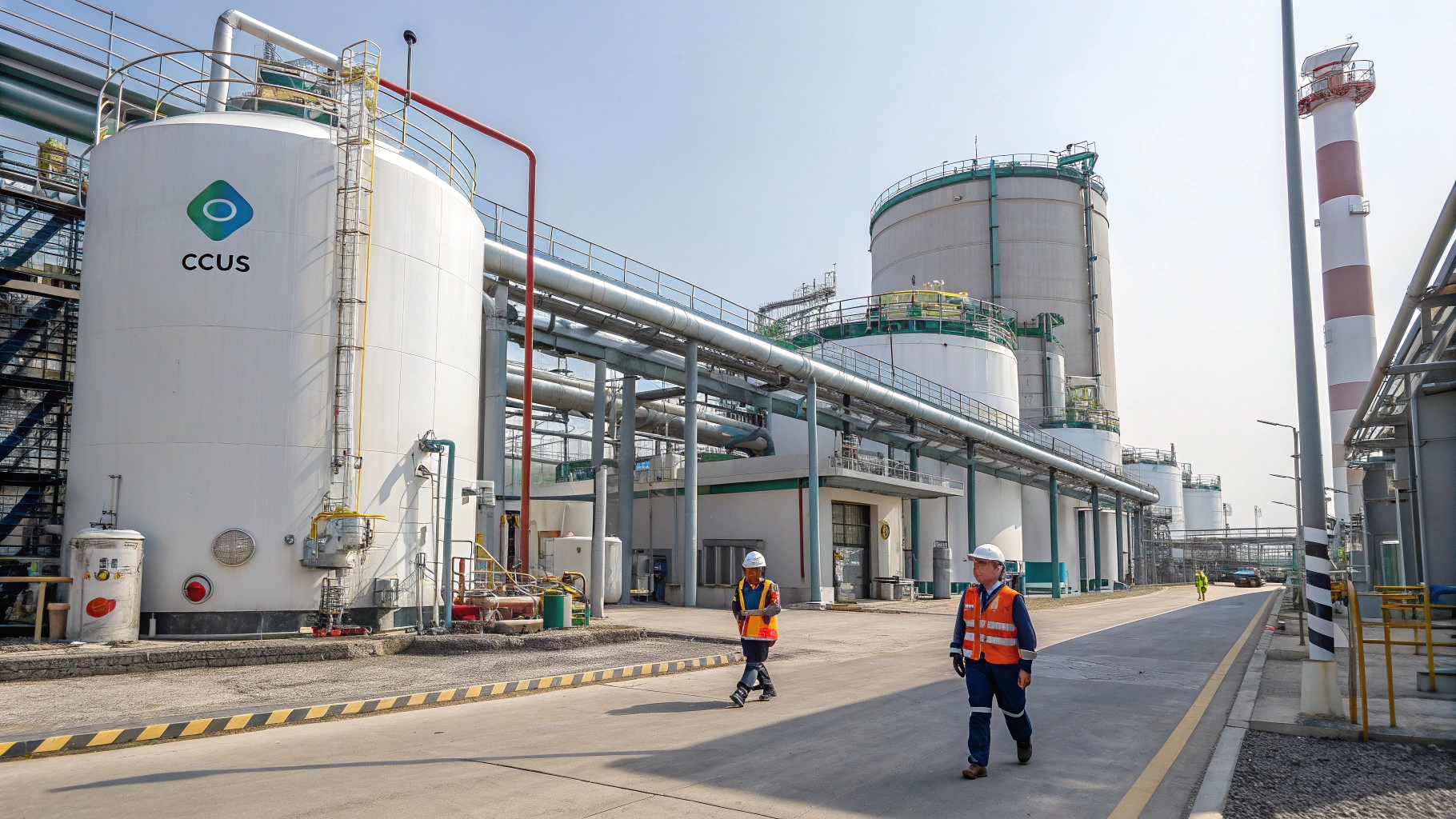
CCUS is a technology that captures carbon dioxide (CO2) from emissions sources and either uses it or stores it deep underground, thereby reducing CO2 emissions into the atmosphere.
It is attracting attention around the world as a trump card in tackling climate change because it can significantly reduce CO2 emissions, the main cause of global warming.
Under the Paris Agreement, Malaysia aims to reduce its CO2 emissions by 45% by 2030 compared to 2005 levels.
In order to achieve this goal, not only will the introduction of renewable energy be expanded, but the use of CCUS technology will also play a major role.
Summary of the CCUS Bill 2025
The CCUS Bill aims to establish legal framework for and facilitate the implementation of CCUS projects in Malaysia.
The bill is currently under deliberation in the Diet, with the aim of it coming into force in 2025.
The bill comprehensively regulates a range of activities related to the capture, transportation, utilization and storage of carbon dioxide, and includes the following key elements:
Establishment of Malaysian Carbon Capture, Utilisation and Storage Authority
The core of the CCUS Bill is the establishment of the Carbon Capture, Utilization and Storage Authority (the "Agency").
The Agency will have a wide range of roles, including oversight, management, permitting, and technical guidance for CCUS projects.
This is expected to improve transparency and efficiency in the implementation of CCUS projects.
Licensing system for CCUS activities
The CCUS bill requires agency permission or registration at each stage of carbon capture, transportation, utilization and storage.
This will make it possible to promote the sound development of CCUS projects while ensuring environmental impact and safety.
Offshore and onshore storage provisions
Malaysia has great potential for geological storage of CO2 by utilizing the geological knowledge and technology it has cultivated through oil and gas development.
The CCUS bill includes detailed provisions for offshore and onshore CO2 storage, and requires the selection of storage sites, safety assessments, and monitoring.
Carbon dioxide stream acceptance criteria
When storing CO2, the quality of the CO2 stream (specifically, the purity of the CO2 and the types and proportions of impurities contained therein) is important.
The CCUS bill sets standards for accepting CO2 streams suitable for storage and aims to ensure the safety and long-term stability of storage facilities.
Establishment of a post-closure management fund
Even after a CO2 storage facility is closed, long-term monitoring and maintenance will be required.
The CCUS bill seeks to reduce the burden on future generations by establishing a post-closure management fund to cover these costs.
Injection tax
To cover the costs of long-term monitoring of storage sites, offshore operators (holders of offshore storage licences who operate a storage site, manage a storage site, or manage the operation of a storage site in an offshore area) are required to pay an injection levy.
Transfer of onshore storage obligations
The transfer of duties relating to monitoring, corrective measures and remedial action for storage sites in onshore areas is to be determined by the Minister in consultation with State Governments.
Strengthening the enforcement system
The CCUS bill aims to increase the effectiveness of legal regulations by strengthening penalties for violations and establishing an enforcement system.
Key topics in each section of the CCUS bill
The CCUS Bill is broadly divided into 10 parts. Below is a brief description of the main topics addressed in each part.
Please take a quick look at the following and check the specific provisions that interest you.
Part I: Introduction
Part I sets out basic matters such as the bill's purpose, scope, and definitions of terms.
Particularly important is the “interpretation” of Article 4.
It clarifies the definitions of key terms used in the CCUS bill, such as "agency," "carbon capture," and "carbon dioxide stream."
This will ensure consistency in the interpretation of the Bill as a whole.
In addition, Article 5 stipulates the principle of prioritizing environmental protection and safety in the implementation of CCUS projects, with reference to international best practices.
Part II: Malaysian Carbon Capture, Utilisation and Storage Agency
Part II stipulates the establishment, members, functions and powers of the Agency that will promote CCUS projects.
The Agency will play a wide range of roles, including granting and licensing CCUS projects, providing technical guidance, research, and international cooperation.
The establishment of the Agency is expected to increase transparency and efficiency in the implementation of CCUS projects.
Part III: Carbon capture
Part III establishes registration requirements for carbon capture facilities. Any person who owns or operates a facility that captures carbon dioxide (CO2) would be required to register with the Agency under this Bill.
Part IV: Carbon dioxide transport and import
Part IV makes provisions for the transportation and import of captured CO2.
It sets out safety standards and methods for transporting CO2, as well as requirements for importing CO2 captured outside Malaysia.
In particular, it specifies that imports of CO2 captured outside Malaysia must meet the Carbon Dioxide Streams Acceptance Standards.
Part V: Carbon dioxide utilization
Part V sets out provisions for the use of captured CO2.
Businesses that use CO2 must register with the agency.
Without this registration, no business will be permitted to operate.
Part VI: Assessment and permanent storage in offshore areas
Part VI provides detailed provisions for the valuation and permanent storage of CO2 in offshore areas.
To implement a CO2 storage project in an offshore area, an Offshore Evaluation Permit and an Offshore Storage Licence must be obtained.
It also details acceptance criteria for CO2 streams, operational obligations, closure and post-closure obligations, and transfer of obligations.
Part VII: Onshore assessment and permanent storage
Part VII makes provisions for the valuation and permanent storage of CO2 in onshore areas.
As with offshore areas, the implementation of CO2 storage projects in onshore areas requires the acquisition of an Onshore Evaluation Permit and an Onshore Storage Licence.
It also sets out acceptance criteria for CO2 streams, operational obligations, closure and post-closure obligations, and transfer of obligations.
However, unlike offshore areas, the transfer of obligations for onshore storage requires consultation with state governments.
Part VIII: Post-Closing Management of Funds
Part VIII makes provisions for a post-closure management fund to ensure the funding needed for the long-term management of CO2 storage facilities after they are closed.
It provides detailed provisions regarding the fund's composition, expenditures, investment authority, accounting and reporting.
Part IX: Execution
Part IX sets out the enforcement regime for the CCUS Bill.
It stipulates penalties for violations and the powers of public officials with enforcement authority.
Part X: General Provisions
Part X contains other general provisions such as protection against appeals, lawsuits and legal proceedings, exemption powers and rule-making powers.
The significance and challenges of the CCUS bill
The CCUS Bill marks an important step in Malaysia's transition to a decarbonized society.
The enactment of this bill is expected to promote the implementation of CCUS projects, resulting in a significant reduction in CO2 emissions, the creation of new industries, and increased employment.
However, the CCUS bill also faces challenges, including:
Technical challenges
CO2 capture and storage technologies are still in their infancy, and there is a need to reduce costs and improve safety.
Economic challenges
CCUS projects tend to have high initial investment and operating costs.
The government needs to provide financial support and establish incentive systems.
Social issues
It is important to gain public understanding and trust regarding CO2 storage.
To gain this understanding and trust, highly transparent information disclosure and dialogue with the local community are essential.
summary
The CCUS Bill is a key pillar in Malaysia’s decarbonisation strategy and its success will contribute significantly to the country’s sustainable development.
This bill will likely pass Congress and become law, but once CCUS facilities are actually in place, it is expected to be a major interest for Japan as well, so it will be necessary to keep an eye on future progress.





comment