Introduction
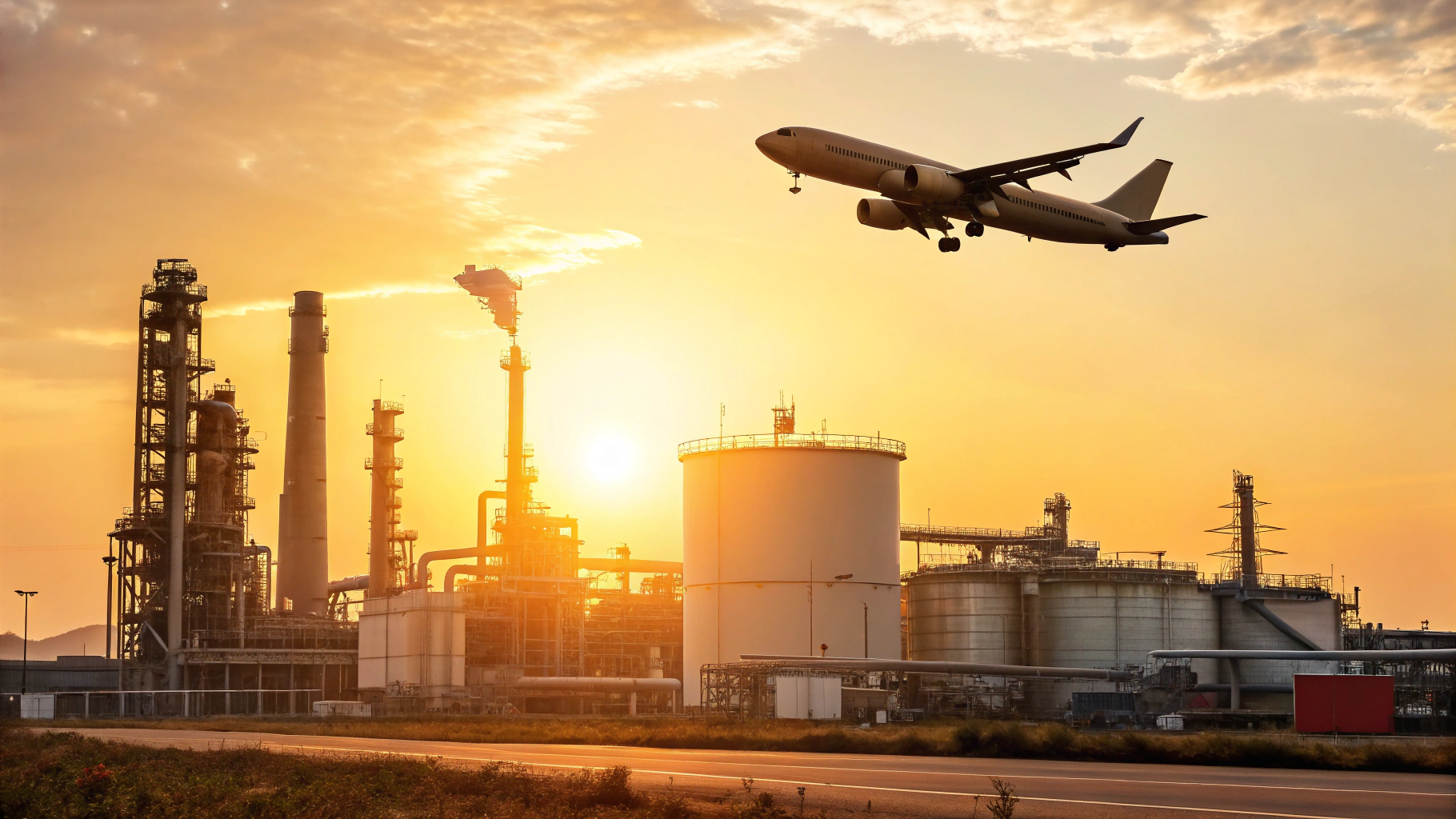
This time, we will explain about the domestically produced SAF (Sustainable Aviation Fuel).
In July 2025, domestically produced SAF will be refueled on scheduled passenger flights at Tokyo International Airport (Haneda Airport), marking a historic step towards decarbonization in Japan's aviation industry.
At Haneda Airport, as part of the " Fry to Fly Project " (a bit of a pun perhaps...), a joint initiative by JGC Holdings, Tokyo Metropolitan Government, All Nippon Airways (ANA), and Japan Airlines (JAL), domestically produced SAF made from used cooking oil collected from homes and stores has been refueling scheduled flights.
This is the first scheme in Japan to complete the entire supply chain - collection, production, transportation, and refueling - domestically, and it is attracting attention as a commercial operation model for domestically produced SAF.
I have written about SAF before, so please take a look if you are interested.
The latest trends and outlook for SAF in Japan (written for those interested in investing in SAF)
SAF ingredients, manufacturing process and ingredient fraud issue
Tokyo Metropolitan Government's initiative to promote the use of domestically produced SAF
Tokyo was the first in the country to establish a " Domestic SAF Utilization Promotion Project " to cover the price difference between domestically produced SAF and conventional jet fuel.
The system provides subsidies of 100 yen per liter, up to a maximum of 2.5 million liters per year, and Cosmo Oil Marketing has been selected as the first selected company ( Tokyo Metropolitan Government press release, May 7, 2025 ).
This policy is expected to reduce the cost burden for airlines in introducing SAF and support the continued stable use of SAF at Haneda Airport.
Latest trends in technological innovation and manufacturing bases
At the Cosmo Oil Sakai Refinery in Sakai City, Osaka Prefecture, SAFFAIRE SKY ENERGY constructed Japan's first large-scale manufacturing facility, which will produce approximately 30,000 kiloliters of SAF per year, and the facility is scheduled to begin operation in December 2024.
The facility uses 100% used cooking oil as its raw material, has obtained ISCC CORSIA certification and ISCC EU certification, and is said to meet international sustainability standards.
In the future, we expect to see further capacity expansion and cost reductions through diversification of raw materials.
Market size and government targets
The global SAF market size is estimated to be approximately US$ 1,262 million in 2023, and is expected to reach US$ 13,841.2 million by 2030, achieving a CAGR of approximately 60%.
Meanwhile, the Japanese government has set a goal of replacing 10% of domestic jet fuel consumption (approximately 1.72 million kiloliters) with SAF by 2030, and the expected supply is 1.92 million kiloliters.
It appears that there is sufficient supply expected for now.
Three barriers to widespread adoption
As mentioned above, interest in SAF is increasing, but there are still many challenges to overcome.
The main points seem to be the following three:
Low awareness
In a survey conducted by the Ministry of Land, Infrastructure, Transport and Tourism in 2024 , only 19.0% of consumers responded that they were "very familiar" with SAF (see PDF, page 28), with more than half responding that they had "only heard of it" or "didn't know anything about it."
Interest in this field is likely to grow with each passing day, so it is possible that at this point in time, the number of people who answer "I know a lot about it" is increasing.
High cost
The current price of SAF is 200 to 1,600 yen per liter, which is 2 to 16 times the price of conventional fuel (approximately 100 yen), and could impose a heavy burden on airlines.
Lack of understanding of raw materials
Only 44.7% of respondents were aware that the main raw material for SAF is used cooking oil, indicating that its value as a circular resource has not been fully recognized.
Public-Private Solutions
The government has established a public-private council jointly with the Ministry of Economy, Trade and Industry and the Ministry of Land, Infrastructure, Transport and Tourism to develop a roadmap for creating demand and strengthening the supply chain.
Specifically, the company is increasing its price competitiveness through subsidies for manufacturing equipment (approximately 36 billion yen), tax incentives, and price difference compensation, and is also working with local governments to establish a system for collecting used cooking oil.
Comparison with international efforts
In the European Union (EU), the ReFuelEU Aviation regulation will gradually introduce mandatory SAF blends of 2% in 2025, 6% in 2030, and 70% by 2050.
In its SAF Grand Challenge, the United States has set a target of supplying 3 billion gallons (approximately 114 million kiloliters) per year by 2030, and is implementing active policy support, such as subsidizing 90% of the facility costs of small airports.
The Frontier of Technological Development
In addition to the currently mainstream HEFA (derived from waste edible oil and animal and vegetable oils and fats), a variety of raw materials and technologies are in the demonstration stage, including alcohol-to-jet (ATJ), municipal waste gasification FT process, and algae-derived SAF.
The commercialization of these next-generation technologies will directly link to securing raw materials and reducing costs, and is believed to hold the key to ensuring a stable supply system beyond 2030.
Contributing to a recycling-oriented society and the role of consumers
As consumers, we can also contribute regarding SAF.
SAF is not simply an alternative to fossil fuels; it can be said to be at the heart of a circular economy.
By collecting and reusing used cooking oil from homes and businesses, we promote circulation in the local economy and contribute to reducing food waste.
Consumers can support the spread of SAF by cooperating with the proper sorting of used cooking oil and choosing services that use SAF.
Future outlook and conclusions
With the start of supply of domestically produced SAF at Haneda Airport, Japan's aviation industry has clearly laid out its path to decarbonization.
However, in order to overcome the three hurdles mentioned above - raising awareness, reducing costs, and securing raw materials - it is believed that united efforts by the government, industry, local governments, and consumers are essential.
If Tokyo's pioneering support system spreads across the nation and price difference subsidies are established on a wide scale, I believe that the target of 10% adoption by 2030 will become a reality.
Japan has not been particularly successful in making Haneda and Narita hub airports, when we look at airports such as Singapore's Changi Airport. However, with regard to SAF, it is expected that Japan will demonstrate leadership as an SAF hub and pave the way for a new era of aviation.








comment