✅ Roughly speaking
🔊 Noise from power storage plants, reflected sunlight - an article topic born from a casual conversation with a client ⚖️ Numerous court cases: Low-frequency noise and reflected sunlight from wind turbines raise room temperature to 50°C, landscape rights not recognized 📜 Over 145 municipalities regulate with their own ordinances, while the national government also accelerates the development of guidelines 🤝 Business measures and measures to give back to the community are key - a bridge between law and dialogue is needed
Introduction – A chat with the client
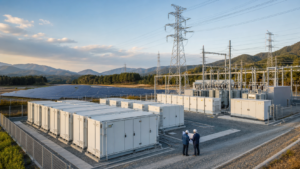
The other day, while chatting with a client, I heard him say, "The larger the capacity of a power storage plant, the louder the noise it produces."
When we think of renewable energy, we tend to think of solar panels and wind turbines, but we were reminded that large-scale power storage facilities, which are essential for grid stabilization, also have the problem of noise.
In fact, as solar and wind power plants spread across the country, various frictions are arising between them and the surrounding residents.
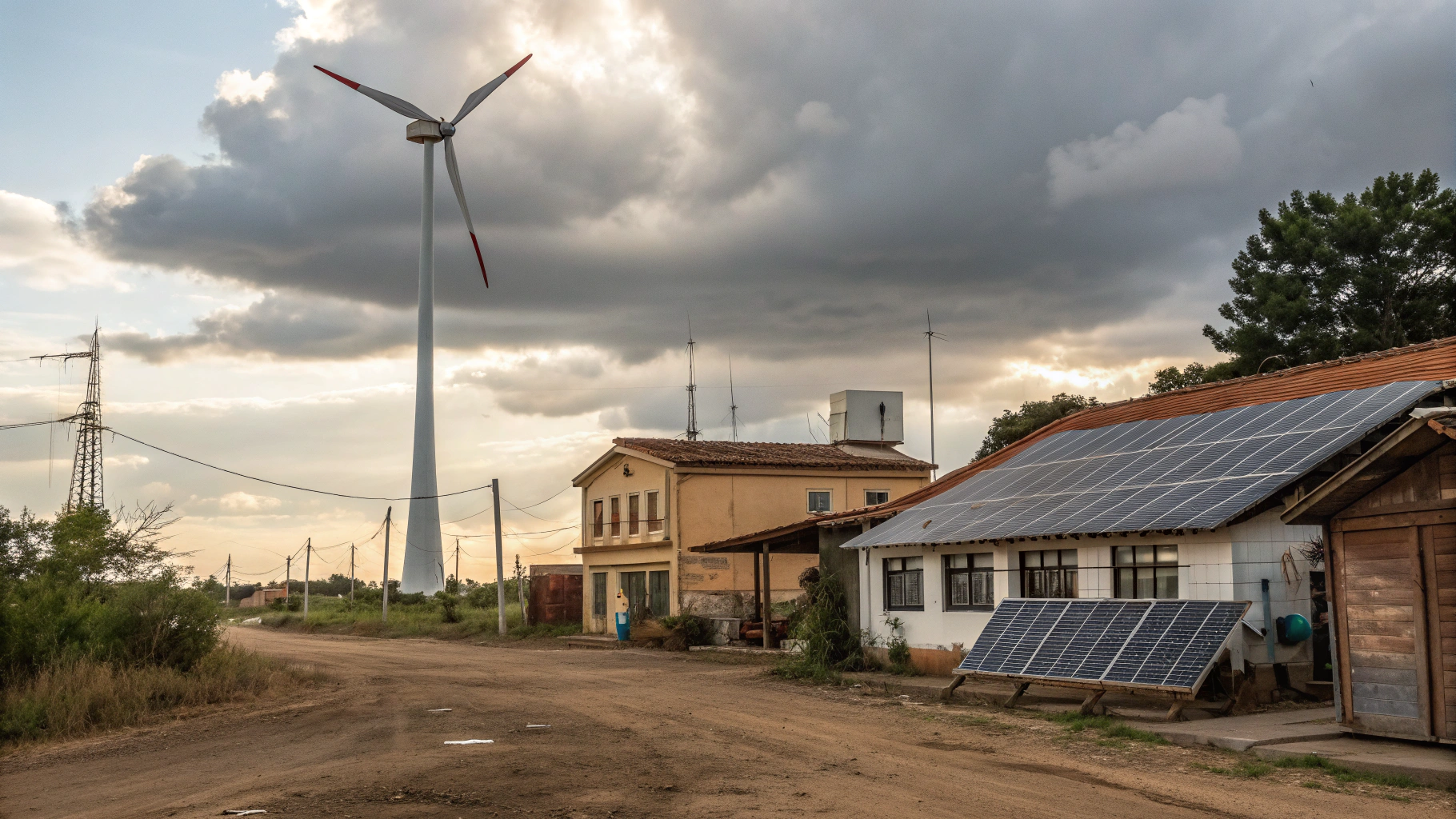
Noise, low-frequency noise, glare from reflected light from solar panels, deterioration of the landscape, and even the risk of landslides due to deforestation...
These problems cannot be solved simply from a technical or economic perspective. As a lawyer and a member of the local community, I feel that this is not just a problem for others.
Actual local troubles
Wind power noise lawsuit (Tahara City, Aichi Prefecture)
A large 1,500kW wind turbine was constructed about 350 meters from a house. Residents sued the operator, claiming that the noise was "beyond the acceptable limits," but in April 2015 the court dismissed the claim, ruling that the noise was "within the legal limits."
Even if something is legally acceptable, the feelings of the people who actually live nearby are another matter.
In areas where wind turbines stand side by side, such as Yurihonjo City in Akita Prefecture, there is a constant stream of residents complaining about the health damage caused by low-frequency noise.
Heatstroke caused by reflected light from solar panels (Himeji City, Hyogo Prefecture)
In 2015, a lawsuit was filed against a couple who suffered heatstroke after their home's indoor temperature rose to over 50°C due to intense sunlight reflected from a nearby mega solar power plant.
In this case, the company voluntarily planted tall trees to take shielding measures, and the matter was settled in 2017 when the residents withdrew their lawsuit.
This is a good example of a company's flexible response preventing a prolonged trial (for now).
Lawsuit over landscape destruction (Yufuin Town, Yufu City, Oita Prefecture)
In response to a mega solar power plant project planned for a scenic highland area, inn owners and other residents have filed a lawsuit seeking an injunction to halt the development, claiming that it would infringe on their personal right to enjoy the area's natural scenery.
However, in November 2016, the Oita District Court dismissed the lawsuit, stating that "landscape benefits are only benefits worthy of legal protection, and an injunction based directly on environmental rights and landscape rights cannot be granted."
The reality is that in many cases of disputes over landscapes, the residents end up losing legally.
Deforestation and landslide risk
In March 2021, approximately 1,000 residents of Heguri Town, Nara Prefecture, filed a class action lawsuit against the developer, seeking to halt the power generation plan, claiming that deforestation had left the mountains bare and they were concerned about landslides.
In Akaiwa City, Okayama Prefecture, a slope collapse occurred after the construction of a mega solar power plant covering an area of 82 hectares, causing actual damage by burying rice paddies at the foot of the slope in mud and debris.
Responses by national and local governments and initiatives by businesses
Over 145 local governments have enacted their own ordinances
According to a national survey, there are more than 145 local governments nationwide that have enacted solar power ordinances with strong regulatory elements (approximately 175 if only notification requirements are included).
Approximately 10% of all local governments are responding with their own ordinances.
In 2019, Hidaka City in Saitama Prefecture enacted an ordinance that prohibits solar power generation within designated protected areas such as forest conservation areas and tourist hub areas.
The business operator filed a lawsuit claiming the ordinance was unconstitutional, but in May 2022 the Saitama District Court dismissed the lawsuit and confirmed the ordinance's legality.
Ingenuity on the part of businesses
At the same time, businesses are also making progress in their efforts to coexist with the local community.
- Use of low-noise equipment and installation of soundproof walls
- Anti-glare panel and reflected light simulation
- Active greening and consideration for the landscape
- Holding multiple public information sessions and establishing a complaint desk
- Agreement concluded to return a portion of electricity sales revenue to the local community
A wind power plant in Nakadomari Town, Aomori Prefecture, has concluded a "Donation Agreement for Regional Revitalization" with the town, and is allocating part of the revenue from selling electricity to the town for the preservation and maintenance of historical buildings and the construction of a welfare and health center.
For more details, see the Law Firm column.
Recently, I have posted a lengthy column on the website of the law firm I belong to that comprehensively summarizes actual court cases on this issue, the institutional responses of the national and local governments, and specific measures that businesses can take.
It explains in detail the following:
✅Details of court cases in various regions (legal issues in the judgments, arguments of both residents and businesses)
✅ The Ministry of the Environment's noise regulation standards, the Ministry of Land, Infrastructure, Transport and Tourism's guidelines for dealing with reflected light ✅ Zoning methods in local government ordinances and the results of lawsuits for unconstitutionality ✅ Specific examples of soundproofing, anti-glare, and greening measures taken by businesses ✅ The potential for utilizing ADR (alternative dispute resolution) ✅ Measures to return profits to the local economy and the mechanism for citizen-run power generation
I believe the content will be of practical use to renewable energy business operators, local government environmental and urban planning officials, and local residents who are concerned .
Conclusion
The difficulty in this field is that a "legal victory" does not necessarily mean that the "problem is resolved."
Expanding the introduction of renewable energy is essential to realizing a decarbonized society.
However, it would be counterproductive if friction with the local community were to arise in the process.
It is believed that many problems can be prevented and resolved through institutional improvements and the ingenuity of businesses.
On the front lines, face-to-face dialogue and ingenuity between businesses, residents, and government officials are essential.
As a lawyer dealing with local disputes, I would like to play a role in bridging the gap between technology, law, and dialogue between people.



comment