✅ Roughly speaking
- 💰Japan 's energy self-sufficiency rate is the lowest in the G7 at 15.3% , and the country faces a structural challenge in which 24 trillion yen of national wealth is lost annually through fossil fuel imports. It is therefore imperative to make renewable energy a major power source, not just in terms of quantity but also in terms of quality.
- 🔄 Starting in fiscal year 2026, output control rules will be introduced that prioritize FIP power sources over FIT power sources . This will affect the revenue structure of existing FIT operators, and it is expected that there will be cases where project finance contracts will need to be revised and prior consultations with financial institutions will be required.
- 🏘️The scope of monitoring by the Renewable Energy G-Men has been expanded to include non-FIT/non-FIP businesses , and compliance requirements for all solar power generation businesses have been strengthened. Businesses are being asked to fundamentally review their compliance systems.
- 🔬 Perovskite solar cells (PSCs) are expected to contribute to both regional coexistence and expansion by installing them close to demand areas, with a cumulative capacity of 20 GW by 2040 and a power generation cost of 10-14 yen/kWh or less. However, this is a long-term strategy until commercialization, and short-term business decisions must be made with caution.
✅ Click here to listen to the audio of the handouts from the 77th meeting of the Subcommittee on Large-Scale Introduction of Renewable Energy and Next-Generation Power Networks of the Comprehensive Resources and Energy Advisory Committee.
Introduction
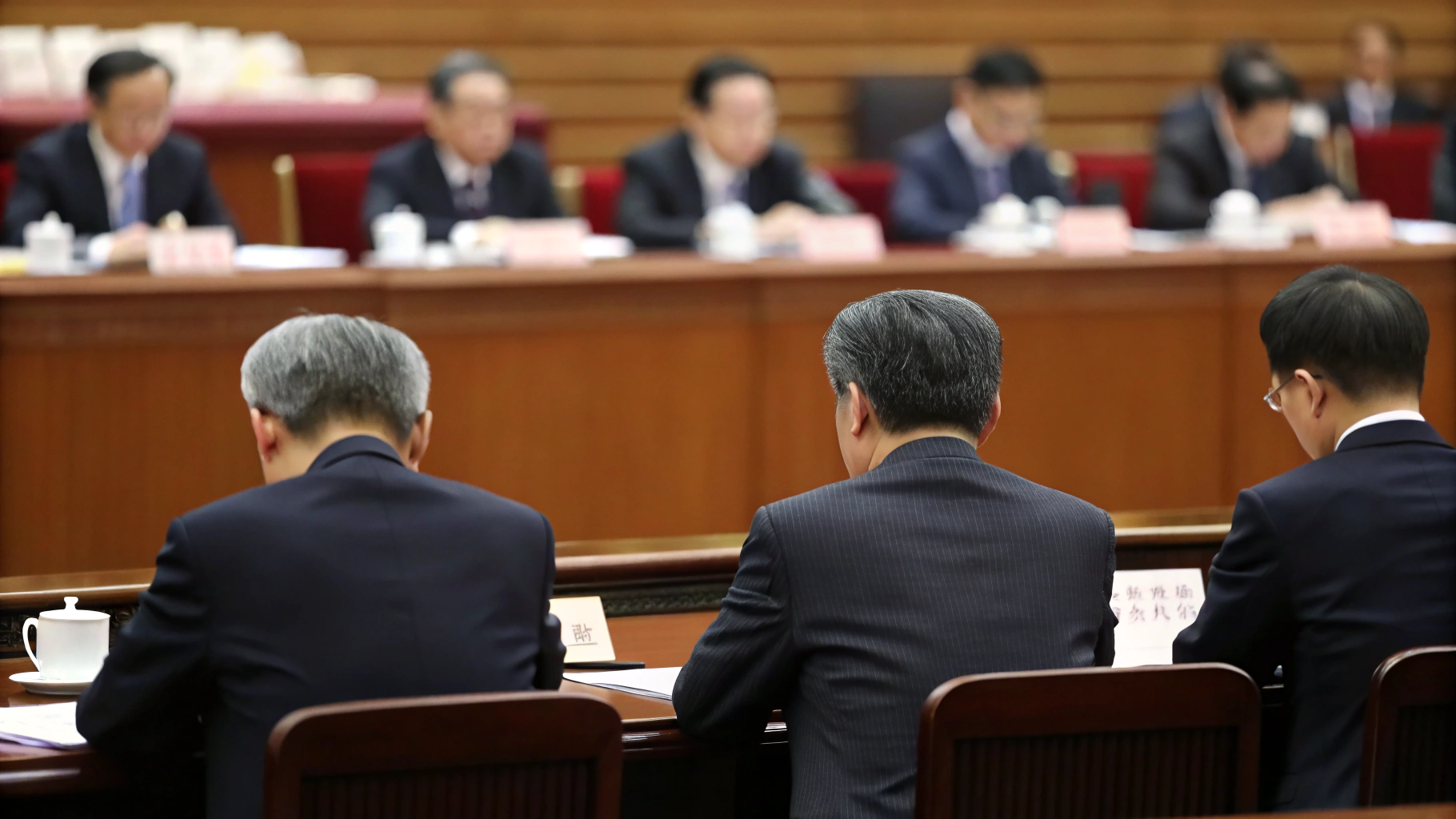
This time, based on the materials distributed at the 77th meeting of the Comprehensive Resources and Energy Study Group's Subcommittee on Large-Scale Introduction of Renewable Energy and Next-Generation Power Networks, held on November 12, 2025, I will explain from a practical perspective as a lawyer the strategy to make renewable energy (hereinafter referred to as "RE") the "main power source," which is the core of Japan's energy policy.
Japan has a structural vulnerability in that it has few usable natural resources and is dependent on fossil fuel imports from overseas for the majority of its energy supply.
Specifically, 24 trillion yen of national wealth flows overseas each year through fossil fuel imports ( Agency for Natural Resources and Energy, "Document 1," p. 8 ), and Japan's primary energy self-sufficiency rate remains at 15.3%, the lowest among the G7 countries ( ibid., p. 6 ).
There is no doubt that this energy security challenge is a pressing issue for national sustainability.
Given this background, there is a need to maximize the introduction of renewable energy in order to achieve both a stable energy supply and decarbonization.
However, "becoming a major power source" in this context does not simply mean increasing the amount of power generated (on a kWh basis). It is thought to be aimed at becoming a qualitatively advanced power source, such as becoming independent from policy support such as the FIT (Feed-in Tariff)/FIP (Feed-in Premium) system, and supplying electricity in response to supply and demand in the electricity market in the same way as general power generation businesses ( ibid. , p . 2 ).
For businesses involved in renewable energy projects and companies promoting ESG (Environment, Social, and Governance) management, we believe that how Japan's renewable energy policy will develop in the future is an important issue that is directly linked to investment decisions and business strategies.
In particular, we believe many people have the following practical questions:
- What contractual considerations should be made when an existing FIT-certified business transitions to FIP?
- How will changes in output control ordering affect existing project finance?
- What is the practical impact of strengthening regulations on non-FIT/non-FIP businesses?
- What should you look for during due diligence when acquiring a solar power plant on the secondary market?
In this article, we will take a deeper look at the latest policy trends, keeping these practical issues in mind.
The essential significance of "independence" toward making renewable energy the main power source
The basic premise of the FIT/FIP system: independence from future support
The FIT/FIP system is a temporary system that aims to expand the introduction of renewable energy by providing price support through public contributions (levies) at a stage when the cost competitiveness of renewable energy is not yet sufficient compared to other power sources, and to achieve cost reductions through economies of scale and learning curves.
What is important is that the basic premise of this system is that renewable energy will become self-sufficient to the point that new investment in power sources will progress even without support from the FIT/FIP system in the future ( Agency for Natural Resources and Energy, " Document 1," p. 2 ).
This concept of "independence" is not merely a pretense, but an important element that is at the core of the system design.
In fact, from the very beginning of the introduction of the FIT system, it was assumed that renewable energy would become an independent, market-competitive power source in the future.
Progress toward independence by power source type and practical issues
Progress towards renewable energy independence varies significantly depending on the characteristics of the power source and the state of its introduction. The table below summarizes the situation based on government documents, with some practical points added.
| Power supply differentiation | Characteristics and Goals | Direction of support (practical issues) | Practical considerations |
|---|---|---|---|
| Solar power generation and onshore wind power | Cost reductions are progressing. Non-FIT/non-FIP projects are already being formed, and consideration of paths to self-sustainability is accelerating. | Accelerate discussions on the nature of support and price levels for large-scale commercial solar power generation from fiscal 2027 onwards | Corporate PPA and other bilateral contracts are on the rise. In price negotiations for direct contracts with consumers, FIT/FIP prices are used as a comparison index, so future pricing trends should be closely monitored. |
| Small and medium-sized hydroelectric power and geothermal power | It has the characteristic of a long operating period, but development risks/costs are high | Aim for gradual cost reductions over the medium to long term while ensuring long-term stable operation even after the end of the FIT/FIP system | Geothermal development can take more than 10 years, and the most important issues are the risk of obtaining licenses and the formation of consensus with local residents. Continuing support during the resource survey stage is essential in practice. |
| Offshore wind power | It is still in its infancy in Japan. The investment amount is large and the total project period is long, so there is a high risk of fluctuations in income and expenses. | We aim to reduce costs through future expansion and the development of an industrial base. We will consider the best form of support while clarifying the medium- to long-term outlook. | The price ceiling set in the public tender occupancy guidelines is directly linked to business feasibility assessment. Domestic supply chain development is lagging behind, and addressing the risk of relying on foreign capital is an issue. |
| biomass | The majority of power generation costs are comprised of operation and maintenance costs, including fuel costs, making the cost structure a major challenge to achieving self-sufficiency | After confirming the strengthening and establishment of the fuel supply chain, consider how to provide support | As sustainability standards become stricter, there is growing criticism of Japan's reliance on imported fuels such as palm oil. The key is to establish a stable procurement system for domestic wood biomass. |
Important practical points : In the current inflationary environment, some power sources are seeing increases in construction costs, etc. However, rather than mechanically and uniformly raising estimated prices, it is recommended that prices be reflected after a comprehensive assessment is made after checking whether "efforts are being made to achieve self-reliance " and " whether costs are increasing even when projects are being implemented particularly efficiently " ( ibid. , p . 2 ).
In practice, this means that when businesses explain the basis for cost increases to the Procurement Price Assessment Committee, it is not enough to simply present market data; they must also explain their own efforts to improve efficiency and their track record of investment in technological innovation .
Policy measures to accelerate the use of the FIP system
The FIP system, which is key to integration into the electricity market, links the income of renewable energy power generation companies to electricity market prices (spot market prices, etc.), thereby encouraging companies to supply electricity in accordance with supply and demand.
Current status of the FIP system: Still in its infancy
As of the end of March 2025, the total amount of FIP certified capacity, including new and transitional certifications, will be approximately 3,795 MW (1,889 cases) , accounting for only approximately 3.7% of the total amount certified under the FIT/FIP system on an output basis ( Agency for Natural Resources and Energy, " Document 1," p. 24 ).
As it is desirable to transition all renewable energy sources to FIP in the future, the government has made clear its intention to implement the following specific business environment improvements:
Game changer: Revision of output control order in power priority dispatch rules
In practice, the most notable policy change is the review of the order of output control under the priority power supply rules.
In order to maximize the introduction of renewable energy (on a kWh basis), and as a measure to encourage the transition to FIP while ensuring fairness in output control, the government clarified a policy to change the order of output control under the priority power supply rules to FIT power sources first, followed by FIP power sources, as early as FY2026 ( ibid., p. 27 ).
Practical Impact Analysis
If this measure is implemented, FIP power sources (solar and wind power) will not be subject to output curtailment for the time being, while the probability of output curtailment for FIT power sources will increase. This will have the following practical effects on FIT operators.
-
Impact on project finance contracts
In many FIT projects, financial covenants based on expected electricity sales revenues are set in the loan agreements with financial institutions.
Increasing output curtailment will undermine the assumption of the expected amount of electricity sold, which could result in a risk of breaching covenants .
Businesses should hold prior consultations with financial institutions and consider revising contract terms (obtaining waivers, etc.) as necessary. -
Economic incentives for transitioning to FIP
This will motivate FIT operators to consider transitioning to FIP in order to avoid the risk of reduced revenue from electricity sales due to output control.
However, transitioning to a FIP also brings with it new operational challenges, such as formulating a power generation plan, managing balancing costs, and bearing the risk of market price fluctuations, so a comprehensive feasibility assessment is essential . -
Need to review existing PPA agreements
If you have a corporate PPA agreement with an off-taker (power purchaser), increased output curtailment may affect your contractual supply obligations.
It is advisable to reconfirm the force majeure clauses in the contract and the handling of output control, and to clarify them in memoranda, etc., if necessary.
Economic incentives to support FIP transition: Balancing cost increase measures
Under the FIP system, balancing costs are provided to cover the costs required to formulate power generation plans and respond to forecasts.
In addition to the recent change in the order of output control, measures to increase balancing costs from fiscal 2025 onwards will be taken to enable the smooth implementation of advanced initiatives, such as shifting renewable energy sources from times when the electricity market price is low to times when it is high ( ibid., p. 36 ).
Specifically, the increase in balancing costs for fiscal 2025 is set at +1.00 yen/kWh ( ibid., p. 36 ).
This increase measure will be used to a limited extent within the scope of the effect of reducing the burden on the public that will result from the reduction in the purchase volume of FIT power sources due to the change in the order of output control, and therefore can be evaluated as having the effect of rebalancing support for FIT power sources to support for FIP power sources .
Practical implications : Increasing balancing costs will provide FIP operators with an incentive to invest in improving forecast accuracy and installing battery storage.
In particular, by collaborating with weather forecasting services and aggregators, it may be possible to shift supply to times when market prices are high, thereby maximizing both premium revenue and balancing costs.
Expansion of direct trading of non-fossil fuel certificates and its impact on corporate PPAs
Under the FIP system, renewable energy power generation companies themselves sell non-FIT certificates (environmental value), and the trading environment for this has also been established.
Even if a FIT power source that began commercial operation before fiscal year 2021 transitions to FIP, direct transactions between power generation companies and consumers will be permitted from the amount of electricity generated in January 2025 .
This measure is in response to growing consumer needs, and we believe it will be an important step in expanding procurement options for RE100 participating companies and consumers aiming to reduce Scope 2 emissions .
Practical points to check
We recommend that customers considering a corporate PPA check the following three points.
-
Does the existing PPA contract include provisions for handling non-FIT certificates?
You should check whether the contract clearly stipulates the attribution of environmental value (non-fossil certificates, J-credits, etc.) and cost burden.
In particular, older contracts are based on the premise of FIT power sources, and there are cases where the handling of environmental value is unclear. -
How to share the risk of certificate price fluctuations after the transition to FIP
Non-FIT certificates are traded on the market, so their prices fluctuate.
In long-term contracts, it is important to clearly agree on the pricing mechanism, such as whether to use a fixed price, a market-linked price, or set upper and lower limits, in order to prevent disputes. -
Have you formulated a FIP power procurement plan up to 2030?
The JPEA roadmap described below aims for a FIP ratio of over 25% by 2030.
For consumers, it is time to systematically consider how procurement from FIP power sources should be positioned within their medium- to long-term renewable energy procurement strategies.
Deregulation of storage batteries attached to FIP: Lifting of ban on grid-side charging
In addition, with regard to storage batteries installed alongside FIP power sources, in addition to previous cases, from April 2025, FIP power sources that were newly certified before fiscal year 2023 (including power sources that have transitioned from FIT) will also be permitted to charge from the grid side .
This is thought to be a measure to improve the operating rate of storage batteries and make their contribution to ensuring a supply-demand balance more efficient.
In practice, there is the potential for increased revenue opportunities by discharging electricity charged from the grid during times when market prices are high.
The seriousness of industry groups: Photovoltaic Energy Association's FIP transition roadmap
The Japan Photovoltaic Energy Association (JPEA), an industry group, is developing a roadmap and action plan to accelerate the transition of solar power generation to FIP.
Ambitious numerical target: FIP ratio of over 25% by 2030
JPEA has set a goal of increasing the FIP ratio (capacity basis) for solar power generation, which was 0.8% as of the end of March 2024, to over 25% (approximately 23 GW) by 2030 ( Photovoltaic Energy Association, Document 2, p. 2 ).
JPEA recognizes that achieving this goal requires behavioral change among power producers, consumers, and financial institutions.
Expected behavioral changes by stakeholder
Power generation companies:
- Active transition to the FIP system
- Installing storage batteries and improving the accuracy of power generation forecasts
- Strengthening collaboration with aggregators
Consumer (off-taker):
- Expanding renewable energy procurement (from current levels of around 1GW to over 23GW)
- Improved business predictability through the conclusion of long-term PPA contracts
Financial Institutions:
- Expanding the loan limit for power sources utilizing FIP
- Developing financing methods that incorporate market price fluctuation risks
Practical implications:
This industry-wide effort to revitalize the FIP market is not merely a policy statement by an industry group, but is seen as signifying a transformation in the industrial structure in line with government policy goals .
International Comparison: Japan's FIP System and ASEAN Countries' Renewable Energy Support Measures
In the ASEAN region, where I often work, each country is adopting a variety of approaches to support the introduction of renewable energy. When comparing Japan's FIP system with that of major ASEAN countries, the following characteristics become apparent.
| country | Major support systems | Progress of market integration | Comparison with Japan |
|---|---|---|---|
| Vietnam | Direct PPA + Feed-in Tariff (FIT-like) | Low | The government regulates PPA prices, and the introduction of market mechanisms is limited. |
| Thailand | Competitive entry system (EGAT-led) + private PPA | middle | Most of the bidding is government-led, but private PPAs are also expanding. Market-linked PPAs like Japan's FIP have not yet been introduced. |
| Indonesia | Mainly FIT, some competitive bidding | Low | Long-term FIT contracts with PLN are the norm. No FIP-like system has been introduced. |
| Philippines | Renewable Energy Certificates (REC) + Wholesale Electricity Market | Medium and high | The wholesale electricity market is functioning well, and there is potential for market integration. However, the complexity of the system is an issue. |
| Japan | FIP system + non-fossil certificate market | Medium and high | The system is characterized by its innovative design, including transparency in output control rules and direct trading of non-fossil fuel certificates. |
Practical implications:
Japan's FIP system has the potential to serve as a model case for ASEAN countries when they introduce market-integrated renewable energy support measures in the future, given its advanced system design, including transparency in output control rules and direct trading of non-fossil fuel certificates .
In particular, for Japanese companies developing renewable energy businesses in the ASEAN region, the know-how of operating the FIP system in Japan could be a competitive advantage in making policy recommendations and building business schemes locally.
Strengthening community coexistence and business discipline: Ensuring social trust
In order to maximize the introduction of renewable energy, it is essential to coexist with local communities and minimize the burden on citizens. In particular, with regard to solar power generation, there have been some cases where consideration for the natural environment and landscape has been lacking, making it an urgent task to strengthen business discipline in order to coexist with local communities .
Establishment of a cross-ministerial monitoring system by the government
On the government side, a comprehensive review of all laws and regulations is being conducted in cooperation with relevant ministries and agencies in order to balance the public interest (living environment, natural environment, landscape conservation, safety assurance, etc.) in solar power generation projects.
As part of strengthening business discipline, a " cross-ministerial and cross-agency renewable energy business monitoring system " has been established, and the Agency for Natural Resources and Energy has put into operation a " renewable energy G-men " team that conducts on-site inspections.
In practice, what is particularly noteworthy is the policy to strengthen discipline over all solar power generation businesses in Japan by expanding the scope of reporting to non-FIT/non-FIP businesses in addition to the "Relevant Law Violation Reporting System" and "Renewable Energy G-Men," which previously only targeted FIT/FIP certified businesses ( Agency for Natural Resources and Energy, "Document 3," pp. 3, 6 ).
Operational performance:
As of October 2025, 926 local governments (47 prefectures + 879 basic local governments) have used this system, and 116 reports have been received ( ibid., p. 6 ). When violations are confirmed, strict administrative sanctions are implemented, such as guidance to businesses and temporary suspension of FIT/FIP subsidies.
Practical solutions:
All solar power generation businesses (including non-FIT/non-FIP businesses) should take the following measures immediately:
-
Complete review of compliance system
We will reconfirm compliance with relevant laws and regulations, such as the Forest Act, the Act on Regulation of Land Development, etc., the Landscape Act, the Species Conservation Act, and the Cultural Properties Protection Act. -
Thorough prior consultation with local governments
Even for projects of a scale that do not require approval or permits, we proactively provide prior explanations and hold voluntary consultations with local governments, and make every effort to gain the understanding of the local community. -
Establishment of an internal reporting system
Establish a system that enables early detection and correction of signs of violations of laws and regulations within the company.
Voluntary Industry Code of Conduct: JPEA's Approach
JPEA itself has adopted " coexistence and co-creation with the local community " and " consideration for the natural environment and conservation of biodiversity " as its code of conduct, and has declared that it will "encourage responsible behavior and desirable initiatives by businesses" ( Photovoltaic Energy Association, "Document 4-1," p.1-2 ).
Key points of the Code of Conduct (practical points):
-
Dialogue with the local community from the planning stage
We will hold explanatory meetings (striving to accommodate non-FIT/non-FIP facilities as well), respect the voices of local residents, and take an attitude of promoting the project together with the local community. -
Ensuring safety and security
Location selection and development planning take into consideration the risk of disasters, the natural environment and landscape (including reflected light). -
Environmental Impact Assessment
We conduct environmental impact assessments based on laws and regulations or voluntarily, and work with experts and local governments to minimize impacts. We are flexible in our response, including changing the scope of the site. -
Appropriate maintenance and long-term stable operation
Long-term stable operation is achieved through business operations that take the local community into consideration and appropriate maintenance and management. -
Contribution to the local economy
Active contribution to local employment and the economy.
Practical Considerations in Secondary Transactions: Buyer Due Diligence
In practice, one extremely important issue is consideration regarding the sale or transfer of a business (secondary transactions) .
JPEA recommends that when power generation companies conduct transactions on the secondary market, they should conduct a risk assessment of their business (using all 162 items in the "Guide to Evaluating Solar Power Generation Businesses") and confirm that their facilities are being properly maintained and managed ( ibid., pp. 3, 7, 9 ).
Practical importance:
This is an extremely important initiative to prevent problematic cases that have caused trouble in the local community from circulating in the market and to encourage the entry of businesses that are considerate of the local community.
Buyer due diligence should look for:
-
Whether there are any agreements with local residents and their contents
The seller will provide us with the minutes of the local information session, memoranda with residents, complaint response history, etc., and we will clarify the obligations that we will inherit. -
Compliance with relevant laws and regulations
Check the status of licenses and permits obtained, compliance with conditions, and whether or not there is a history of administrative guidance. In particular, we place emphasis on checking compliance with forest land development permit conditions under the Forestry Act and development permit conditions under the Housing Land Development Regulation Act. -
Technical evaluation based on 162 items in the evaluation guide
Detailed evaluations were conducted by experts in three areas: land and title, civil engineering and structure, and power generation facilities. -
Reserve status for future disposal and recycling costs
Check the external reserve status for disposal costs and estimate the burden at the end of the business in the future.
Expectations for next-generation technology: Strategic positioning of perovskite solar cells (PSCs)
Perovskite solar cells (PSCs) are highly anticipated as a next-generation technology that will contribute to both the achievement of becoming a major power source and achieving regional coexistence.
Technical features of PSC and the significance of its introduction
Taking advantage of their lightweight and flexible characteristics, PSCs can be installed close to demand areas, such as on roofs, walls, and windows of buildings, where it has been difficult to install solar cells until now.
Japan's solar power generation capacity per land area is already one of the largest among major countries, and there is limited room for new development of large-scale solar power plants on flat land.
In this situation, utilizing PSCs located close to demand areas will be key to achieving both regional coexistence and expanded adoption .
Government goal: Ambitious targets for 2040
Based on the "Next Generation Solar Cell Strategy," the following ambitious goals have been set for PSCs ( Agency for Natural Resources and Energy, "Document 1," pp. 15, 19 ):
- Cumulative installed capacity by 2040: Approximately 20GW
- Power generation costs by 2040: 10 to 14 yen/kWh or less
Furthermore, Japan is the second largest producer of iodine in the world (with a share of approximately 30%), a key raw material for PSCs. Building a robust supply chain utilizing domestic resources is expected to contribute to a stable energy supply.
Practical perspective: Short-term business decisions require careful consideration
However, from a practical perspective, I would like to emphasize that PSC is a long-term strategy aiming towards 2040, and short-term business decisions require careful consideration .
Current challenges:
-
Uncertainty about the timeline for commercialization
Technical challenges remain for commercialization, such as improving durability (lifespan) and establishing a manufacturing process. -
Lack of regulatory and certification systems
If installation in buildings is envisaged, standards for handling under the Building Standards Act, fire resistance performance, etc. will need to be established in the future. -
Uncertainty in initial costs
There is a risk that costs will remain higher than expected in the early stages before the benefits of mass production are realized.
Advice for businesses:
It would be wise to closely monitor trends in PSC-related technological development and the results of demonstration projects, and to make actual business investment decisions only after commercialization becomes more likely. On the other hand, participation in the research and development stage and cooperation in demonstration projects are worth considering from the perspective of securing a competitive advantage in the future.
summary
This time, based on the materials distributed at the 77th meeting of the Comprehensive Resources and Energy Study Group's Subcommittee on Large-Scale Introduction of Renewable Energy and Next-Generation Power Networks, held on November 12, 2025, I have explained the latest trends in Japan's strategy to make renewable energy the main power source from a practical perspective as a lawyer.
Important practical points (review)
Accelerating the FIP transition: Practical impact of changes to power output control order from FY2026
The fact that output control of FIP power sources will take priority over FIT power sources as early as fiscal 2026 will provide an important opportunity for existing FIT operators to review their business plans .
Things to consider now:
- Impact analysis of financial covenants in project finance contracts
- Prior consultation with financial institutions and consideration of whether or not to obtain waivers
- Evaluation of the business feasibility of FIP transition (comprehensive assessment of balancing costs, market price fluctuation risks, etc.)
- Clarification of handling of output control in PPA contracts with off-takers
Strengthening regional coexistence: Non-FIT businesses are also subject to regulations, and all businesses must strengthen compliance
Non-FIT/non-FIP projects are also subject to monitoring by the "Renewable Energy G-Men," and all solar power generation businesses are being asked to fundamentally strengthen their compliance systems.
Actions to take now:
- Comprehensive inspection of compliance with relevant laws and regulations (Forestry Act, Landscape Act, Species Conservation Act, etc.)
- Thorough prior consultation and explanation with local governments (including cases where no permits or licenses are required)
- Use of 162 evaluation guide items for due diligence in secondary transactions
Next-generation technology PSC: 2040 target is a long-term strategy, short-term business decisions should be made carefully
Perovskite solar cells are part of the government's long-term strategy, which aims for a cumulative 20GW of power generation capacity and power generation costs of 10-14 yen/kWh by 2040. While the technology has great potential, careful consideration is needed before making short-term business investment decisions , given the uncertainty surrounding commercialization.
Recommended approach:
- Continuously monitor technology development trends and the results of demonstration projects
- Consider securing future competitive advantage through participation in demonstration projects
- Actual large-scale investment decisions will be made once commercialization becomes more likely
Future points to watch
Based on the discussions of this subcommittee, the following points are expected to become important points of focus in future practice.
-
FIP transition results for fiscal year 2026
The extent to which actual results in fiscal 2026 will progress towards JPEA's target of a FIP ratio of over 25% by 2030 will be an important indicator for measuring the effectiveness of the policy. -
Actual operation of the cross-ministerial monitoring system
After monitoring is expanded to non-FIT/non-FIP projects, it will be necessary to keep a close eye on how the actual number of reports and the content of administrative sanctions change. -
Timeline for PSC commercialization
As the transition period from demonstration to commercialization becomes clearer, investment decisions by operators will also become more concrete. -
FIT/FIP price levels from fiscal 2027 onwards
As considerations towards the independence of large-scale commercial solar power generation and other projects accelerate, how procurement prices are set from fiscal 2027 onwards will have a direct impact on new investment decisions.
We encourage everyone involved in renewable energy businesses and companies promoting ESG management to keep a close eye on these policy trends and begin considering practical countermeasures as soon as possible .
In particular, reviewing contracts in conjunction with the transition to FIP and strengthening compliance systems based on the premise of coexistence with the local community are considered to be urgent issues.
As a lawyer, I would be happy to contribute, however small, to the success of your renewable energy business and the realization of a sustainable society in Japan. Please feel free to contact me if you have any questions or concerns.







comment